India’s population aged 60 and above currently exceeds 150 million (~11% of the total population, UNFPA Estimates), and this figure is expected to more than double to 347 million by 2050 (~21% of the Indian population).
This demographic shows greater technological proficiency, consumerism, financial security, and aspirations beyond basic needs. Their expectations include a wellness-oriented lifestyle, active & engaging avenues,new experiences, spiritual support, comprehensive financial and succession planning.
The growth in retirement-focused mutual funds, demonstrated by a 226% increase over five years, from ₹9,800 crore in June 2020 to ₹31,973 crore in June 2025 (RTR, Bajaj Capital Estimates), indicates considerable financial affordability.
The private sector NPS AUM also shows a similar trend, with a 26.8% increase over the past five years, climbing from ₹84,814 crore to ₹2,78,102 crore, and is expected to exceed ₹9.12 lakh crore in AUM with 15 million subscribers in the next five years (as per a study in Economic Times estimates).
Attractive Business Opportunity
The senior care industry is poised for continued evolution and diversification, with the sector projected to reach approximately 50 billion USD by 2030, growing at a compound annual rate of ~20% (PwC – ASLI). The senior living industry alone is estimated to be ~USD 8 billion by 2030 (JLL – ASLI report).
A recent survey by ASLI and PwC shows that 85-90% of industry leaders are highly optimistic about the sector’s growth in India over the next 15 years , with most planning active investment, diversification, and service expansion. “With the sector projected to grow ~20% annually to nearly USD 50 billion by 2030, India must pair scale with compassion. We believe that with innovation, collaboration, and supportive regulation, senior care in India can set new benchmarks” said Ankur Gupta, Co-Founder,ASLI & Joint MD Ashiana Housing.
Investment Hotbed
The sector is witnessing robust investments, with nearly 20 deals in the last 18 months alone. Investment ticket sizes have crossed ₹100 crore, new investors have signed up, and the target portfolio has diversified.
Supply Ramp Up
In response to growing demand, supply is anticipated to increase substantially. The current organized supply infrastructure serves approximately 3-4 million seniors (~2-3% of the total senior population), with projections indicating that capacity will more than triple in the next five years.
The senior living capacity is likely to increase 5x by 2030 (JLL – ASLI report). Premium senior living facilities are experiencing strong performance, with occupancy rates consistently maintaining 80-85%. Nevertheless, the projected increase in supply is expected to remain insufficient to meet potential demand.
“India’s senior living sector is at a critical inflection point, with the target market expanding to 2.3 million households by 2030 and market penetration nearly doubling to 2.5%. Currently, India operates at just 1.4% market penetration versus 6%+ in mature markets. This supply-demand gap presents a golden opportunity for strategic investors in one of India’s most vibrant emerging sectors.
The sector’s transformation will be driven by innovative solutions and operational model changes, with Maharashtra’s Housing Policy 2025 serving as a progressive blueprint that could unlock national-scale investment.” said Karan Singh Sodi, Senior Managing Director – Mumbai MMR & Gujarat, and Head – Alternatives, India, JLL
Steady Evolution
As the senior population grows, both domestic and international investors are fueling innovation and expanding service options. The sector will likely integrate best practices and innovations from real estate, BFSI, and healthcare industries. Expect more diverse providers, facilities in various locations, and innovative service and payment models. The portfolio of services is likely to further diversify to include more skilled nursing care centers, specialized geriatric centers, continuing care retirement communities, and other specialized care service providers.
Enabling Regulatory Regimen
A streamlined, progressive regulatory framework is crucial for the growth of senior care in India. This should include single-window clearances, clarity in registration, and incentives for global best practices in safety and service quality.
Updated financial regulations, such as providing financial independence to the senior population through Reverse Mortgage Loans (RML) and enabling long-term loans by classifying senior living projects as ‘infrastructure status,’ can facilitate growth. Setting minimum standards for infrastructure, staffing, and healthcare integration will ensure quality care nationwide.
Similarly rationalizing GST considerations to 5% or lower on senior care services, along with having more innovation in health insurance and retirement planning solutions for seniors can help improve affordability further.
– What the Leaders Say
Rajit Mehta, Chairman, ASLI and MD & CEO Antara Senior Care, said: “India’s Silver Generation has more money than the previous one and they’re investing it in their golden years. While as many as 70% seniors remain financially dependent even today, this trend is changing. The right financial and insurance innovation can help unlock the economic opportunity presented by India’s demographic evolution.
But investing in India’s senior care sector is more than a financial opportunity. It is a commitment to shaping a future where longevity meets dignity, innovation, and community. Those who invest now in the senior care sector will enable better lives and also unlock resilient, long-term value in a rapidly expanding market.”
Dr. Rana Mehta, PwC India Partner & Leader– Health Advisory, added: “A thriving senior care sector is not only vital for ensuring dignity and well-being for India’s aging population, but also represents one of the nation’s most promising, resilient business opportunities for forward-thinking investors and innovators.
As the focus shifts from simply extending lifespan to actively enhancing health span—the years lived in good health—we must reimagine aging not as decline but as possibility. By investing in preventive care, active lifestyles, and age-inclusive innovation, India has the chance to move from a ‘silver economy’ narrative of dependency to an evergreen economy—one where longevity fuels growth, productivity, and intergenerational value creation.”
– Call to Action: Mumbai, Sept 17th
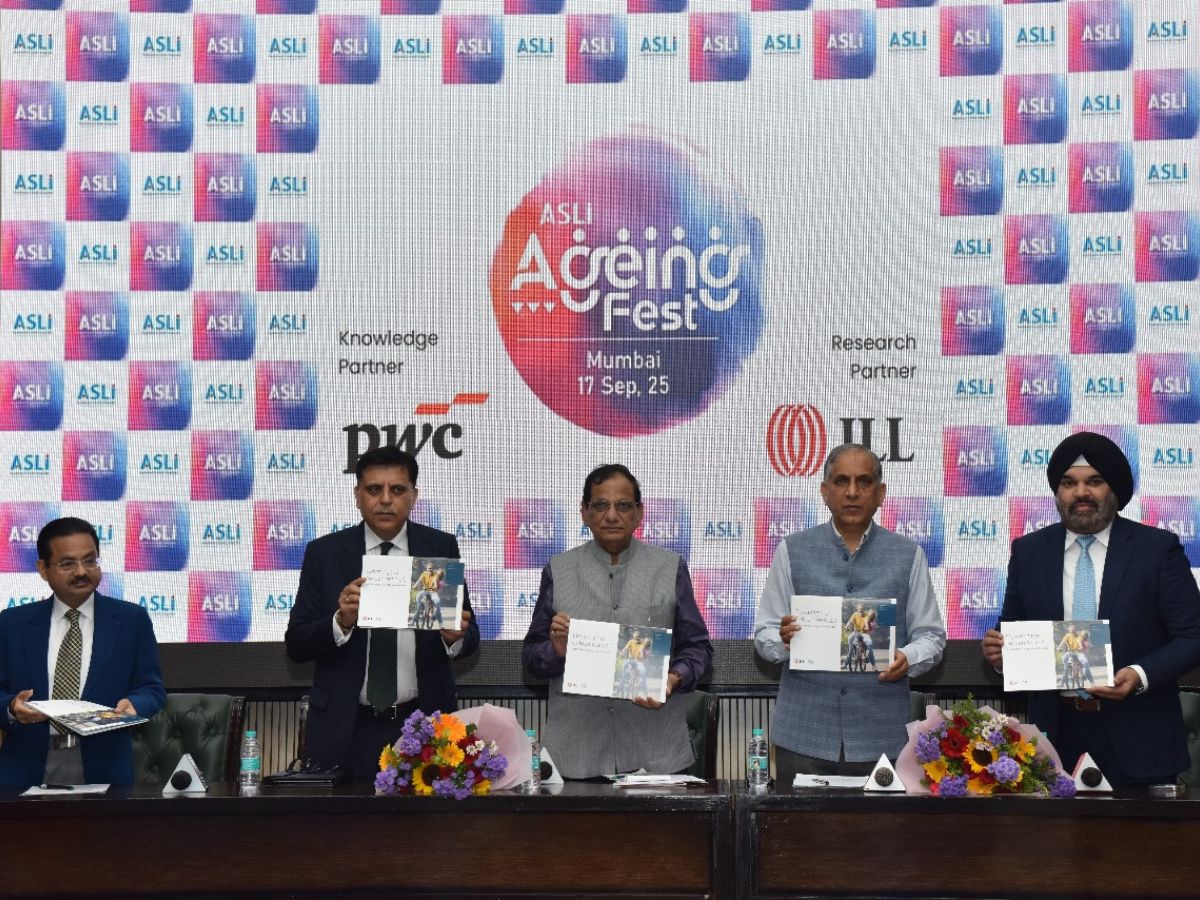
The Association of Senior Living India (ASLI) will host its flagship conclave on September 17 in Mumbai, with PwC India as Knowledge Partner & JLL India as Research Partner, bringing together investors, providers, and regulators to discuss developments in the sector. The event offers an opportunity for attendees to learn about senior care, exchange ideas, and engage in discussions related to growth within the industry.
About ASLI
The Association of Senior Living India (ASLI) is a national membership organization of developers, caregivers, home care providers, and service providers. ASLI aspires to create a model of self-regulation and work in tandem with the government to create a positive regulatory environment through advocacy. The members of ASLI exemplify the principles of choice, dignity, and independence for seniors to enhance their quality of life.
Also Read: Dhruva Space ConfirmsSuccessful Deployment Of LEAP-1 Satellite Into Orbit
Ankur Mishra is a journalist who covers an extensive range of news, from business, stock markets, IPOs to geopolitics, world affairs, international crises, and general news. With over a decade of experience in the business domain, Ankur has been associated with some of the reputed media brands. Through a sharp eye on global marketplaces along with deep insights and analysis of business strategies, Ankur brings simplicity to the complex economic matrix to decode market trends and empower people.
He is committed to entrenched data, facts, research, solutions, and a dedication to value-based journalism. He has covered trade tariff wars, international alliances, corporate policies, government initiatives, regulatory developments, along with micro- and macroeconomic shifts impacting global fiscal dynamics.
One of the biggest pre-release rumours was about Yami Gautam making a cameo, which has…
Eid 2026 Moon sighting timings for Gulf countries: Check sunset and crescent visibility timings for…
SC Delhi vs Jamshedpur FC Live Streaming: Where to Watch ISL match on TV and Online In India?
Check out the Live Streaming and Telecast details of SC Delhi vs Jamshedpur Indian Super…
