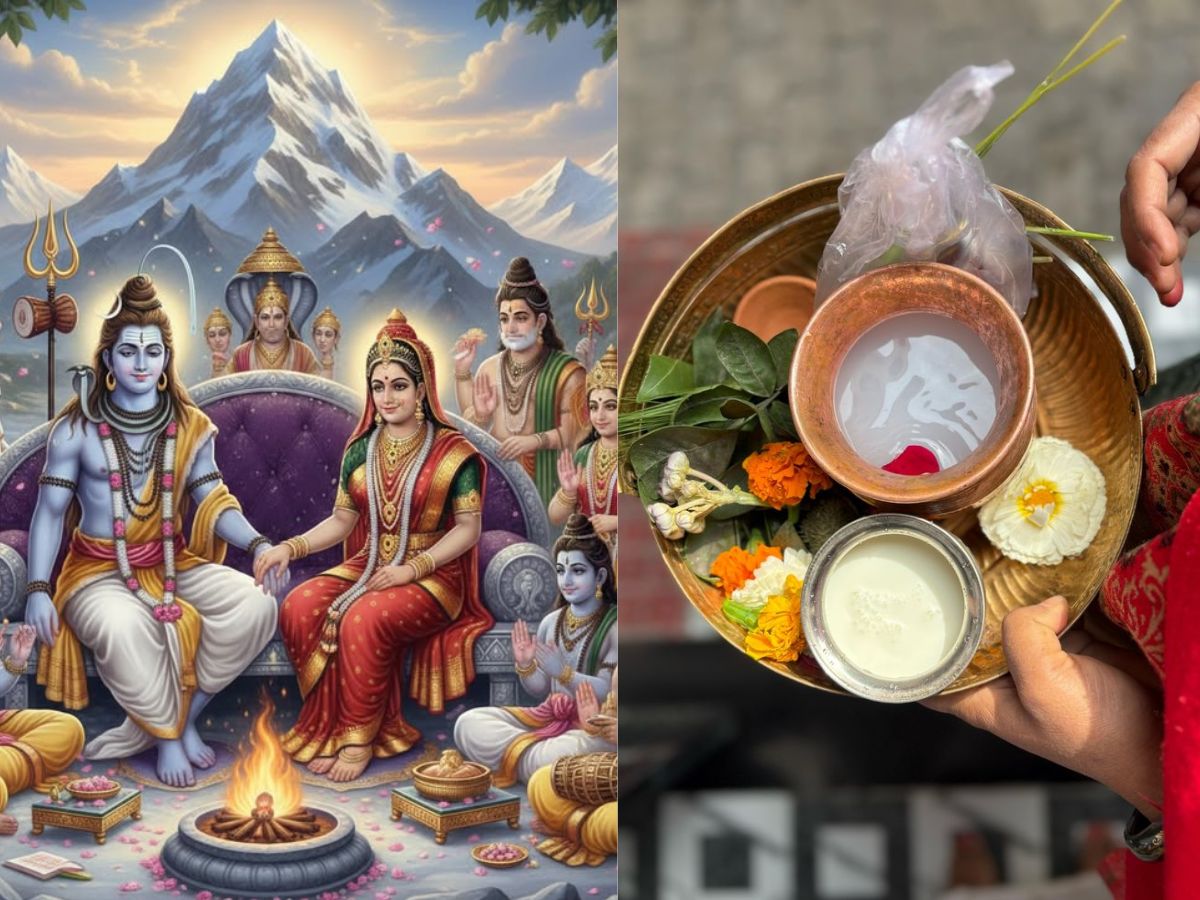
Maha Shivaratri 2026: Date, Puja Timings, Rituals & Fasting Rules
Maha Shivratri represents the most important religious observance for Lord Shiva, which demonstrates the connection between Shiva, who represents consciousness, and Shakti, who represents energy.
The festival takes place on February 15, which falls on a Sunday in 2026. The Chaturdashi Tithi period starts at 5:04 PM on February 15 and ends at 5:34 PM on February 16. Devotees use this day to honor the sacred union between Shiva and Parvati or the night when Shiva performed his Tandava dance.
The observance requires participants to fast and meditate for 24 hours, which ends with the Nishita Kaal midnight vigil, when they believe that spiritual energy reaches its highest level.
The worship of Lord Shiva on this day is uniquely divided into four Prahars (three-hour segments) throughout the night. The First Prahar begins at 6:11 PM on February 15, while the most vital Nishita Kaal Puja occurs between 12:09 AM and 1:01 AM on February 16.
The main rituals of the ceremony include Abhishekam, which involves bathing the Shiva Lingam with water and milk and honey and curd.
Devotees offer Bel Patra (wood apple leaves), which represent the three eyes of Shiva, and Dhatura flowers to invoke grace. People need to keep themselves awake during the entire night of Jagran because this allows them to access cosmic vibrations through the nonstop chanting of the “Om Namah Shivaya” mantra.
The followers of Vrat practice specific dietary restrictions to achieve their desired state of purity. A person needs to stay away from all grains, which include wheat, rice, and lentils, together with all tamasic foods, which include onion and garlic. People use Sendha Namak (rock salt) instead of common table salt.
The sattvic diet allows fresh fruits such as bananas and apples, together with dry fruits and dairy products, which include milk and curd, and Sabudana (tapioca) khichdi to those who do not observe a Nirjala (waterless) fast.
The fast will end through “Parana” at sunrise on February 16 between 6:59 AM and 3:24 PM after a person completes his final morning prayer.
A recent media graduate, Bhumi Vashisht is currently making a significant contribution as a committed content writer. She brings new ideas to the media sector and is an expert at creating strategic content and captivating tales, having working in the field from past four months.
ATLAS ISDI Brings Design-Led AI Discourse to Campus at AI Impact Pre-Summit
Mumbai (Maharashtra) [India], February 14: ATLAS SkillTech University and ISDI – School of Design & Innovation,…
The United States military reportedly used an artificial-intelligence system developed by Anthropic during the operation…
The Noida Metro Aqua Line extension to Sector 142 and Delhi Metro Phase V(A) promise…
