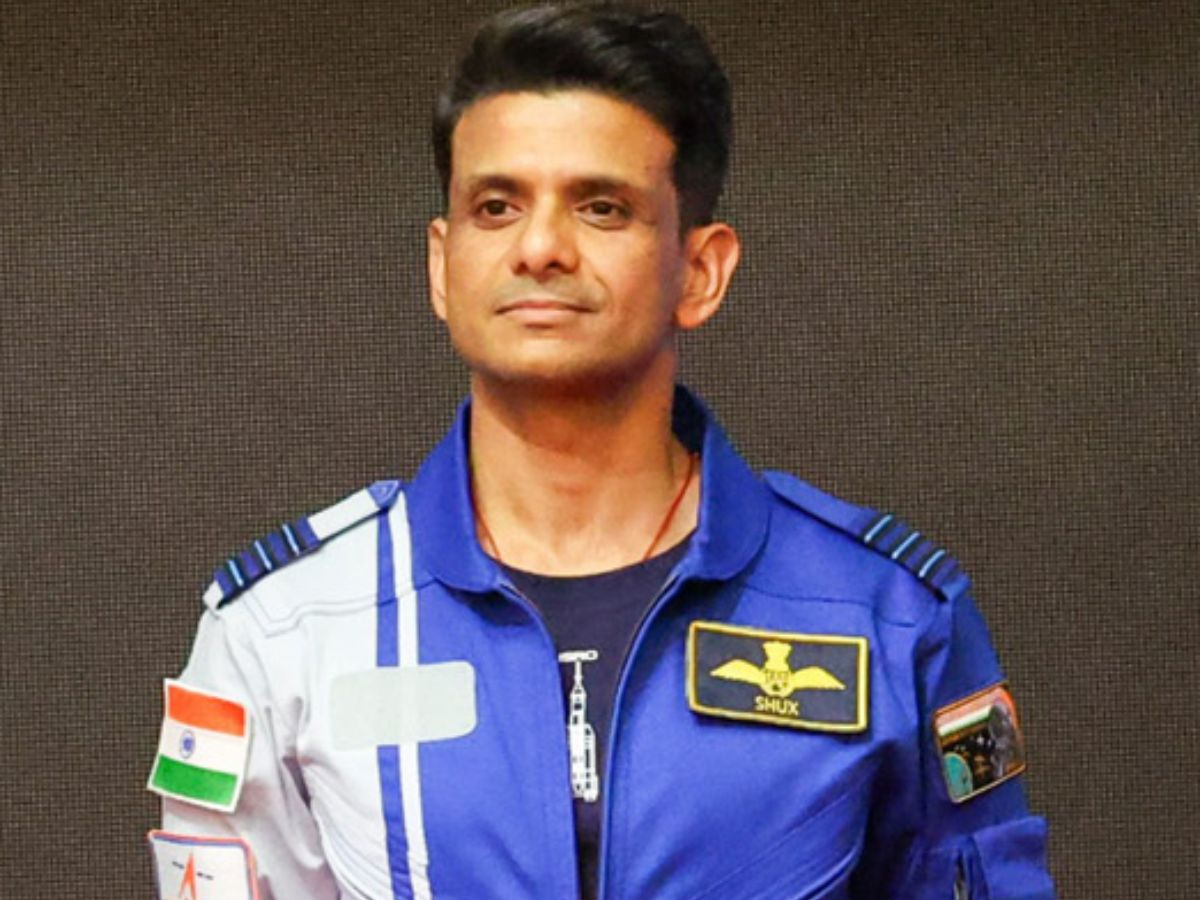
Astronaut Shubhanshu Shukla Returns to Earth (Image Credit - X)
Indian Air Force’s Group Captain Shubhanshu Shukla safely landed on Earth on Tuesday, splashing down off the California coast aboard the SpaceX Dragon capsule “Grace” as part of the Axiom‑4 mission. This milestone marks India’s first astronaut aboard the International Space Station (ISS) in last four decades. Shukla became only the second Indian to travel to space after Rakesh Sharma in 1984.
After the splashdown, the Axiom‑4 crew was transported to NASA’s Johnson Space Centre located in Houston. Shukla will further undergo a minimum 10-day quarantine and rehabilitation schedule. The medical teams will also assess his cardiovascular health, reflexes, bone density, balance, immune response, and mental well-being to help his body re-acclimate to Earth’s gravity after weeks in microgravity.
Shukla, an accomplished combat pilot with over 2,000 flying hours, was selected for India’s Gaganyaan programme in 2019. His mission aboard Axiom‑4 is likely to shape ISRO’s Gaganyaan‑4 programme which is scheduled for early 2027, aiming to have a budget of ₹600 crore (USD 2.32 billion), including astronaut training and mission logistics.
Stressing the importance of all aspects of Shukla’s mission, ISRO Chairman Dr V Narayanan stated that it would be instrumental in refining India’s human spaceflight programme and upcoming Bhartiya Antariksha Station, predicted for 2035.
Shukla is expected to return to India around August 17. Upon return, he is likely to be honoured by the Indian government, ISRO, and the Indian Air Force for his pioneering role. Shukla is also anticipated to take up ambassadorial roles, engaging with universities, students, researchers, and policymakers. His outreach is aimed at inspiring youth and promoting India’s growing capabilities in science, technology and space diplomacy.
Shukla’s research is spanning micro-algae cultivation, human physiology in microgravity, and AI-driven health monitoring and is poised to strengthen India’s scientific capabilities while reinforcing its role in global space research. The data generated will support advancements in space agriculture, enhance safety protocols for long-duration missions and contribute to strategies for mitigating space radiation risks.
India on Tuesday launched a scathing attack on Pakistan over the deadly Kabul airstrike that…
Rohit ‘Hitman’ Sharma set the internet buzzing ahead of IPL 2026 with a monster six…
From Single Malts To Smart TVs: NXT Fellows Witness India’s Industrial Revolution In Indri
A deep dive into India’s manufacturing future sees 65 global fellows exploring the craftsmanship of…
