
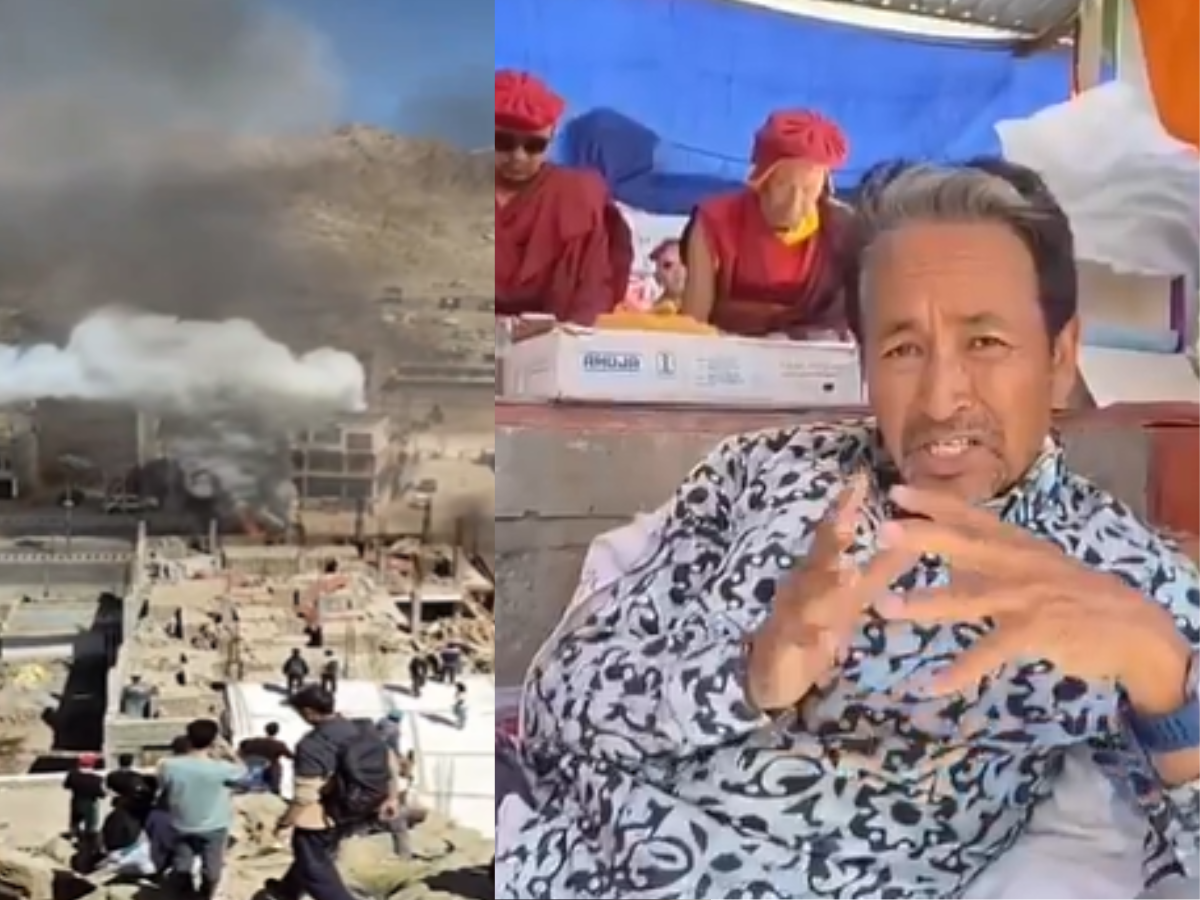
Climate activist Sonam Wangchuk ended his 15-day hunger strike on Wednesday after violent protests erupted in Ladakh. He staged the protest to demand statehood for Ladakh and the inclusion of the region under the Sixth Schedule of the Constitution. The movement escalated when large crowds in Leh took to the streets, leading to incidents of arson and vandalism. Protesters set parts of the city on fire, creating thick smoke and flames in the sky. The unrest highlighted the growing tensions in the region as leaders pressed for early talks with the Centre over constitutional safeguards for Ladakh.
Ladakh Apex Body Youth Wing Calls Protest After Hunger Strikers Hospitalised
The Ladakh Apex Body (LAB) youth wing called for mass demonstrations after the health of two activists deteriorated during a hunger strike. The two were part of a 35-day protest that began on September 10 and had to be moved to a hospital on Tuesday evening. Following this development, protests turned violent as several youths hurled stones at the BJP office and the Hill Council headquarters in Leh. The situation quickly spiraled into chaos with damage to property and clashes with police. Authorities faced difficulties in controlling the crowd as the violence spread in different parts of the city.
Administration Imposes Prohibitory Orders to Control Unrest
In response to the escalating situation, the local administration imposed prohibitory orders under Section 163 of the Bharatiya Nagarik Suraksha Sanhita (BNSS). The order banned gatherings of five or more people across Leh to prevent further violence. Security forces were deployed in large numbers to maintain order as the protests intensified. Police used tear gas shells and baton charges to disperse the mobs. The administration appealed for calm, urging people not to indulge in activities that could worsen the situation. The restrictions are expected to remain in place until peace is restored and negotiations with the Centre progress.
Sonam Wangchuk urged his supporters to stop violence, warning that unrest would harm the purpose of their movement. Addressing the protesters, he said the demand for statehood and Sixth Schedule status must remain peaceful to be effective. “I request the youth of Ladakh to stop the violence forthwith as it only causes harm to our cause and further deteriorates the situation. We do not want instability in Ladakh and the country,” he said. Earlier, Wangchuk posted a video on X, expressing sadness over the events in Leh and called the violent turn of the protest a major setback.
What Is the Sixth Schedule of the Indian Constitution?
The Sixth Schedule of the Indian Constitution provides special protections for tribal communities in northeastern states such as Assam, Meghalaya, Mizoram, and Tripura. It lays down unique governance rules to preserve their cultural identity and land rights. The schedule gives powers to autonomous district councils, which can make laws on land, forest, and village administration.
It also empowers the President and Governors to oversee its functioning. Additionally, it allows these councils to establish separate judicial systems and exercise financial authority. The demand in Ladakh seeks similar constitutional safeguards to protect the region’s unique tribal population and environment.