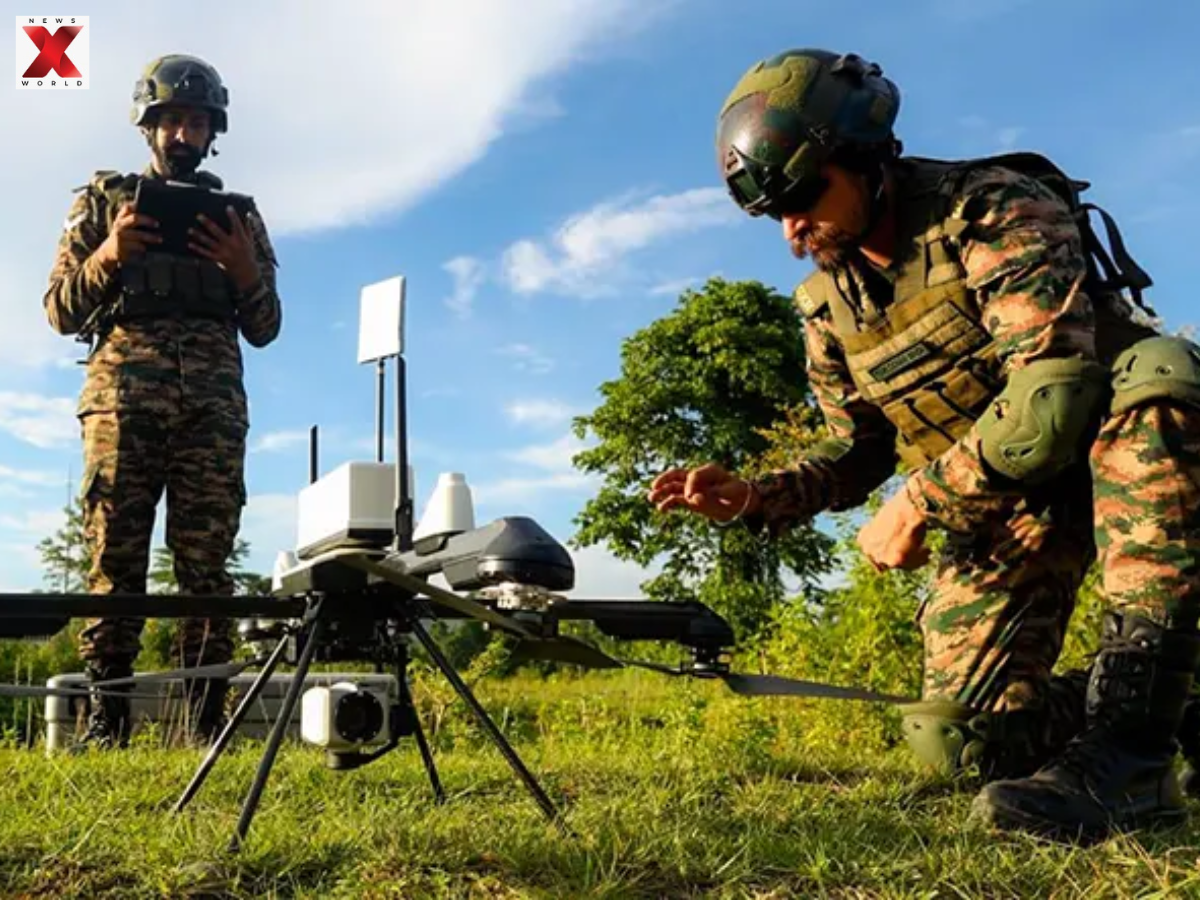
Anti-terror doctrine Prahaar launched (Image: X)
India’s first anti-terror policy: On Monday, February 23, the Union government rolled out India’s new anti-terror policy, calling it “PRAHAAR.” The policy covers everything from cross-border and cyber attacks to the growing threat of drones and new tech.
It’s pretty clear about one thing: threats don’t just come from across the border. India faces attacks on land, in the air, and even online. The government says they’ve built up security for key sectors, i.e. power, railways, aviation, ports, defence, and space.
The policy document, which went up on the Ministry of Home Affairs website, doesn’t link terrorism to any religion, nationality, or group.
Instead, it points out that India has been under attack from groups operating out of other countries for a long time. Groups like Al-Qaeda and ISIS get a specific mention. The document says they try to stir up trouble in India using sleeper cells, while other networks hatch plots from abroad.
One thing that really stands out is how these groups are using advanced tech at the border—especially drones, which is a big concern in Punjab and Jammu & Kashmir.
Terror groups aren’t just working alone anymore; they’re teaming up with organised crime for logistics and recruitment.
Online, the policy talks about how terrorists use social media, instant messaging, encrypted apps, the dark web, and even cryptocurrency wallets to spread propaganda, move money, and coordinate their activities, all while staying anonymous.
Countering these threats isn’t easy. The government says it’s tough to stop groups from getting their hands on dangerous materials: chemical, biological, radiological, nuclear, explosive, or digital. Drones and robots are a growing worry, too.
As part of the plan, the policy wants legal experts involved at every step, from registering cases to prosecution.
It also says national efforts need to be backed up by international cooperation, since groups abroad are relying more and more on local support, infrastructure, and know-how to pull off attacks.
When it comes to radicalisation, the Home Ministry says terror groups are still targeting young Indians. If someone gets pulled in, the police respond step by step, and legal action follows based on how far that person’s gone down the path of radicalisation.
Community and religious leaders are key here. The policy pushes for modern preachers and NGOs to help spread the word about the dangers of radicalisation and extremist violence.
There’s also a big focus on keeping young people engaged in positive ways and working inside prisons to prevent inmates from falling into radical groups plus, there are programs to help people turn away from extremism.
The policy flags technological advancements like encryption, the dark web, and crypto wallets, which have allowed the terror groups to operate anonymously.
“Disrupting and intercepting terrorist efforts to access and use CBRNED (Chemical, Biological, Radiological, Nuclear, Explosive, Digital) material remains a challenge for Counter Terrorism (CT) agencies.
The threat of state and non-state actors misusing drones and robotics for lethal purposes remains another area of concern, even as criminal hackers and nation states continue to target India through cyber-attack.”
It mentions that there has been a history of sporadic instability in the immediate neighbourhood of India, which has often given rise to ungoverned spaces. Besides, a few countries in the region have sometimes used terrorism as an instrument of state policy.
In the end, PRAHAAR sets out a roadmap to keep up with evolving threats by combining tech solutions, legal action, and a strong community effort.
(With inputs from ANI)
Tension in Team India? Gautam Gambhir confronts Abhishek Sharma after the IND vs SA Super…
The Game of Thrones prequel A Knight of the Seven Kingdoms has been renewed for…
Thousands in Iran received a mysterious alert warning that the US President is “a man…
