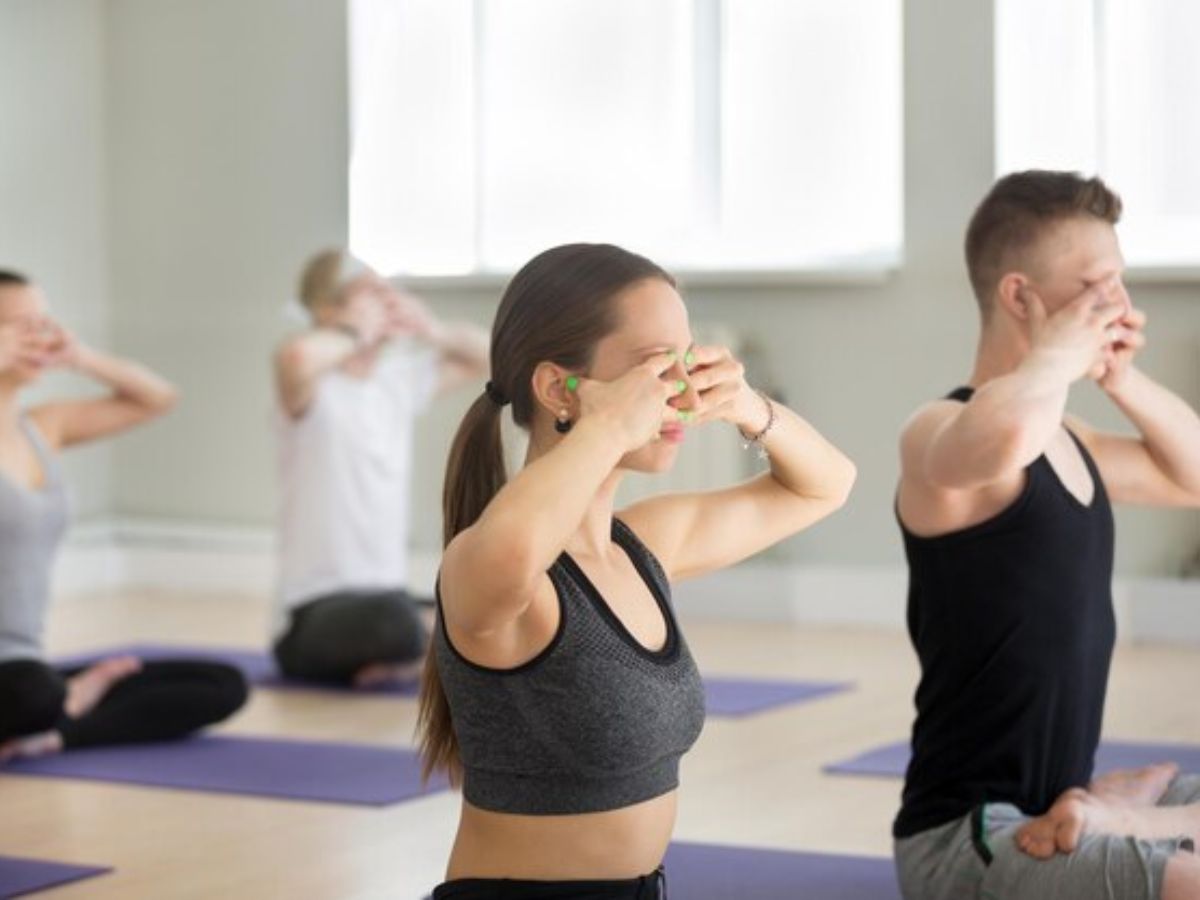
The human brain works based on the rhythmical electricity. These rhythms--commonly referred to as brain waves--govern perception, emotional response, attention, and decision-making. (Photo credit: freepik)
Bhramari pranayama is usually related to rest and peace of mind. While this description is accurate, it does not fully explain the profound neurological influence the practice can have when applied correctly. Calmness is not the final result but an apparent consequence of the more profound processes of control that take place in the brain and the nervous system. Its actual difference consists not in the practice, but in its application.
When Bhramari Pranayama is performed with precision–integrating posture, breath rhythm, sound vibration, and hand placement–it influences brain coherence, autonomic balance, and cognitive regulation in measurable and lasting ways. Misuse or incomplete use will reduce the practice to a temporary calming procedure unless proper use will convert it to a way of conscious control of the nervous system. Himalayan Siddhaa Akshar – Author, Columnist, Founder of Akshar Yoga Kendraa shares how Bhramari Pranayama helps in reducing stress and anxiety.
The human brain works based on the rhythmical electricity. These rhythms–commonly referred to as brain waves–govern perception, emotional response, attention, and decision-making. When neural rhythms become disorganized, the individual experiences anxiety, restlessness, emotional volatility, and mental fatigue. When these rhythms are synchronized and stable, clarity, focus, and emotional steadiness naturally emerge.
The constant rhythmic input is presented by Bhramari Pranayama. The humming sound produced internally is a vibratory signal that is interacting with the existing neural vibrations. As opposed to external sound, which has to be converted, sifted, and translated, internally generated vibration bypasses numerous stages of sensory multifaceted, and has a direct effect on neural timing and coordination.
Vibration of sound created during Bhramari goes through the cranial cavity, sinuses and bones of the face as well as tissues surrounding the head. These vibrations activate auditory processing, interoceptive, and emotional regulation neural pathways. Since the sound is generated inside a body, it is perceived by the brain as an internal stimulus or signal and not as an external stimulus.
This difference is essential. Internal vibration is processed differently by the nervous system. It encourages assimilation and not response. Circuitry that is used in the detection of threats or sensory alertness subside, whereas networks that are used in regulation and coherence get stronger.
Proper use of Bhramari has the position of hands being applied in deliberate manner thus minimizing outside sensory stimulus. Sensory points on the face are stabilized and the ears are closed softly, which means that the brain receives fewer external signals when the ears are closed. This sensory withdrawal allows internal signals–breath rhythm, vibration, and bodily awareness–to take priority.
The neuroscience research on sensory suppression shows that the reduction of the external stimuli maximizes the activity of the brain networks related to self-regulation and introspective awareness. Meanwhile, the background neural noise which is associated with distraction and rumination reduces. This is also done naturally in Bhramari by posture and the position of the hands instead of by means of a concentrated effort.
Breath Rhythm and Autonomic Balance
The major connection between conscious action and autonomic functioning is breath. Bhramari Pranayama involves slow breathing with a long exhalation of humming, which is a decisive factor in the work of the nervous system.
Prolonged exhaled stimulates the vagus nerve which controls the parasympathetic. This transition facilitates a non-dull relaxation. The heart rate variability is enhanced which indicates that the heart and the brain communicate better. Emotional processing centers get more stable and impulsive reactions to stress are decreased.
More to the point, it is not a state of suppression. The nervous system is not being induced to calmness. Rather it is steered towards coherence by rhythmic contribution.
Calm alertness is one of the greatest results of properly administered Bhramari. This condition contrasts with sedation or mental retardation. The level of awareness is high, with low reactivity. Attention becomes sustained rather than scattered. Emotional responses become measured rather than impulsive.
Cognitive resources are saved in this state. The brain does not spend as much energy in processing inner noise or emotional changes. This allows higher-order functions such as reasoning, creativity, and decision-making to operate more efficiently.
Nervous system becomes accustomed to repetition. When there is proper and regular practice of Bhramari, the brain will begin to accept the mode of vibratory-breath as a normal existence. Over time, this leads to durable changes in stress response, attention span, and emotional regulation.
The practice adapts the neural behavior of baselines instead of relief, which is short-lived. The reaction to stress is minimized. Healing of emotional disturbance is quicker. Mental clarity becomes easier to access.
Such adaptive process requires regularity and accuracy. Improper or unbalanced practice will result in inconsistent input, which restricts neurological transformation in the long term.
Himalayan Siddhaa Akshar stresses that the transformational effects of Bhramari are a result of a method rather than a result of effort. Straining the breath, forcing the sound, or applying excessive pressure disrupts neural harmony. Precision of posture, gentle hand placement, balanced breath, and smooth vibration allow the brain to reorganize itself naturally.
The rationale behind the practice is that it honors the smartness of the nervous system. It is a structured input and the response of biological processes to it is organic.
Modern life is characterized by constant sensory stimulation, information overload, and chronic cognitive demand. Constant internal coherence in the brain is hardly ever experienced. Over time, this leads to fatigue, anxiety, and reduced emotional resilience.
When practiced properly, Bhramari Pranayama provides an effective and scientifically-supported approach to overcome such effects, being non-invasive. It does not involve the use of external resources, medication, or complicated intervention. It relies on breath, sound, and posture to restore neural balance from within.
By integrating sound vibration, breath rhythm, sensory withdrawal, and intentional posture, Bhramari reorganizes neural activity toward coherence and stability. In doing so, it offers a pathway to sustained mental clarity, emotional balance, and cognitive resilience in an increasingly overstimulated world.
From earning just ₹500 a month to becoming one of India’s top comedians, Sunil Grover’s…
Canadian Prime Minister Mark Carney will visit India from February 26 to March 7 as…
Iran warns any US strike, even limited, would be an act of aggression, vows ferocious…
