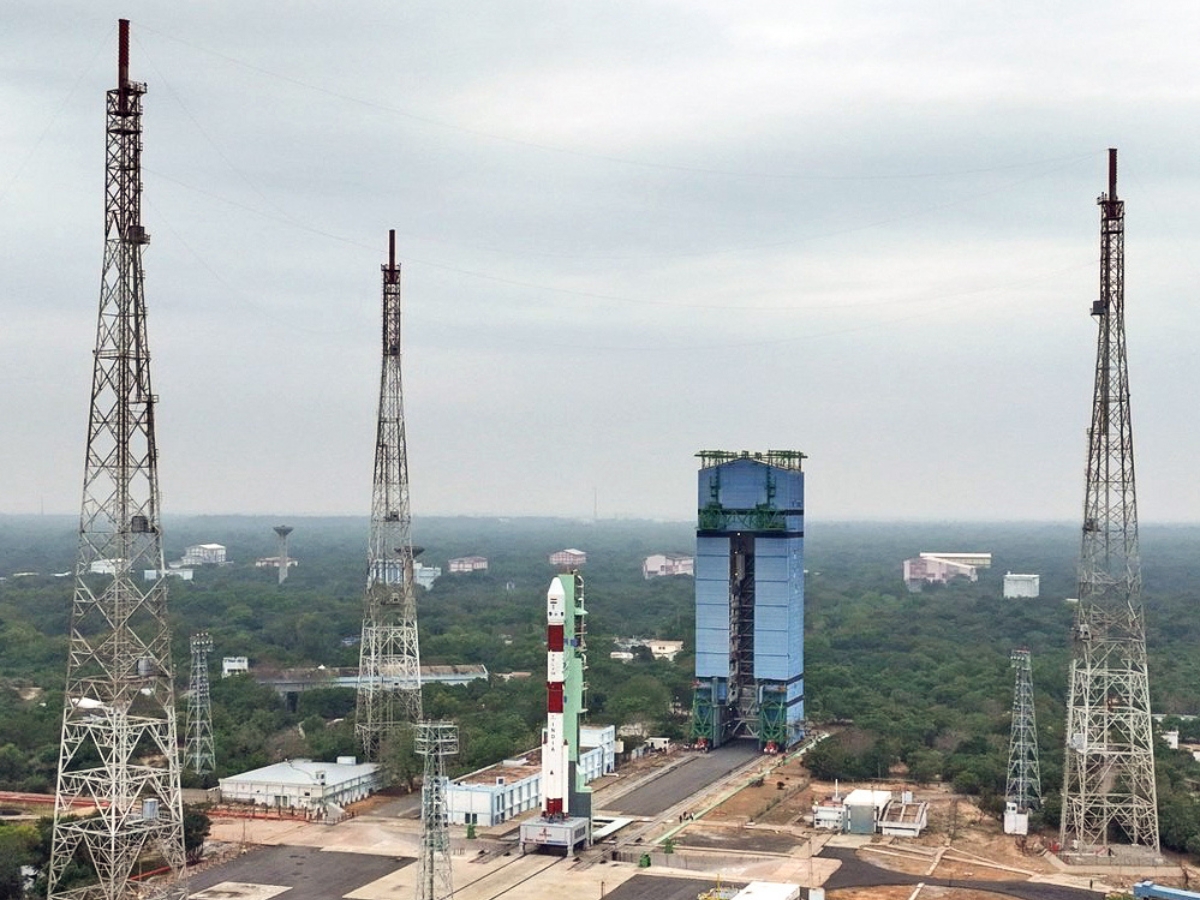
ISRO’s PSLV-C62 mission hit an anomaly during PS3 burn, with a flight path deviation observed, prompting detailed analysis. Photo: ANI.
The Polar Satellite Launch Vehicle PSLV-C62 mission carrying the DRDO’s ‘Anvesha’/EOS-N1 satellite and 15 co-passenger satellites launched by India on Monday encountered an anomaly during the end of the PS3 burn stage with ISRO chairman V Naryanan stating that “a deviation in the vehicle’s flight path” was observed.
“A detailed analysis has been initiated,” the Indian Space Research Organisation (ISRO) posted on X.
ISRO Chairman V Narayanan said a disturbance was observed in the vehicle at the end of the third stage, which was otherwise proceeding as expected.
“Today, we have attempted the PSLV C62 / EOS – N1 Mission. The PSLV vehicle is a four-stage vehicle with two solid stages and two liquid stages. The vehicle’s performance near the end of the third stage was as expected.
(However), near the end of the third stage, we are seeing increased disturbance in the vehicle. Subsequently, a deviation in the vehicle’s flight path is observed. We are analysing the data and will come back at the earliest,” Narayanan said.
This is ISRO’s first major launch of 2026. The mission aimed to place an Earth observation satellite into orbit from the First Launch Pad (FLP) at Sriharikota.
The mission was carried out by NewSpace India Limited and represents the ninth dedicated commercial mission to build and launch an Earth Observation satellite.
For the first time, a single Indian private company, Dhruva Space, based in Hyderabad, contributed seven satellites to the mission.
Chaitanya Dora Surapureddy, CFO and Co-founder of Dhruva Space, said they also launched four satellites that they built.
“We launched four satellites that we have built, three for customers and one for us, and we also help other companies with part of the integration of the satellite onto the rocket. Essentially, a total of nine of our systems, which we have built, are going onto the rocket. So, quite exciting that that’s a good number,” he said.
Surapureddy said their satellites are for low-data-rate communication, which can be utilised by amateur radio operators.
“The satellites that we launched are all for low data rate communication. Amateur radio operators can utilise it towards that, and also a good demonstration for these satellites, and also for low data rate communication that can be done,” he added.
The launch took place from the Satish Dhawan Space Station in Sriharikota, Andhra Pradesh, at 8:55 AM IST.
The mission deployed the next-generation communication satellite designed to provide high-speed cellular broadband directly to smartphones worldwide. The BlueBird Block-2 spacecraft would be the heaviest payload to be launched into Low Earth Orbit in the history of the LVM3 rocket. (ANI)
(With inputs from ANI)
Zubair Amin is a Senior Journalist at NewsX with over seven years of experience in reporting and editorial work. He has written for leading national and international publications, including Foreign Policy Magazine, Al Jazeera, The Economic Times, The Indian Express, The Wire, Article 14, Mongabay, News9, among others. His primary focus is on international affairs, with a strong interest in US politics and policy. He also writes on West Asia, Indian polity, and constitutional issues. Zubair tweets at zubaiyr.amin
The local community and the loved ones of Ganti Abhishek are grieving the early demise…
New York City Mayor Zohran Mamdani met with US President Donald Trump at the White…
The violence highlights the weak security conditions in the Afghanistan-Pakistan border which has been a…
