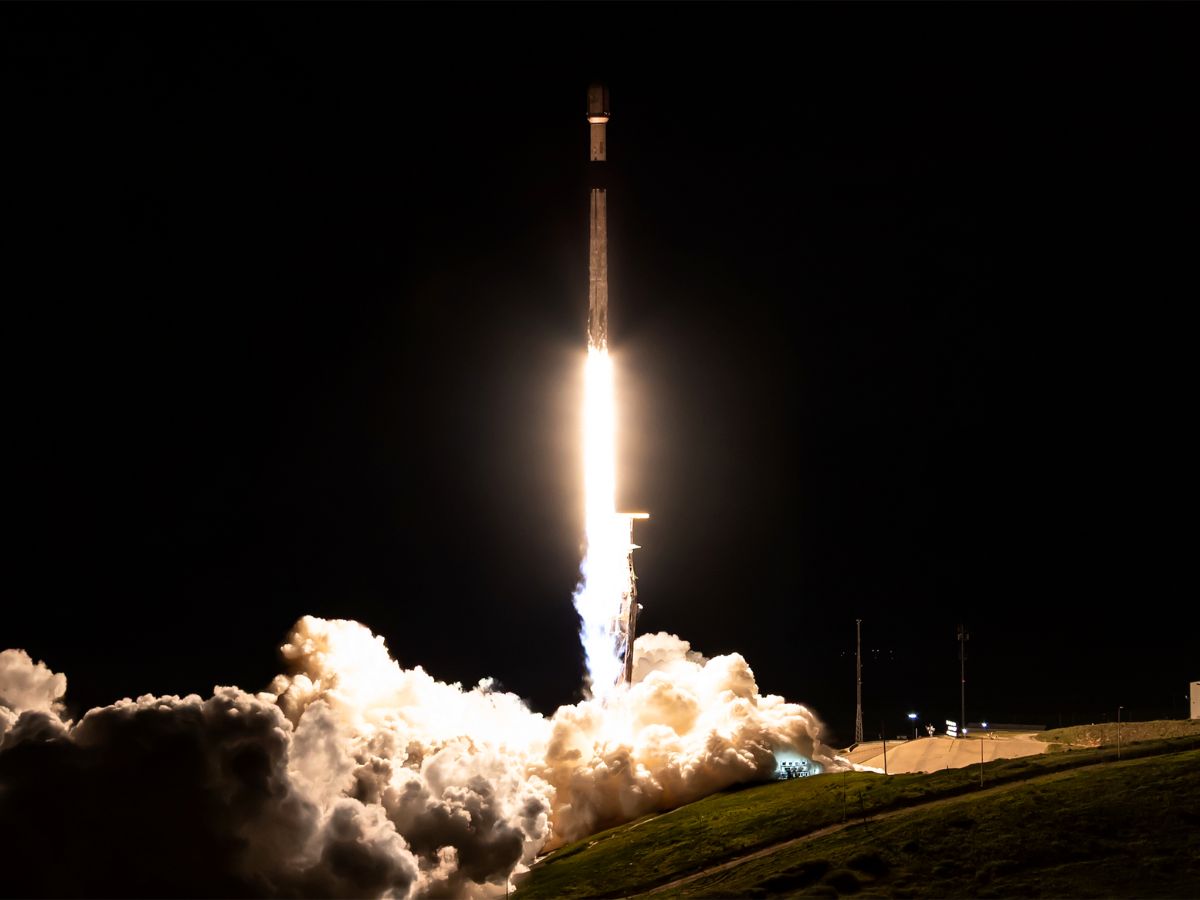
SpaceX launches NROL-105, its first national security mission of 2026. (Photo: X/@SpaceX)
SpaceX opened its 2026 national security launch schedule on Friday night by sending a classified payload of U.S. intelligence satellites into orbit for the National Reconnaissance Office (NRO).
The mission, designated NROL-105, was carried aboard a Falcon 9 rocket from Vandenberg Space Force Base in California.
The launch took place at 11:39 p.m. EST on January 16, signalling another step in the U.S. government’s push to modernise its space-based surveillance systems using smaller, rapidly deployable satellites.
NROL-105 forms part of the NRO’s expanding “proliferated architecture”, a satellite strategy that moves away from reliance on a handful of large, expensive spacecraft. Instead, the programme focuses on deploying large numbers of compact satellites that can be launched quickly, replaced easily and maintained at lower cost.
This was the 12th mission linked to the new architecture, which is designed to ensure consistent global coverage and maintain intelligence capabilities even if individual satellites are disrupted.
By spreading surveillance functions across hundreds of satellites, the U.S. gains the ability to track developments more frequently, collect data faster and reduce the risk of blind spots. The distributed system also increases resilience against potential threats to space assets, a growing concern amid rising global military competition.
NRO Director Chris Scolese has previously said that this approach enables faster delivery of intelligence to decision-makers, improving response times across defence and security agencies.
The satellites used in the proliferated architecture are being developed by SpaceX in partnership with Northrop Grumman, with Falcon 9 rockets handling all launches so far. The first mission under this framework was conducted in May 2024, and the programme has since expanded steadily.
As with most NRO operations, specifics such as satellite count, orbital paths and deployment timing remain undisclosed.
After completing the launch, the Falcon 9’s first stage returned safely to Earth, touching down at Vandenberg roughly seven and a half minutes after liftoff. The booster was flying for only the second time, highlighting SpaceX’s continued use of reusable hardware for high-priority government missions.
The company ended its live broadcast shortly after the landing, a standard practice for classified launches.
NROL-105 marked SpaceX’s seventh launch of 2026. While several missions this year have supported the firm’s Starlink internet network, defence-related launches continue to underline SpaceX’s growing importance to U.S. intelligence and military space operations.
With this mission, SpaceX further cements its role as a central player in shaping the future of America’s security infrastructure in orbit.
ALSO READ: What Happened To PSLV-C62 Carrying DRDO’s Anvesha Satellite? ISRO Chairman Gives Big Update
Sofia Babu Chacko is a journalist with over five years of experience covering Indian politics, crime, human rights, gender issues, and stories about marginalized communities. She believes that every voice matters, and journalism has a vital role to play in amplifying those voices. Sofia is committed to creating impact and shedding light on stories that truly matter. Beyond her work in the newsroom, she is also a music enthusiast who enjoys singing.
Iran announced the launch of Operation True Promise-4, claiming large-scale drone strikes against US and…
The issue of the vacuum in the leadership within Tehran is one that is being…
Holi is one of those rare celebrations where joy is quite literally worn on the…
