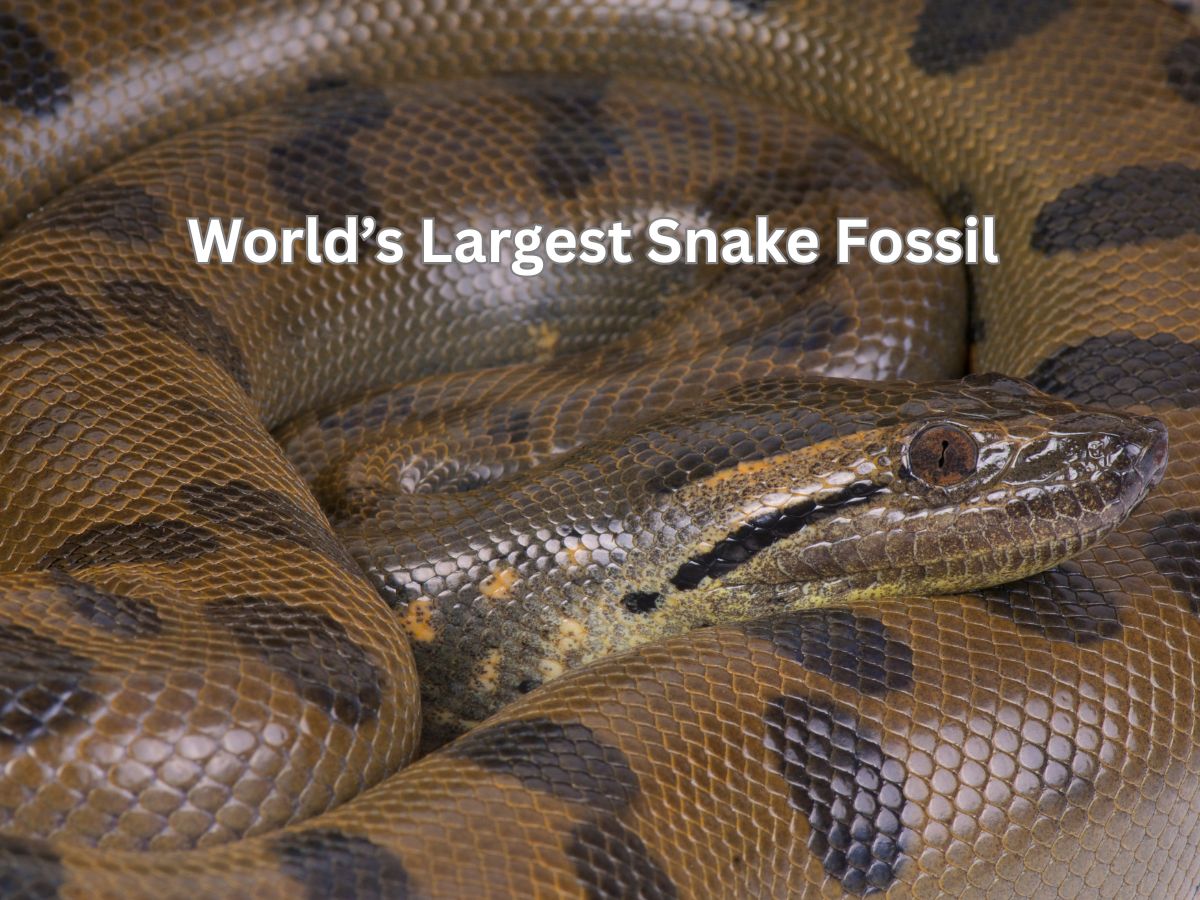
The Indian new revelation has stunned scientists and mythology enthusiasts alike. Researchers from IIT Roorkee have recently discovered the fossil of a prehistoric serpent named Vasuki Indicus, reportedly 49 feet long and almost 1,000 kilograms in weight.
If this were not big enough, consider that before, Titanoboa had been accepted as the largest snake, at 42 feet. The discovery of Vasuki Indicus thus corresponds to India’s possession of the largest snake to have ever existed on Earth.
The fossil was found along the coastal area of Kutch in Gujarat, which, since that moment, has turned out to be a land of interest for both paleontologists and mythology enthusiasts. The other distinguishing feature has linked this discovery to the Indian scriptures. The serpent has been named after Vasuki Naag, the mythological serpent which is usually depicted coiled around Lord Shiva’s neck and remembered as the cosmic rope in Samudra Manthan in Hindu mythology.
Hence, Vasuki Indicus was kept as per the belief of scientists around 47 million years ago, surviving a catastrophic event that exterminated the dinosaurs. Fossil evidence shows that early snakes appeared first in the ocean 160 million years ago and slightly transformed to thrive on land.
Dr. Oriana Aragon, of the research team, explained that such a monumental finding merged science and mythology: thus giving substance to the ancient Indian texts, which did describe the blazing gigantoid serpent.
The discovery of Vasuki Indicus not only reshapes our understanding of prehistoric reptiles but also beautifully weaves together India’s cultural heritage and cutting-edge paleontology, a true meeting of myth and science.
Shubhi is a seasoned content writer with 6 years of experience in digital media. Specializing in news, lifestyle, health, sports, space, optical illusions, and trending topics, she crafts engaging, SEO-friendly content that informs and captivates readers. Passionate about storytelling, Shubhi blends accuracy with creativity to deliver impactful articles across diverse domains.
For over six decades, Metformin has remained the go-to treatment for Type 2 Diabetes, valued…
Petrol Price Today: Petrol prices have risen sharply by over ₹5 per litre in several…
Boman Irani humorously questioned Donald Trump’s delayed concern for Iranians, asking “Where were you when…
