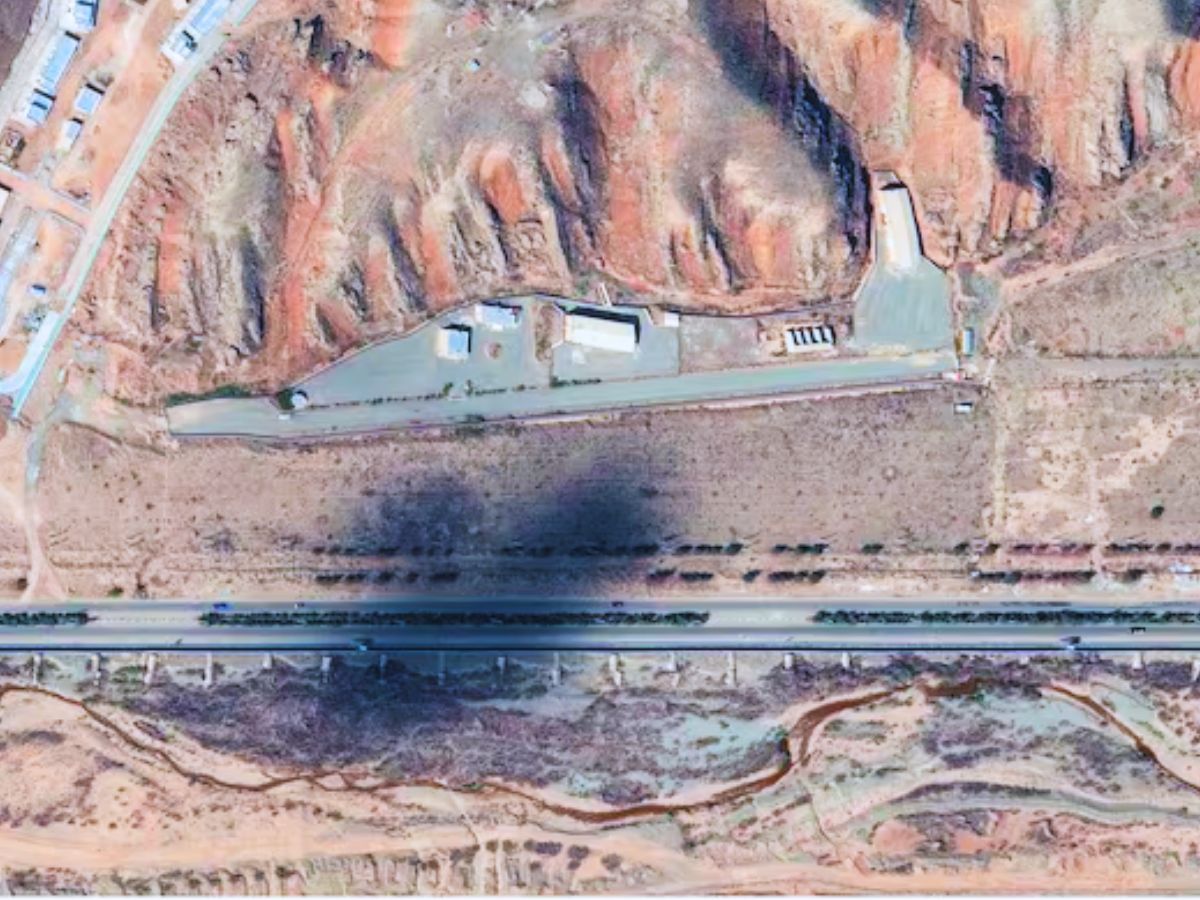
Satellite images show Iran fortifying key nuclear sites.(Photo: X/reuters)
As tensions escalate between Iran and the United States, new satellite imagery shows Tehran racing to fortify key nuclear facilities, transforming sensitive sites into hardened bunkers beneath layers of concrete and earth.
According to fresh analysis by the Institute for Science and International Security (ISIS), high-resolution images reveal rapid construction activity at major nuclear-linked locations, shows what experts describe as their “strategic significance” amid rising military pressure and ongoing diplomatic negotiations.
At the Parchin military complex, about 30 kilometres southeast of Tehran, imagery shows the newly identified Taleghan 2 facility encased in a thick concrete shell and gradually buried under soil.
Satellite images from mid-February indicate that once the concrete structure hardened, large volumes of earth were moved over the site, leaving only limited entry points visible. Earth piles accumulating on nearby hills suggest additional overburden is being added to shield the facility from potential aerial strikes.
The Washington-based watchdog described the structure as resembling a “concrete sarcophagus,” noting that the rapid fortification signals the facility’s importance to the Iranian regime, though its exact purpose cannot be determined from imagery alone.
Parchin has long been one of Iran’s most sensitive military sites. Western intelligence agencies have previously alleged that activities related to nuclear weapons research occurred there more than two decades ago claims Tehran has consistently denied.
New images also show reinforced tunnel portals beneath Kolang-Gaz La Mountain near the Natanz nuclear facility, one of Iran’s primary uranium enrichment sites.
Concrete is reportedly being poured over a western tunnel entrance, while rock and soil have been levelled at an eastern portal to increase overburden additional layers designed to absorb the impact of airstrikes.
Analysts say these measures significantly enhance protection for underground infrastructure. Smaller vehicles spotted near the entrances suggest interior work may also be underway. In the past, Iran has linked construction in the area to rebuilding advanced centrifuge assembly facilities damaged in earlier attacks.
At the Esfahan nuclear complex, satellite images from early February indicate attempts to conceal tunnel entrances. The site, another major component of Iran’s nuclear programme, has previously been targeted in military strikes.
While it remains unclear how effective these fortifications would be against high-powered bunker-busting munitions, the upgrades reflect a broader pattern of defensive preparations across multiple nuclear-linked facilities.
Beyond structural reinforcements, Iran has also upgraded air defence systems around Parchin. Satellite imagery shows reactivation of an abandoned anti-aircraft artillery position and the addition of new defensive emplacements in recent months.
The deployment of anti-aircraft systems further strengthens the protective posture of the site, signalling concerns about potential aerial attacks as US officials continue to warn of military consequences if nuclear talks collapse.
The fortification efforts come as Washington and Tehran remain engaged in negotiations over Iran’s nuclear programme. US officials have indicated that new proposals from Tehran are expected in the coming weeks, even as the United States maintains military pressure in the region.
The latest satellite findings highlight a dual-track approach: diplomatic engagement on one hand, and rapid infrastructure hardening on the other.
While Iran insists its nuclear activities are peaceful and denies pursuing atomic weapons, the construction surge at Parchin, Natanz and Esfahan is likely to intensify scrutiny from Western governments.
As US tensions grow, satellite imagery suggests Tehran is preparing its most sensitive facilities to withstand potential strikes reshaping parts of its nuclear infrastructure into fortified bunkers beneath concrete and earth.
Sofia Babu Chacko is a journalist with over five years of experience covering Indian politics, crime, human rights, gender issues, and stories about marginalized communities. She believes that every voice matters, and journalism has a vital role to play in amplifying those voices. Sofia is committed to creating impact and shedding light on stories that truly matter. Beyond her work in the newsroom, she is also a music enthusiast who enjoys singing.
F1 News: Max Verstappen who has won four world championships has expressed his disapproval of…
HPBOSE Class 10, 12 Result 2026: Expected Date, Time And How To Check Scores
The Himachal Pradesh Board of School Education (HPBOSE), Dharamshala, is expected to declare the HP…
Emmanuel Macron hails India’s digital revolution, praises India Stack, financial inclusion, AI governance, and tech…
