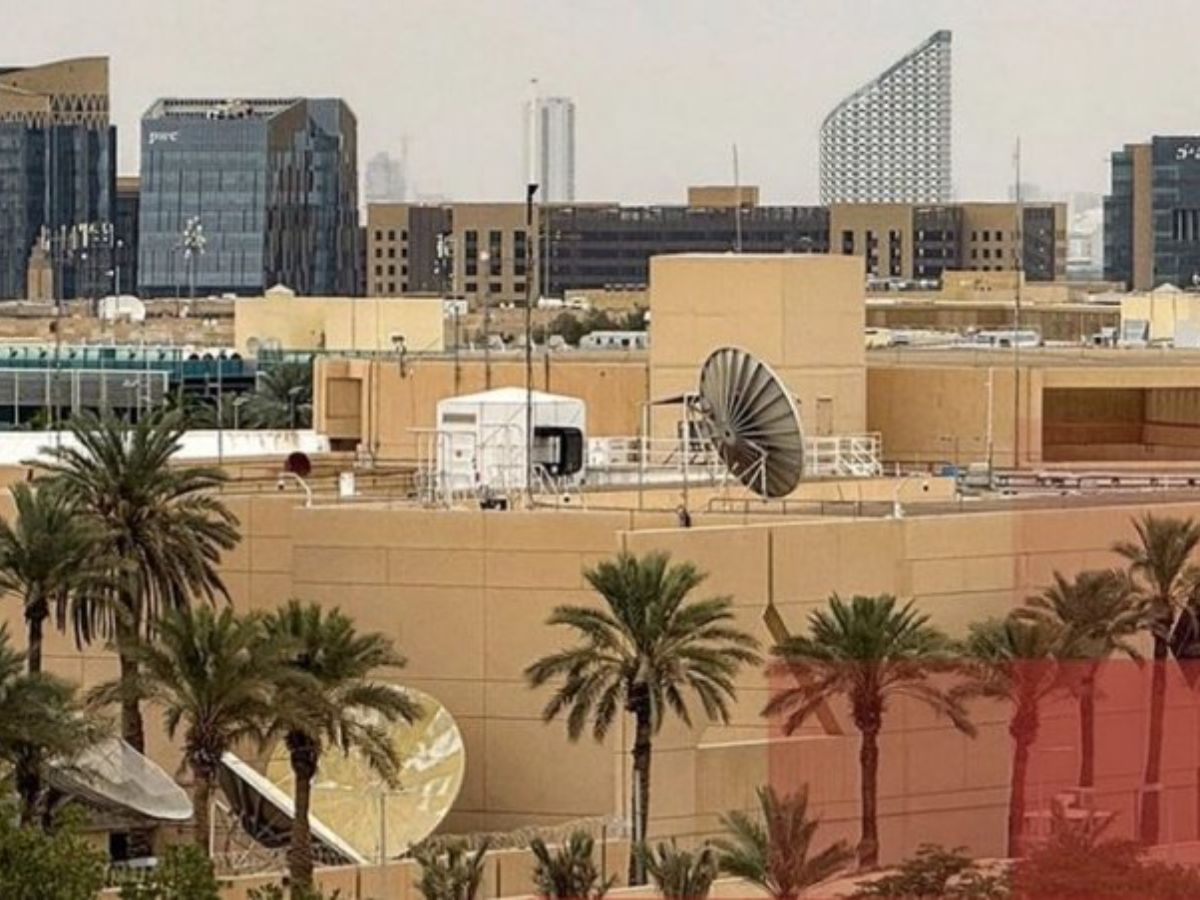
How did Iran attack the US embassy in Saudi (Image: X/ ShieldOfTruth_)
A coordinated drone attack on the US Embassy in Saudi Arabia demonstrated Iran’s capability and how vulnerable even some of the most secured diplomatic zones are. The new evidence shows that two UAVs targeted the embassy in Riyadh with only a one-minute gap between strikes, causing significantly more destruction than initially reported and impacting a sensitive intelligence facility located inside.
The March 3rd drone attack against the US embassy has become one of the most substantial escalations in the ongoing conflict involving the US, Iran, and Israel. The attack also represents a larger campaign of attacks on the US and its allies throughout the Middle East.
According to officials, the first drone successfully circumvented Saudi air defenses and crashed into the US Embassy compound located in Riyadh’s heavily fortified Embassy District. Roughly one minute later, the second drone followed the same flight path as the first and impacted the same site, resulting in another explosion.
This timing made the attacks significantly worse than they would have been without the first explosion, followed by police, ambulances, and fire crews arriving on the scene. Reports indicate that the second drone instead entered the embassy through the opened floor areas and/or doors, loosely correlating with the first explosion.
The embassy houses several hundreds of employees who typically work in the building during business hours.
Another shocking revelation was that one of the attacks on the embassy resulted in serious damage to a Central Intelligence Agency (CIA) facility located within the embassy. The damage was severe due to damaged infrastructure and included physical damage to at least three floors of the physical structure of the embassy.
According to Government officials, the bombs that exploded in the embassy caused mass fires causing “irreversible damage” to multiple areas of the embassy and creating an unprecedented amount of damage. The attacks occurred at night which would have prevented any casualties from occurring otherwise however Authorities stated that had the attacks occurred during working hours there likely would have been.
Separately, multiple drone attacks were also directed at the city of Riyadh, with some of the drones intercepted by Saudi air defence systems. Active incendiary debris from the confirmed interceptions fell in/around civilian populated areas of the City of Riyadh including approximately 1/2 mile from the preschool.
Reports say that it is believed that one of the targets of drones was the residence of the chief American diplomat in Saudi Arabia; it is located just a few hundred feet from the embassy, which raises significant questions about both the size of this attack and its purpose.
The strike against the American embassy was not a one-time incident. Since the outbreak of conflict on February 28, Iran has conducted a large number of attacks against American bases and diplomats throughout the Middle East.
Diplomatic missions have also been attacked by drone and missile strikes in cities such as Baghdad, Dubai, Kuwait and Irbil. While many of those strikes did not produce American casualties, the larger offensive as a whole has produced at least seven dead American service members and many hundreds of injured; it has also caused billions of dollars’ worth of destruction to U.S. military equipment.
In addition to attacking United States diplomatic facilities, Iran has targeted U.S. military installations in Saudi Arabia. At the Prince Sultan airbase, attacks by drone and missile have caused damage to aircraft, including a very high-value E-3 AWACS (Airborne Warning & Control System) aircraft and refueling aerial tankers.
Reports said about a dozen troops were wounded in these attacks, showing how the conflict is expanding beyond symbolic targets to critical military infrastructure. The scale and precision of these strikes highlight Iran’s continued ability to hit strategic locations despite ongoing retaliation.
Also Read:
Khalid Qasid is a media enthusiast with a strong interest in documentary filmmaking. He holds a Master’s degree in Convergent Journalism from AJK MCRC. He has also written extensively on esports at Sportsdunia. Currently, he covers world and general news at NewsX Digital.
Firefighters from multiple departments are battling a major fire at a commercial storage facility near…
Police in Strafford County, NH, responded to an active shooter firing high-caliber weapons from a…
IPL 2026 Orange Cap Leaderboard After RR vs GT: Sameer Rizvi Swells Lead— Check Top 10 List
Who leads the IPL 2026 Orange Cap race? Check the latest leaderboard as of April…
