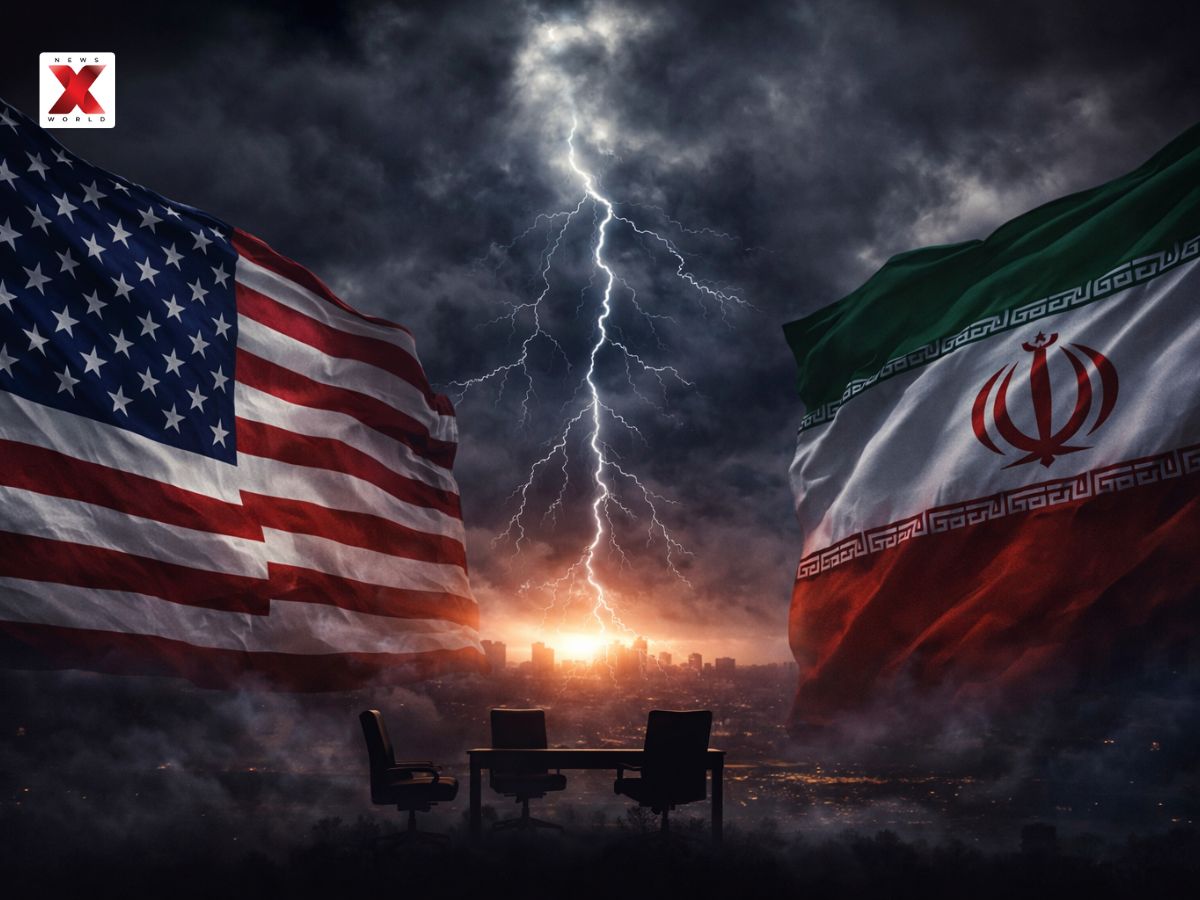
Iran Halts US Contacts, Signals Possible Hormuz Blockade (Photo Credits: AI)
Iran has reportedly suspended indirect message exchanges with the United States through mediators, linking the decision to ongoing Israeli military operations in Lebanon. The move comes as diplomatic efforts to end the nearly three-month-long regional conflict face fresh uncertainty, raising concerns about further escalation across the Middle East. According to Iran’s Tasnim news agency, Tehran’s negotiating team has stopped exchanging messages with Washington through intermediaries. Iranian officials reportedly argue that continued military action in Lebanon has undermined conditions necessary for diplomatic engagement.
The development marks a significant setback for efforts aimed at reducing tensions between the two sides and finding a political path to end the conflict.
Tasnim reported that Iran and allied groups within the so-called “Resistance Front” have discussed measures to increase pressure on Israel and its supporters.
Among the options reportedly under consideration are efforts to disrupt movement through key maritime routes, including the Strait of Hormuz and the Bab el-Mandeb Strait, two of the world’s most strategically important shipping corridors.
The Strait of Hormuz is a critical passage connecting the Persian Gulf to global markets. A significant share of the world’s oil and liquefied natural gas exports passes through the narrow waterway every day.
Any disruption to shipping in the region can have immediate consequences for global energy markets, fuel prices and international trade flows. Analysts have repeatedly warned that instability around the Strait of Hormuz could trigger sharp increases in oil prices and affect economies far beyond the Middle East.
Attention has also shifted to the Bab el-Mandeb Strait near Yemen, another major maritime chokepoint linking the Red Sea to the Gulf of Aden and the Suez Canal.
If the conflict expands, shipping routes through the area could face additional security challenges, potentially affecting trade between Asia, Europe and Africa. The waterway has become increasingly important amid ongoing regional tensions and disruptions to international shipping.
Iranian Foreign Minister Abbas Araqchi warned that actions on one front of the conflict could have consequences across the broader region.
He stated that any violation of ceasefire understandings would carry wider implications and said the United States and Israel would bear responsibility for the consequences of further escalation.
His remarks came amid continued fighting and growing concerns that the conflict could spread beyond its current boundaries.
The conflict, which began in late February, has already had a significant economic impact. Rising geopolitical tensions have contributed to volatility in global energy markets and increased concerns over supply chain disruptions.
Energy traders and international observers continue to monitor developments closely, particularly any changes affecting major shipping lanes and oil-export routes.
Iranian officials have reiterated that meaningful negotiations cannot resume unless military operations in Gaza and Lebanon stop and disputed areas in Lebanon are vacated. According to Tasnim, Tehran’s position remains that diplomatic engagement will not move forward until these demands are addressed.
(Via Agency Inputs)
‘Wait For 2 Days’: K Annamalai Responds To BJP Exit Buzz
Speculation over K. Annamalai’s political future intensified after the former Tamil Nadu BJP chief asked…
India May Revisit Whisky Tariff Cuts Over UK Steel Plan
India has warned it may reconsider tariff concessions, including cuts on Scotch whisky duties, under…
Siddaramaiah’s Son to Become Deputy CM?
Yathindra Siddaramaiah has dismissed speculation about becoming Karnataka's Deputy Chief Minister, saying "No" when asked…
