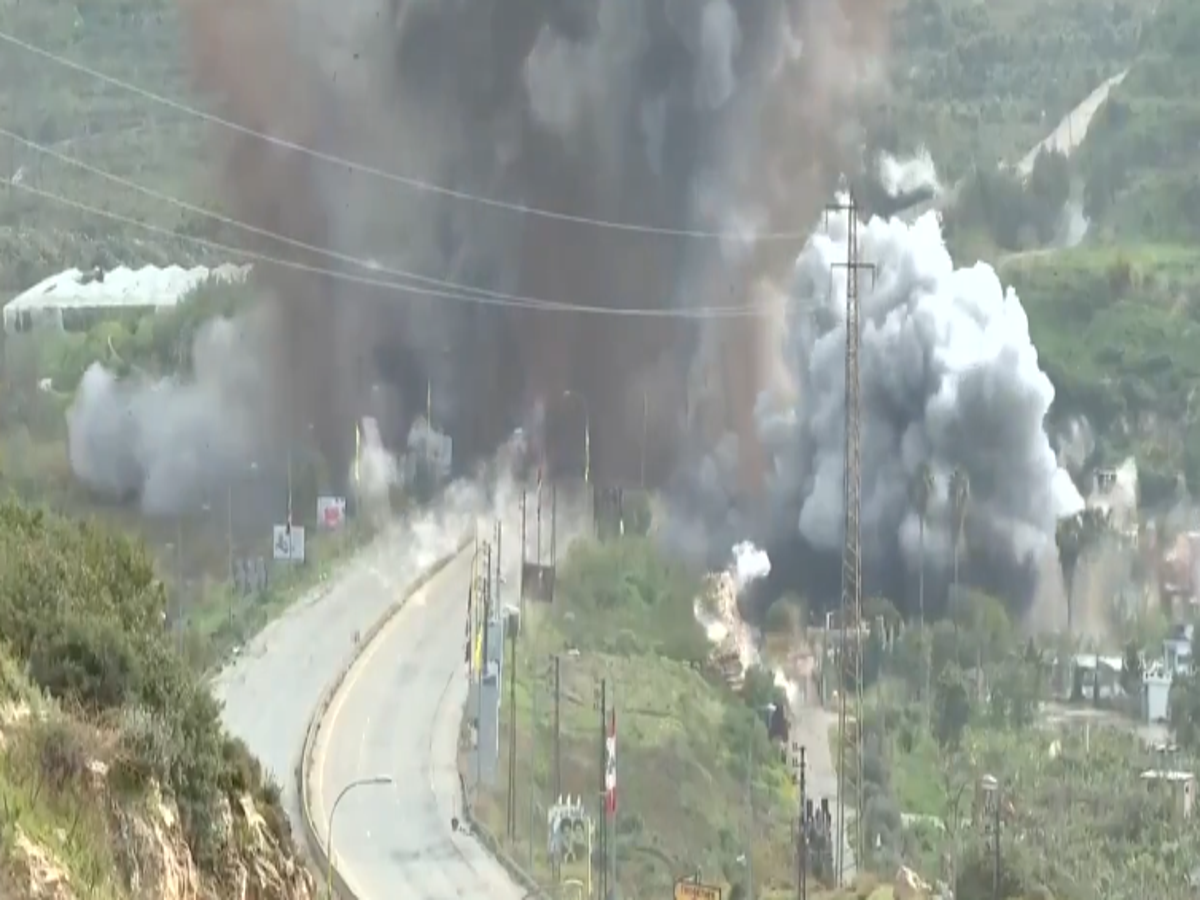
Israel bombs the Al-Qasmiya Bridge (Image: X)
Israel has expanded its offensive against Hezbollah in Lebanon by targeting and destroying one of the most significant routes linking southern Lebanon to the rest of the country, a bridge known as Qasmiya Bridge. This milestone represents a considerable ramping-up of the ongoing military operation.
Every report confirms that this attack was carried out by air on a bridge in the vicinity of the coastal town of Tyre but nevertheless inflicts significant damage on a road that thousands of people, as well as aid deliveries, rely upon to get through southern and central Lebanon.
According to officials, the bridge is located through farmlands and serves as one of the major highways between central and southern Lebanon. The loss of this bridge is an extraordinary blow to access and mobility within the region.
The Israeli military previously mentioned their plan to target structures like Qasmiya Bridge because they were used by Hezbollah to supply fighters with munitions and to move troops and supplies into combat areas. Prior to carrying out its attack, the Israeli military even indicated its intent to strike at the Qasmiya Bridge as part of a much larger operational plan.
Israel has stated its target for the airstrikes as an attempt to limit Hezbollah’s capabilities to operate across the Lebanese-Israeli border. They also expanded their ground forces in southern Lebanon, indicating they are still in their campaign against Hezbollah. According to Chief of Staff Eyal Zamir, “the operation against Hezbollah has just begun. This is a prolonged operation.”
The strikes have sparked firestorms of criticism from Lebanese officials, including warnings from President Joseph Aoun that attacking infrastructure may be construed as a violation of international law and indicate preparations for a larger ground invasion.
The airstrikes have created humanitarian issues by destroying bridges and other forms of infrastructure. Reports of cutting off key transportation routes could leave communities isolated or possibly prevent humanitarian assistance from being delivered to civilians and could intensify the suffering of individuals who are already experiencing suffering due to the current conflict, according to some estimates, more than 1 million individuals have been displaced as a result of the ongoing fighting and evacuation orders.
The latest round of escalation stems from the larger, regional conflict that began when Hezbollah began conducting attacks inside Israeli territory earlier this month, which prompted significant retaliation from Israel. Since then, both parties have continued to conduct military operations within the region (airstrikes, missile strikes, ground combat, etc.) across the border.
Khalid Qasid is a media enthusiast with a strong interest in documentary filmmaking. He holds a Master’s degree in Convergent Journalism from AJK MCRC. He has also written extensively on esports at Sportsdunia. Currently, he covers world and general news at NewsX Digital.
The Strait of Hormuz serves as a vital gateway for global energy shipments and has…
A senior spokesman for Iran’s Islamic Revolutionary Guard Corps mocked US President Donald Trump using…
Iran and the United States exchanged sharp warnings, signalling rising tensions amid the ongoing conflict.
