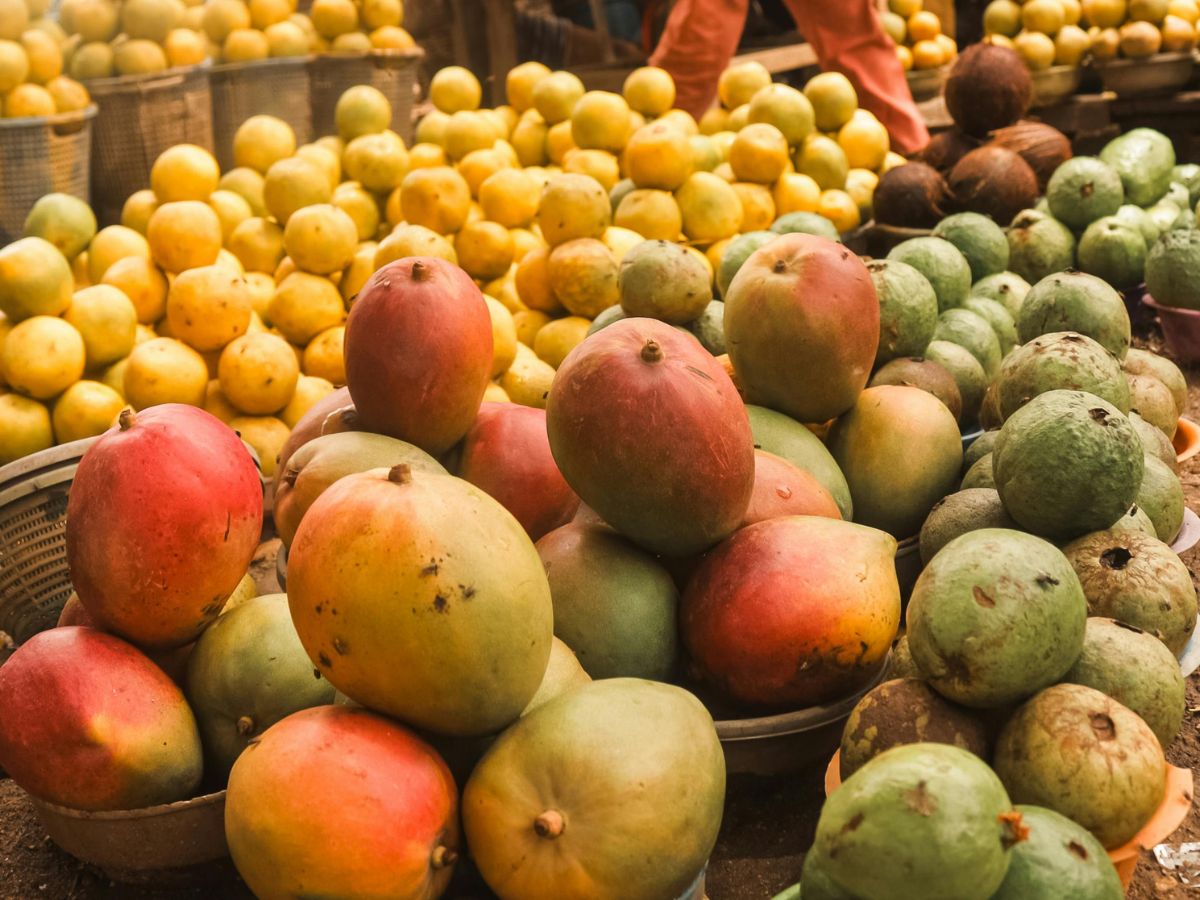
'No Ban' On Indian Mango Import, Nepal Clarifies Amid Rumours Of Trade Restrictions (Via AI)
The confusion surrounding Indian mango exports to Nepal has been put to rest after Nepal formally clarified that no ban has been imposed on mango imports from India. The statement comes after reports circulated in sections of the media and on social platforms claiming that Nepal had restricted imports due to concerns over pesticide residues and quarantine regulations. Both governments have now confirmed that trade in Indian mangoes is continuing, subject to standard phytosanitary requirements and documentation procedures.
The Ministry of Agriculture and Farmers Welfare, citing Nepal’s Plant Quarantine and Pesticide Management Center, stated that reports suggesting a ban on Indian mangoes were incorrect.
According to the clarification, imports remain fully permitted as long as exporters comply with prescribed phytosanitary norms. Import permits and release orders continue to be issued after authorities verify required documentation, including valid phytosanitary certificates issued by the Government of India.
The ministry described claims of a ban as “factually incorrect and misleading,” emphasizing that trade has not been suspended.
Official figures released by the ministry indicate that mango shipments from India to Nepal have continued steadily throughout the year.
Since January 2026, India has exported 149 consignments of mangoes to Nepal, amounting to approximately 2,005 metric tonnes. During June 2026 alone, 18 consignments totaling 266 metric tonnes have already been exported. The data highlights that commercial movement of mangoes between the two countries has remained active despite concerns raised by recent reports.
Nepal explained that the recent measures were introduced as part of a Pest Risk Analysis (PRA) conducted under the Plant Quarantine and Protection Act, 2064.
The country’s National Plant Protection Organisation (NPPO) stated that such assessments are routinely carried out to protect local agriculture from the entry of high-risk pests and plant diseases. Based on these assessments, phytosanitary requirements are updated whenever necessary.
Officials stressed that the objective is not to restrict trade but to safeguard crops and maintain agricultural biosecurity standards.
The clarification follows a recent incident involving a large consignment of Indian mangoes that was temporarily stopped at the Bhittamod Quarantine Check Post in Nepal’s Madhes Province.
The shipment was later released after the necessary plant health documentation was submitted. According to provincial officials, the consignment cleared quarantine procedures once the required certificate from Indian authorities was produced. The incident had contributed to speculation that Nepal had imposed a wider restriction on mango imports.
Nepal has recently revised some import conditions to strengthen protections against pest-infested plant material.
Imported mango consignments must undergo certification that they are free from a list of high-risk pests under the new requirements. Authorities have also required that the mangoes be subjected to hot-water treatment, at 48°C, for one hour before exportation. This is an internationally accepted procedure and removes larvae, insects and other pathogens, including those that cause disease.
They are part of a general initiative by Nepal to meet international plant-health standards for agro-products imported in the country.
India has accepted Nepal’s right to take biosecurity measures, but has expressed its disquiet at the introduction of new phytosanitary requirements without consultation.
The issue is being pursued through bilateral discussions under the framework of the World Trade Organization’s Sanitary and Phytosanitary (SPS) Agreement and the International Plant Protection Convention (IPPC).
Officials are expected to continue talks to ensure that trade remains smooth while addressing regulatory concerns on both sides.
Nepal produces its own mangoes, which are highly valued by consumers. However, domestic production is limited to a relatively short harvest season lasting around two months each year.
As a result, imports from India play a crucial role in ensuring consistent availability in the market and meeting consumer demand beyond the local harvest period. The latest clarification is likely to reassure traders, exporters, and consumers who were concerned about possible disruptions to supply.
The lead star of the movie is Akshay Kumar, who has made a return appearance…
15 Questions to Ask Before Adding a Critical Illness Benefit to Your Existing Health Plan
Mumbai (Maharashtra) [India], June 10: A critical illness benefit is not something you must add…
Surat (Gujarat) [India], June 10: ArcelorMittal Nippon Steel India (AM/NS India), a joint venture between…
