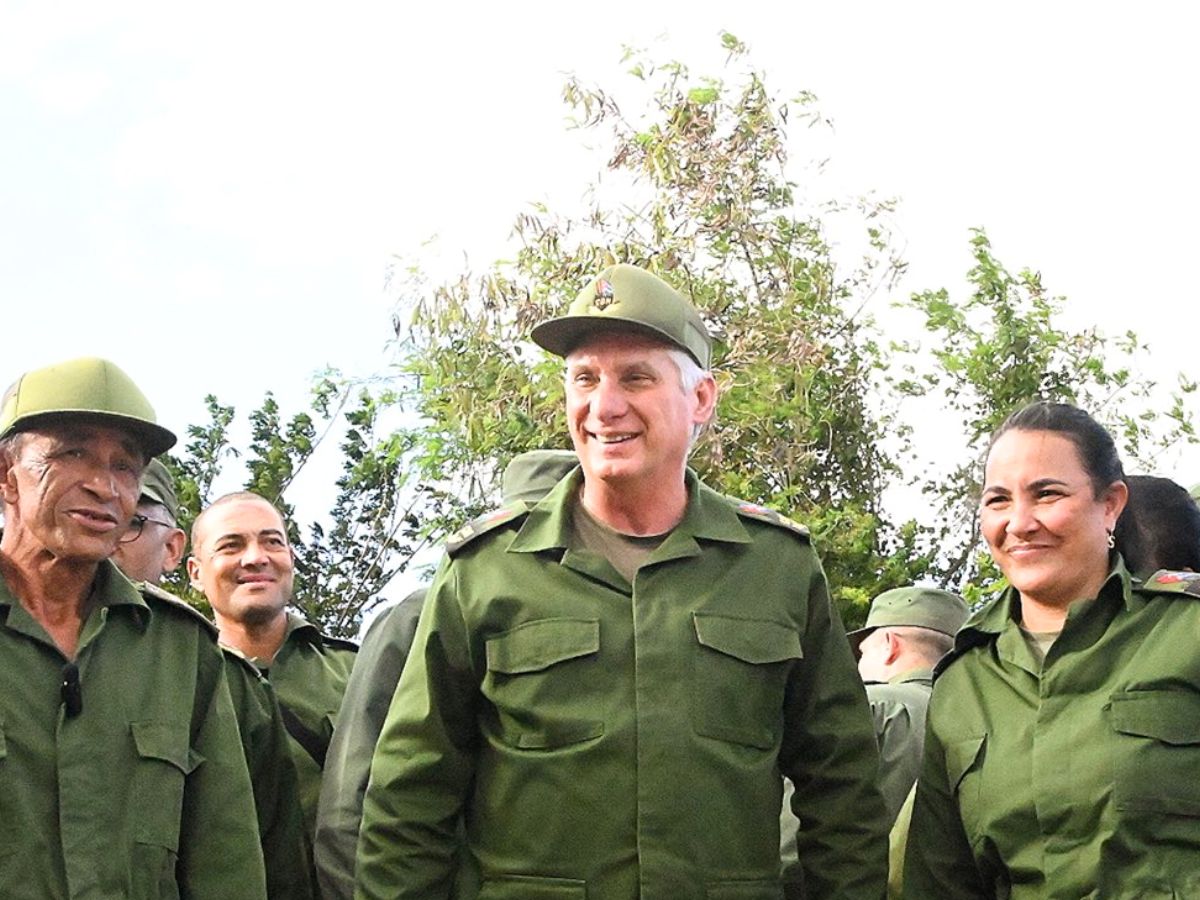
Miguel Díaz-Canel rejects Donald Trump’s call to “make a deal". (Photo: X/@DiazCanelB)
Cuban President Miguel Díaz-Canel has strongly rejected US President Donald Trump’s claim that Washington is holding talks with Havana, asserting that “no one dictates what we do” as tensions escalate over oil supplies and US pressure on the Caribbean nation.
Amid mounting pressure from Washington, Díaz-Canel said there have been “no conversations” with the United States. He reiterated that Cuba has always been open to dialogue, but only on the basis of sovereign equality, mutual respect, and international law.
Cuban officials pushed back after Trump suggested that Havana should “make a deal” with Washington or face severe economic consequences.
Trump significantly hardened his stance on Cuba after announcing a “large-scale strike” against Venezuela, Cuba’s closest ally and primary oil supplier. Posting on Truth Social, Trump warned that Havana would be cut off entirely from Venezuelan support.
“THERE WILL BE NO MORE OIL OR MONEY GOING TO CUBA – ZERO! I strongly suggest they make a deal, BEFORE IT IS TOO LATE,” Trump wrote in his signature all-caps style.
Cuba has relied heavily on subsidised Venezuelan oil and economic assistance for decades.
With the Trump administration asserting control over Venezuela, Cuba risks losing one of its main economic patrons. According to an Associated Press report, experts have warned that a sudden halt in Venezuelan oil shipments could trigger widespread social unrest and mass migration from the island.
The warning follows US actions that dramatically altered the regional balance of power.
On January 3, 2026, the US carried out a large-scale military strike against Venezuela, during which former president Nicolás Maduro and his wife were captured and flown out of the country.
The operation came after months of US military buildup in the Caribbean, including the deployment of the USS Gerald R. Ford aircraft carrier and several warships.
Washington has repeatedly accused Maduro of narco-trafficking, alleging links with drug cartels and collaboration with Colombia’s FARC guerrilla group to traffic cocaine and weapons to the US—claims long denied by Caracas.
Responding to Trump’s demands, Díaz-Canel took to X to reject what he described as US interference in Cuba’s internal affairs.
“No one dictates what we do,” the Cuban president said, adding that Cuba has been “aggressed upon by the United States for 66 years.”
He also accused Washington of lacking moral authority, saying that those who turn “everything into a business, even human lives,” cannot lecture Cuba.
Despite Cuba’s denial, Trump later told reporters aboard Air Force One that the US was “talking to Cuba,” though he did not specify the level or nature of any discussions.
Trump said one issue he wanted addressed was the fate of Cubans who were “forced out or left under duress.”
Adding to the tension, Trump recently suggested that the idea of US Secretary of State Marco Rubio becoming president of Cuba “sounds good to him.”
In recent weeks, Trump has reposted multiple social media posts referencing a US “takeover” of Cuba, ranging from jokes about Cuban cigars to claims that Rubio could lead the island nation—remarks that Havana views as provocative.
Cuban Foreign Minister Bruno Rodríguez firmly rejected Trump’s claims that Cuba exchanged security services for Venezuelan oil and money.
“The US is behaving like a criminal and uncontrolled hegemon that threatens peace and security not only of Cuba and this hemisphere but of the entire world,” Rodríguez said.
He also asserted Cuba’s absolute right to import fuel from economic partners without US interference.
Residents in Havana expressed mixed reactions to Trump’s oil threat. Some acknowledged the severity of the situation, while others said they were prepared to endure hardship.
“There’s no electricity, no gas, nothing here,” one resident told Reuters, questioning where oil shipments had gone. Others insisted that Cubans have endured crises before and would do so again.
Sofia Babu Chacko is a journalist with over five years of experience covering Indian politics, crime, human rights, gender issues, and stories about marginalized communities. She believes that every voice matters, and journalism has a vital role to play in amplifying those voices. Sofia is committed to creating impact and shedding light on stories that truly matter. Beyond her work in the newsroom, she is also a music enthusiast who enjoys singing.
New Delhi [India], February 19: TM Perfume House, a growing Indian fragrance brand under Fourpirates…
As the trend propagates, platforms are being called into action by parents and online safety…
Markolines Pavement Technologies Ltd. Reports Stellar Earnings for Q3FY26, PAT Jumps 72 Percent QoQ
Mumbai (Maharashtra) [India], February 17: Markolines Pavement Technologies Ltd. (BSE: 543364, NSE: MARKOLINES), a growing…
