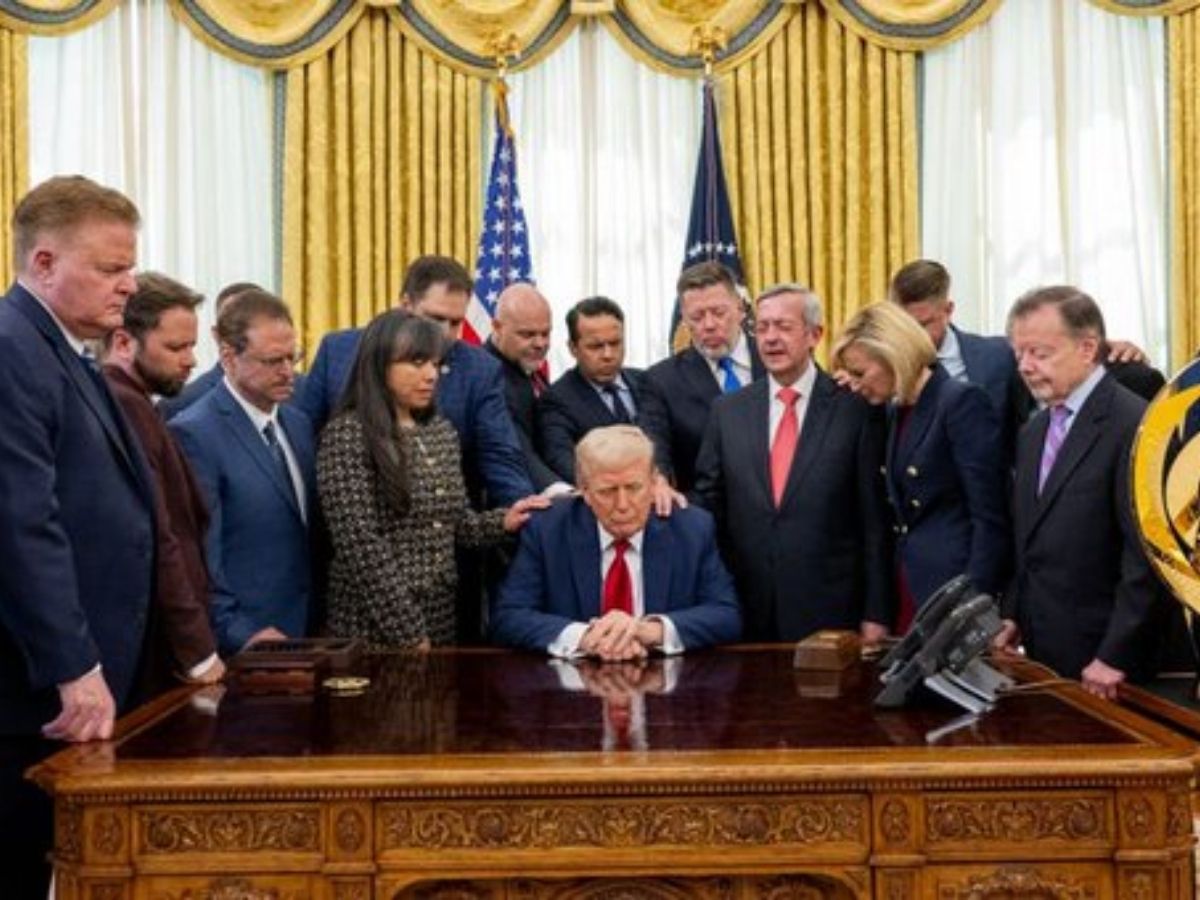
A new Trump team memo allows federal workers to persuade coworkers that their religious beliefs are "correct," expanding religious expression at work. (Photo: X/@skupor)
The Trump administration, through the Office of Personnel Management (OPM) Director Scott Kupor, has released a memo to heads of federal agencies defining new guidance that broadens religious expression at work, the US media reported on Monday. A key takeaway from the memo is that federal employees can now attempt to persuade coworkers that their religious beliefs are “correct”, as long as it doesn’t turn into harassment.
Kupor, working alongside the White House Faith Office, outlined what should not trigger disciplinary action.
According to the new memo, federal employees may:
The memo also stresses that federal workplaces should be welcoming to people of faith and warns that discrimination threatens recruitment and retention of “highly‑qualified employees of faith.”
The latest memo, experts say, builds on Trump’s earlier executive order banning “anti‑Christian bias”. The White House Faith Office, formed in February, helped craft these guidelines, a spokesperson told The Hill.
According to a Forbes report, Kupor explicitly cites Title VII of the Civil Rights Act, arguing that it protects federal staff’s right to promote their religion, display religious icons, and create prayer groups outside duty hours.
“Allowing religious discrimination in the Federal workplace violates the law. It also threatens to adversely impact recruitment and retention of highly‑qualified employees of faith,” Kupor said in guidance sent Monday to leadership of federal agencies, while outlining protected activities by federal employees, Forbes reported.
While the memo clarifies what expression won’t be punished, reports suggest it is not legally binding. Agencies can still “reasonably regulate” speech to ensure no discrimination in content or viewpoint, including religious speech, especially when interacting with the public.
The memo follows in footsteps of the earlier administrations’ similar moves. Clinton-era guidance protected private religious speech, and Bush’s OPM in 2003 affirmed the same.
Some legal experts, however, are expecting court challenges, especially around whether persuasive religious talk crosses into coercion.
ALSO READ: Federal Judge Halts Trump Administration’s Push to Defund Planned Parenthood
Mohsin Khan returned with impressive figures of 1/19 in four overs and also bowled a…
Rassie van der Dussen has retired from international cricket after being excluded from South Africa’s…
Pakistan-Afghanistan War: According to sources cited by Reuters on Wednesday, the discussions would center on…
