Experts Say Venezuelan Oil Only a Tactical Option as India Continues Russian Crude Imports
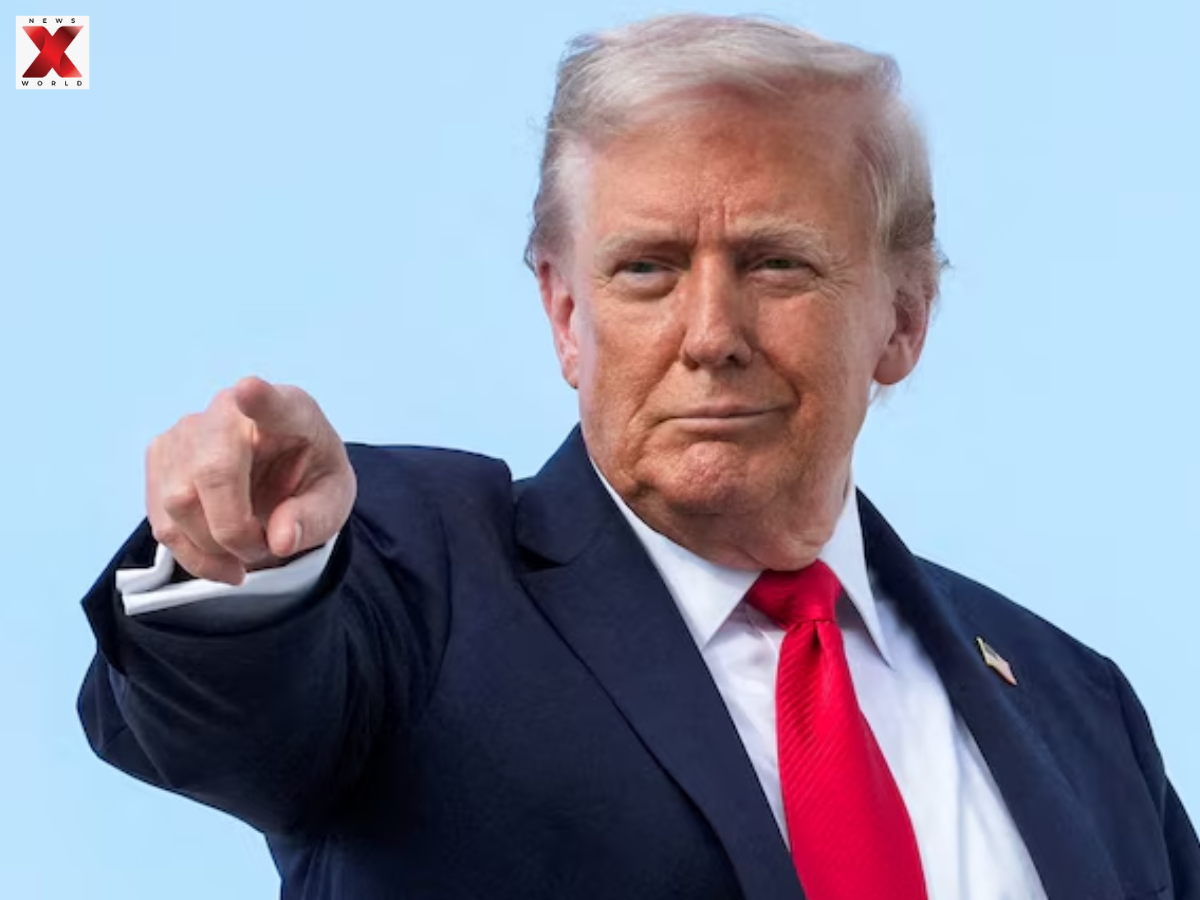
While the US president Donald Trump has claimed that India will stop buying Russian oil and instead buy more oil from the US and potentially Venezuela, experts say that Venezuelan crude is better viewed as an episodic or tactical option for India and may even serve as a negotiation lever against Russian grades rather than a sustained replacement of Russian oil.
Even as officials of both countries have been making announcements over the India-US trade deal, a draft of the deal is likely to take several months to be released while a joint statement on the same is expected to be issued by the two countries in the next four-five days.
Speaking to TDG, energy experts have said that despite Trump’s claims, Venezuelan oil cannot be a plug-and-play replacement for Russian Urals and even under supportive conditions, it would take several months before refiners get comfortable running Venezuelan crude on a regular basis, and even then, volumes would remain limited relative to Russian imports.
According to Humayoun Falakshahi, Lead Research Analyst, Crude at commodity market analytic firm Kpler, despite Reliance agreeing to buy two mbbls of Venezuelan crude for its Jamnagar refinery within two-three days of the US and India announcing that a trade deal between the two countries had been finalised, Venezuelan crude is unlikely to become a core supply source for India.
A report prepared by Kpler states that Reliance Industries has bought 2 Mbbls of Venezuelan crude for April delivery—India’s first purchase since May 2025—with flows likely to remain episodic rather than structural.
“While some cargoes could technically arrive within a few weeks, the broader adjustment of trade flows, shipping, insurance and blending logistics means that any sustained imports would more realistically be a Quarter 2 –Quarter 3 story rather than something that happens overnight. By contrast, Russian barrels are already embedded in India’s supply chain, with logistics, payment mechanisms and refinery configurations largely in place,” Falakshahi said.
He further pointed out that many of the Russian cargoes arriving in February and March were fixed weeks in advance, which limits how quickly refiners can pivot volumes even if there is political intent to diversify supply.
In fact, another report prepared by Kpler notes that India–US trade deal announced on 2 February is unlikely to trigger a near-term reduction in India’s Russian crude imports as Russian volumes are largely locked in for the next eight–ten weeks and remain economically critical for complex Indian refiners.
“Despite a recent moderation in purchases (Higher Middle East crude volumes have offset declining Russian imports), India is unlikely to fully disengage in the near term, as an abrupt shift could disrupt refining economics and raise overall energy costs; while refiners are technically capable of operating without Russian Urals and can process alternative grades, a complete move away would require careful management of commercial factors such as feedstock costs and margins, alongside broader political and diplomatic considerations,” Sumit Ritolia, Lead Research Analyst, Refining and Modeling at Kpler in the report.
The report further said that Venezuelan barrels are more likely to serve as a tactical pricing and negotiation lever against Russian grades rather than a sustained or structural replacement.
It said that the key factor for the viability of Russian oil for India over its competitors is its price.
“…price remains a key factor. Urals crude is being offered at discounts around USD 9/bbl to ICE Brent, some USD 4-5/bbl cheaper than where Venezuelan barrels are being shown (with WTI (West Texas Intermediate) as a blend stock trading near parity to ICE Brent on a delivered-India basis),” it said.
It said that Kpler does not anticipate any substantial further decline in Russian crude volumes into India from current levels.
“As outlined in our November note, imports have already moderated from a 2025 average of around 1.7 Mbd and are expected to stabilise broadly within the 1.1–1.5 Mbd range. A more pronounced reduction would likely require a clear policy shift by the Government of India, which appears highly unlikely given that energy security and economics remain a primary policy objective amid increasingly complex geopolitical dynamics shaping global oil trade flows,” it said.
Noting that Reliance Industries’ decision to buy 2 Mbbls of Venezuelan crude for its Jamnagar refinery comes just within two-three days of the US and India announcing the finalisation of a trade deal, Falakshahi noted that the same indicates that “there may have been some political motives behind it.”
“For Reliance, it also makes sense to try blending this heavy crude with lighter grades from the UAE and the US, in order to test whether they can reduce their reliance on Russian crude with a relatively cheap alternative,” he noted.
“Reductions in Russian intake more of a temporary adjustment, partly linked to compliance resets and broader trade negotiations with the US”
While noting the recent moderation in the purchase of Russian oil by India, Falakshahi noted that Russian crude remains highly competitive for Indian refiners.
“Price differentials continue to favour Urals over most alternatives, including Venezuelan grades, and Russian barrels are well suited to India’s complex refining system. Moreover, recent reductions in Russian intake appear to be more of a tactical and temporary adjustment, partly linked to compliance resets and broader trade negotiations with the US, rather than a structural shift away from Russian supply,” he said.
He added that as these frictions ease, and provided discounted Russian barrels remain available, there is a strong economic incentive for refiners to restore or even increase intake, particularly at large, sophisticated plants.
“We have seen two cargoes of Russian Urals discharge into Jamnagar in February already, indicating that the willingness to buy cheaper Russian crude is still strong. In this context, the India–US trade deal is more likely to reshape marginal crude flows: US crude could displace some lighter Atlantic Basin or West African grades, or even UAE’s Murban grade, rather than lead to a wholesale displacement of Russian oil,” he said.
Refineries await clarity, underline commercial viability of oil from any country
Speaking to TDG, a source at the Hindustan Petroleum Corporation Limited said that they are still awaiting clarity as a draft of the India-US trade deal is awaited and the way ahead will only be clear once the government issues detailed instructions.
Bharat Petroleum Corporation Limited’s (BPCL) director (refineries), Sanjay Khanna, has commented that the state-run entity is open to sourcing crude from any country, including Venezuela, as long as it is commercially viable and available.
Experts on India-Russia ties too underlined the viability factor of the Venezuelan oil with some pointing out that it may be near impossible for Venezuela to produce enough oil to replace the Russian oil imports to India.
“Venezuelan oil can never be a replacement for Russian oil for India. In India, as of now, there’s only one major refinery that can process it, which is owned by Reliance. With Russia offering more discounts to India, the Russian oil is cheaper while the Venezuelan oil is expensive. Moreover, let’s not forget that Venezuela is not producing enough oil and the US president, Trump, had in fact asked the oil companies of his country to help increase production of Venezuelan oil. So even if the country agrees to buy Venezuelan oil under US pressure, Venezuela just can’t produce enough oil to replace Russian oil,” said Nandan Unnikrishnan, a distinguished fellow at Observer Research Foundation and an expert on India-Russia ties.
However, Harsh V. Pant, vice president of ORF, pointed out that India will have to re-assess the market, as it had emerged that the discounts on Russian oil being offered to India had come to an end but if the discounts continued, India would try to make the most of it.
“The Russians are offering India discounts, and if those discounts continue, then India will certainly try to make the most of it. After all, this is what the commerce minister has said—that energy security is most important for India. It would certainly continue to buy oil from cheaper sources, and the market will dictate a lot of that,” he said.
Significantly, he noted that it had also emerged in the past that the discounts offered by the Russians had come to an end, so in that light, India will have to re-assess the market.
“Certainly, one element of energy security is diversification. So, it would be prudent for India not to rely too much on only one player in the market and look at diversifying its sources. It has been doing so and will hopefully continue to do it,” he said.
Also Read: Iran’s FM Calls Talks With US A ‘Good Beginning’, Signals Diplomatic Path Ahead Amid Global Watch
A recent media graduate, Bhumi Vashisht is currently making a significant contribution as a committed content writer. She brings new ideas to the media sector and is an expert at creating strategic content and captivating tales, having working in the field from past four months.
Tariff on India Scrapped: Trump Signs Order Lifting 25% Penalty Tariff Over Russian Oil Purchases
Trump removes 25% tariff on India, boosting India-US trade, energy exports, and defense cooperation; Russian…
A viral video shows Amity University students slapping, punching, and pulling each other’s hair in…
The US imposed new sanctions on Iran’s oil, petrochemical trade, and hidden tanker fleet after…
