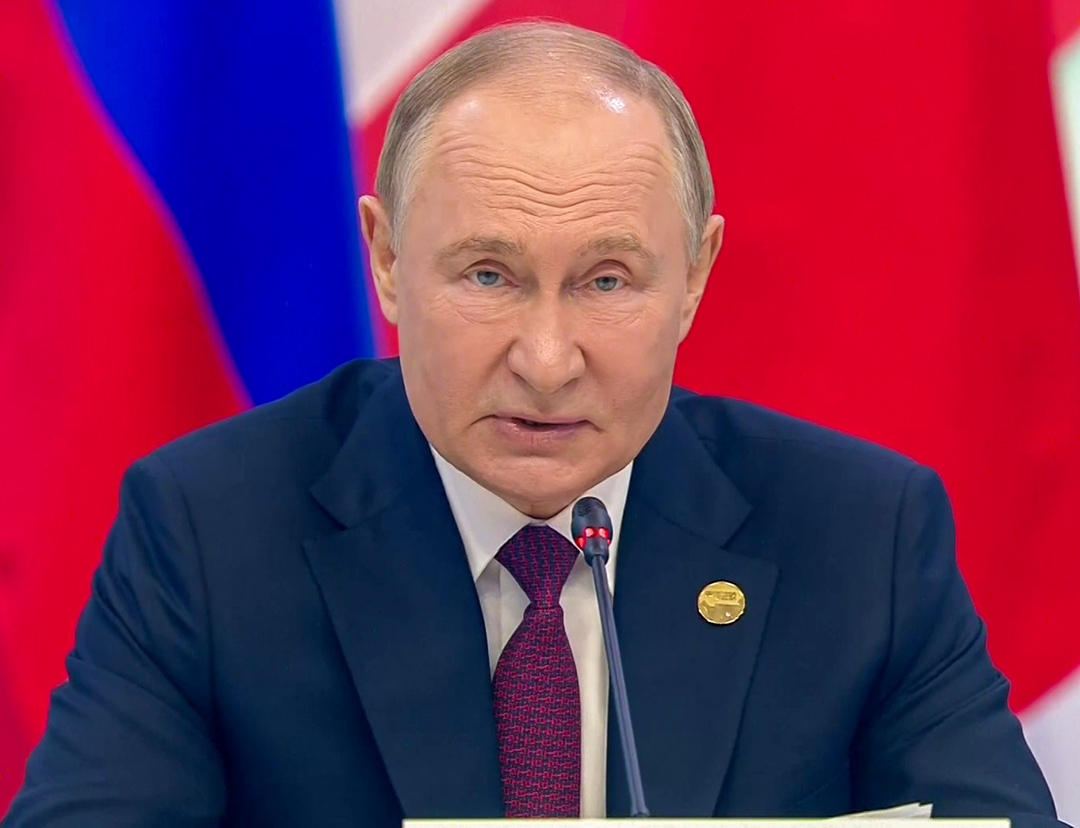
Putin's use of a Russian-made jet highlights the country's push for aviation independence amid sanctions, delays and an industry battling to stay afloat. (Photo: X)
When Russian President Vladimir Putin landed on American soil to meet with US President Donald Trump on Friday, he flew in a sleek, four-year-old Il-96 — a Russian-made aircraft operated by the Special Flight Squadron, in a move that appeared to be a calculated signal in Moscow’s efforts to cut ties with Western aerospace giants like Boeing and Airbus, news agency Reuters reported.
Russia’s push to build its own planes has seemingly taken center stage in recent times, especially since Western sanctions, which were imposed after the Ukraine invasion, severed Moscow’s access to spare parts and support for the country’s largely foreign-made fleet.
Back in 2022, the Kremlin had announced plans to roll out 1,000 domestically built airliners by 2030, according to a Reuters. However, analysts say the reality on the ground appears different. So far this year, Russian aircraft makers have delivered just one of the 15 commercial jets they had planned, according to Swiss aviation data provider ch-aviation.
“To create all this from scratch takes years, if not decades,” a Russian aviation industry source told Reuters on the condition of anonymity.
Reports suggest Russia relies heavily on commercial aircraft to connect its vast territory, which spans 11 different time zones. However, with most of the country’s reportedly 700-odd plane fleet made up of Airbus and Boeing jets, sanctions have forced airlines to find indirect and often convoluted ways to source key parts.
The consequences have been severe. A Soviet-era Antonov An-24 aircraft crashed in July, killing all 48 on board, as reported by Reuters. Soon after, Aeroflot was forced to ground dozens of flights due to a major cyberattack.
Reports suggest that the Russian government has reduced aircraft production targets in a drastic manner: cutting planned deliveries from 171 units in 2024–2025 to just 21 aircraft.
State-owned conglomerate Rostec, which oversees major aircraft projects including the Superjet-100, Tu-214 and MC-21, has reportedly missed multiple deadlines. And while a fully Russian-built MC-21 is in development, it’s believed to be relatively heavier and less efficient than its Western-component counterpart, thereby making airlines hesitant to adopt it.
On August 13, Rostec CEO Sergei Chemezov told Prime Minister Mikhail Mishustin that serial production for the MC-21 and other jets is now scheduled for 2026, which is effectively two years behind the original timeline.
ALSO READ: ‘High-Stakes’ Ukraine Peace Talks Begin at Trump-Putin Alaska Summit – What We Know So Far
Despite Moscow’s push for localisation, reports of foreign parts still being sourced through third party channels have surfaced in recent times. The country’s customs data reviewed by the news agency showed that in 2024 alone, at least $300,000 worth of components — including from Safran, Honeywell and Rolls-Royce — were imported through Turkey, China, Kyrgyzstan and the UAE.
These companies have denied doing business with Russia, all while stressing that they are “actively working to prevent sanctions violations”.
Meanwhile, as the Russian government seeks to stabilise the country’s aviation sector, passengers are reportedly feeling the pinch, with airfare prices having climbed steadily since 2023, according to Rosstat.
Moscow has also sought help from Central Asian airlines like those from Kazakhstan and Uzbekistan to operate domestic routes within Russia.
“No other country in the world produces fully import-substituted planes,” Russia’s Industry and Trade Minister Anton Alikhanov had recently said, per Reuters.
ALSO READ: Who’s Who at the Trump-Putin Meet: A Look at the US and Russian Teams in Alaska
IPL 2026: Delhi Capitals Rope In Former Ireland All-Rounder John Mooney As Fielding Coach
Delhi Capitals (DC) appoint former Ireland all-rounder John Mooney as their new fielding coach for…
The Pentagon said the US has hit over 7,000 targets using bunker-buster bombs under Operation…
Eid moon sighting in India on March 19; Chand Raat tonight if seen. Check city-wise…
