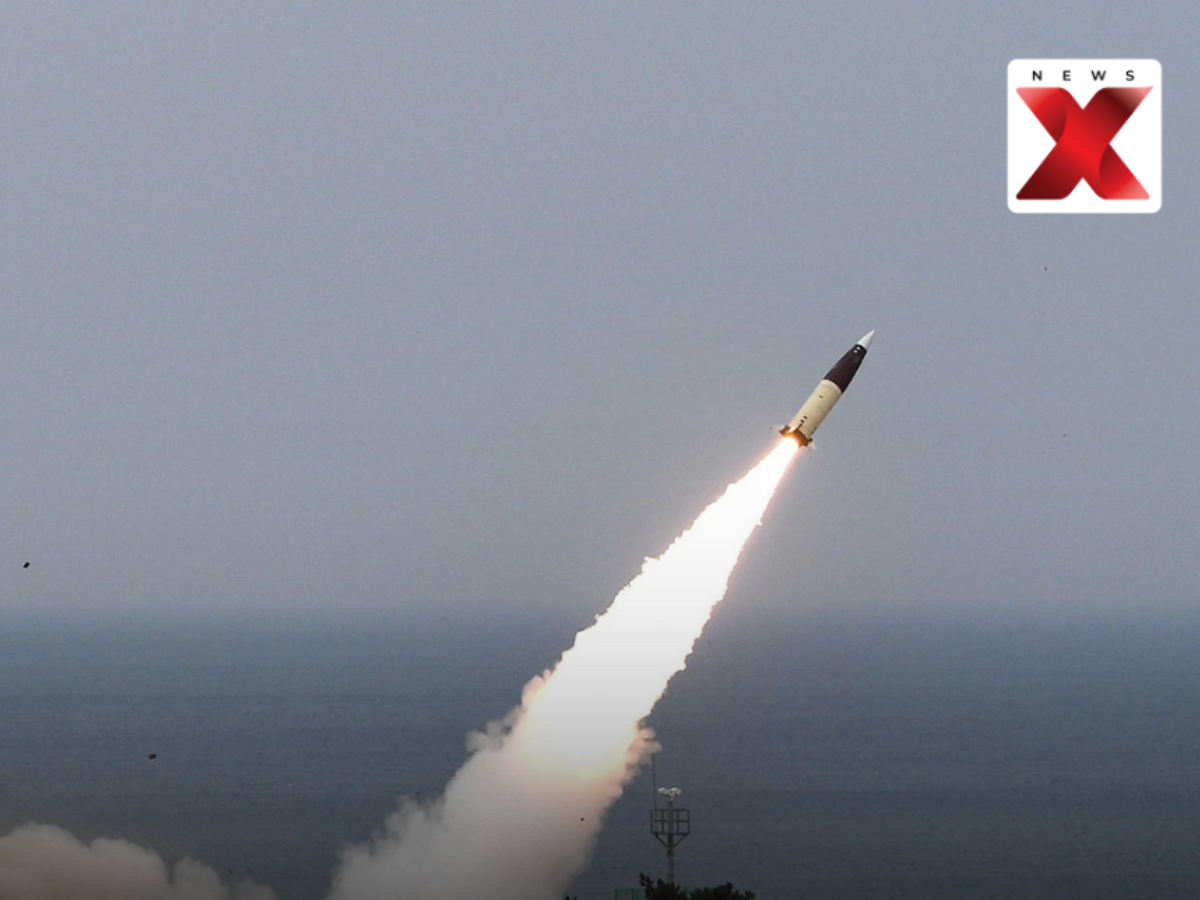
What Kind of Ballistic Missiles Does North Korea Have? (Image: X/ NewsX)
Once again, North Korea has garnered the worldwide spotlight after firing around 10 ballistic missiles into the ocean as the United States and South Korea conduct joint military exercises. The South Korean military reported that the launches occurred from an area outside North Korea’s capital, Pyongyang and that they flew several hundred kilometers to drop into the waters east of Korea.
These launches demonstrate North Korea’s advancing capabilities with respect to their missile proliferation program, which consists of numerous types of ballistic missiles including short-range, medium-range and intercontinental as well as hypersonic missiles which have been designed to carry nuclear warheads.
Short-range ballistic missiles (SRBM) are one of the most commonly used missiles in North Korea’s arsenal, including their Hwasong-11 (KN-23), a short-range ballistic missile with capabilities similar to Russia’s Iskander series and a range of approximately 450 km while having a warhead mass in the vicinity of 400 kg.
Being a solid propellant missile, the Hwasong-11 (KN-23) is fired at a high rate of speed with very little warning, giving it an immediate tactical capability; furthermore, the Hwasong-11 (KN-23) has proven to possess great agility, which allows it to circumvent existing missile defense systems and thus remain a critical tactical weapon for operational use on the battlefield.
North Korea has several medium-range missiles including the Hwasong-12 that can strike targets across Eastern Asia and some parts of the Pacific, with a range of 3000 – 4500 km. Other early North Korean missiles include the Taepodong-1, a multi-stage missile with a range of approximately 2200 km, capable of carrying a payload (i.e. 700 – 1000 kg).
The intercontinental ballistic missiles (ICBM) are North Korea’s highest capacity missile system; the Hwasong-17 is a two-stage ICBM with a potential range of greater than 15000 km; thus, potentially capable of reaching the United States.
The most recent missile system introduced to the North Korean arsenal is the Hwasong-20, which North Korean media has referred to as the “most powerful nuclear strategic weapon.” Intelligence experts believe it may also carry multiple nuclear warheads.
North Korea is researching, developing and testing hypersonic missiles such as the Hwasong-8, which uses a hypersonic glide vehicle. The vehicle can fly at high speed, traverse across multiple altitudes, and deploy guidance systems to remain on course. All these characteristics of the Hwasong-8 will make it nearly impossible to defend against using current missile defense systems.
Analysts say that the number of missile platforms from North Korea’s short-range tactical missile (i.e. SCUD – 100 km) to long-range nuclear-capable ICBM (i.e., Hwasong-17 – 15000 km) will ultimately enable North Korea’s strategic focus upon increasing range, reducing launch timeline, and improving missile survivability against ballistic missile defense systems.
Khalid Qasid is a media enthusiast with a strong interest in documentary filmmaking. He holds a Master’s degree in Convergent Journalism from AJK MCRC. He has also written extensively on esports at Sportsdunia. Currently, he covers world and general news at NewsX Digital.
Mamata Banerjee, West Bengal’s first woman Chief Minister, has shattered political glass ceilings. Known for…
Pakistan’s struggling economy has taken another hit due to the ongoing conflict involving the United…
Ustaad Bhagat Singh trailer out: Pawan Kalyan shines in action, punchy dialogues, and mass entertainer…
