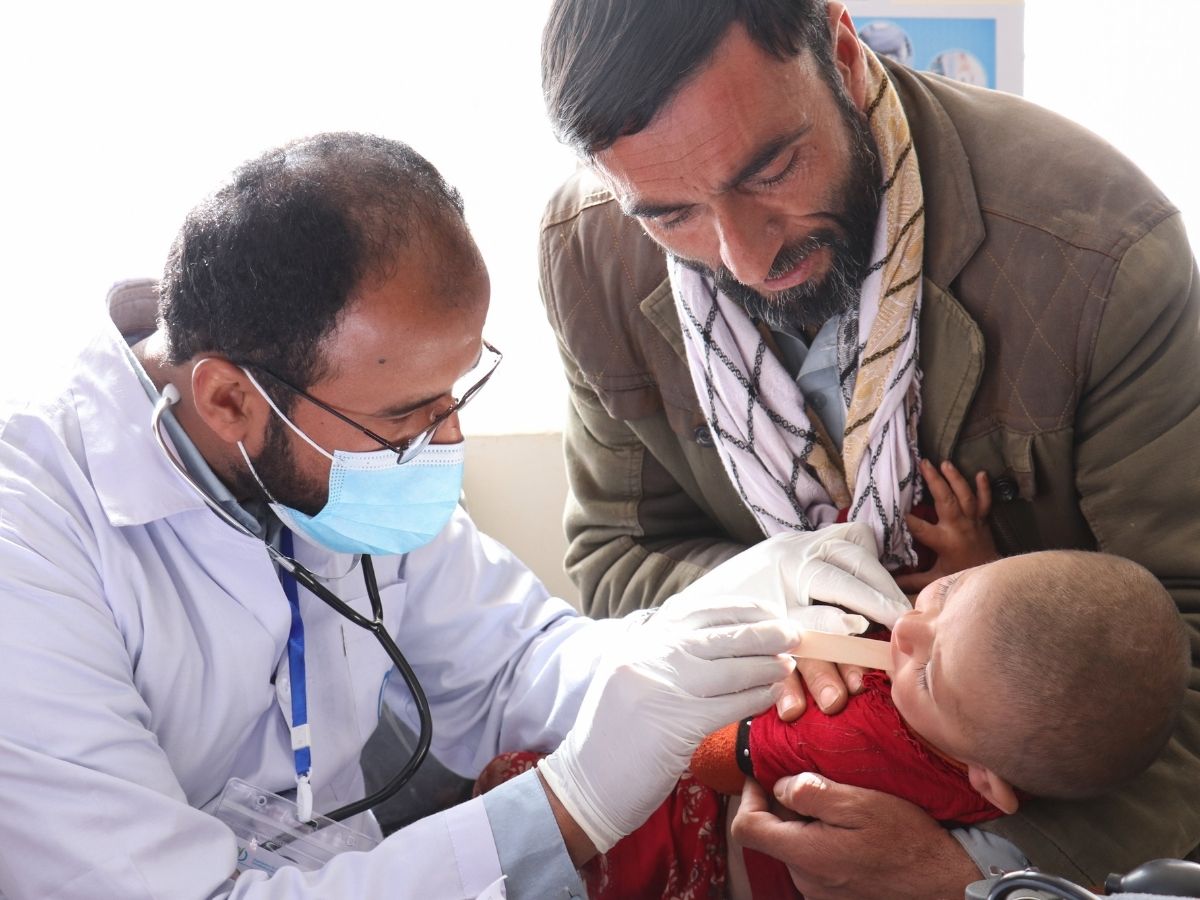
WHO has secured $6.3M in aid to restore healthcare in Afghanistan, focusing on women and children as medical services remain crippled across the country. (Photo: X/@WHOAfghanistan)
The World Health Organisation (WHO) has received over USD 6.3 million in humanitarian funding to help restore and reinforce Afghanistan’s struggling healthcare infrastructure, with a focus on essential services for women and children, Khaama Press reported.
According to Khaama Press, citing the announcement made on Tuesday, the funding package includes USD 4.98 million from the UN’s Central Emergency Response Fund (CERF) and USD 1.39 million from the Afghanistan Humanitarian Fund (AHF).
The financial support will be used to reopen or sustain 42 primary health centres and deploy 15 mobile health teams, aimed at reaching vulnerable and remote populations. Additionally, more than USD 1 million will go toward six peripheral health centres, improving healthcare access in underserved areas, Khaama Press reported.
This aid comes at a critical time, as nearly one-third of Afghanistan’s population lacks access to basic medical services, Khaama Press reported.
The healthcare crisis has worsened following the halt of US financial aid earlier this year, which led to the closure of over 400 health facilities and the disruption of numerous women’s health programmes.
Dr Edwin Salvador, WHO Representative in Afghanistan, highlighted the urgency of the funding, noting that it will help prevent avoidable deaths and deliver essential care to women and children, Khaama Press reported.
The WHO’s recent funding success reflects the global community’s commitment to supporting health services in Afghanistan amid ongoing humanitarian challenges. However, experts stress that continued support and long-term investment are essential to rebuild and sustain the country’s health system.
Earlier, WHO stated that Afghan returnees from Pakistan and Iran had been facing severe healthcare challenges, including shortages of essential medicines, female health staff, gender-sensitive services, isolation facilities, trauma care, and mental health and psychosocial support (MHPSS).
According to Khaama Press, citing the WHO report, between July 31 and August 15, 2025, a total of 106,109 people returned to Afghanistan from Pakistan and Iran, with 83.7 per cent arriving from Iran. Returns through the Torkham crossing nearly tripled during this period, highlighting the pressure on border healthcare services.
(This story has been published from a syndicated ANI wire feed)
On March 20, 2026, Delhi experienced its coldest March day in six years, with temperatures…
US President Donald Trump ruled out a ceasefire with Iran, emphasizing military priorities. He outlined…
Raymond Group Chairman Gautam Singhania suffered minor injuries in a Maldives speedboat accident on March…
