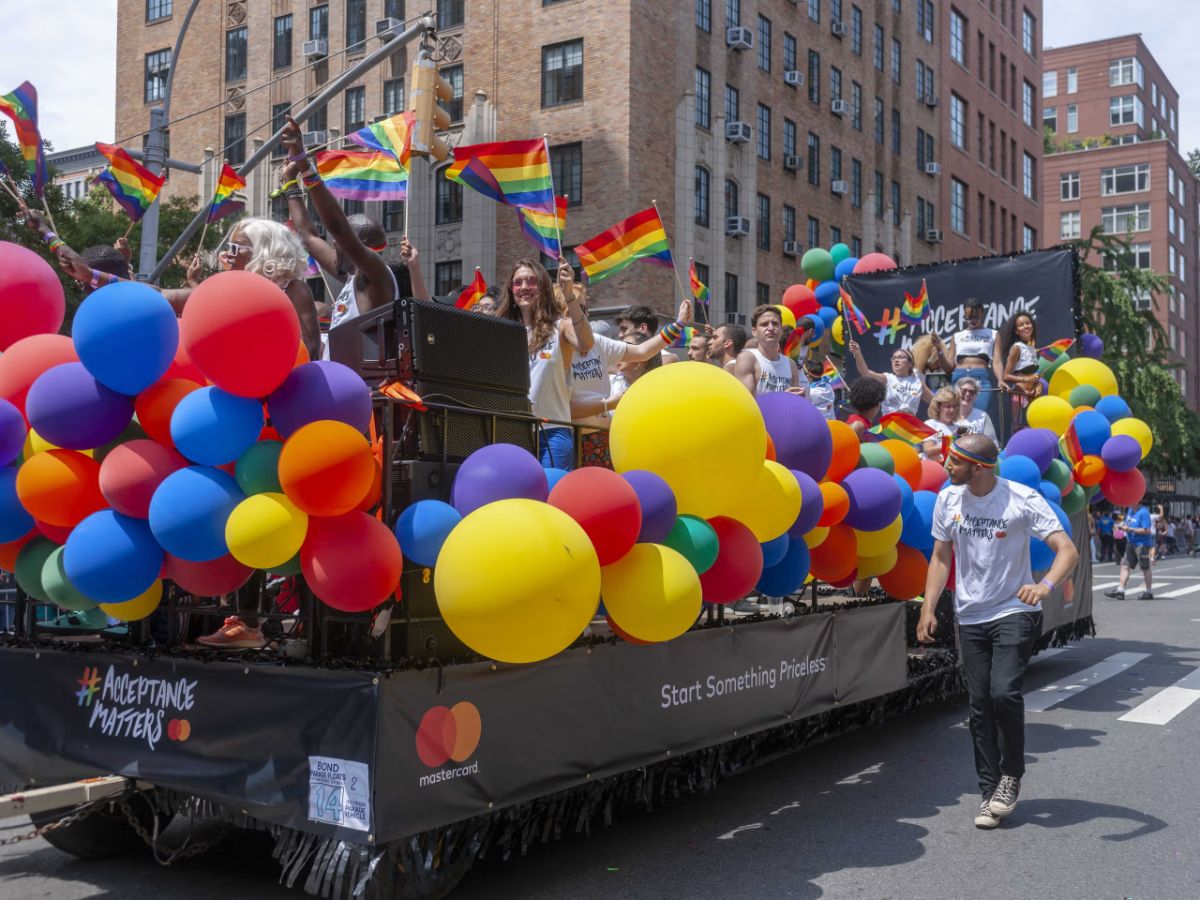
As New York City gets ready to host the country’s most high-profile LGBTQ+ event on June 29, organizers of the annual Pride Parade are facing a challenge they didn’t expect just a few years ago — less corporate funding and more need for community support.
With the political climate shifting, especially under former President Donald Trump’s renewed attacks on diversity, equity, and inclusion (DEI) programs, many big-name sponsors have either pulled out or scaled back their support for Pride events this year.
That’s left organizations like NYC Pride scrambling to fill the gap — but they’re not giving up. “Just about 80 percent of the fundraising goal” has been met, said NYC Pride spokesperson Kevin Kilbride. “That gap we’re trying to fill with a community fundraising campaign.”
This year, NYC Pride kicked off a peer-to-peer fundraising campaign in mid-May to make up the difference. It lets anyone start their own mini fundraiser online and share it with friends and family — all in the hope that grassroots donations can help replace lost corporate dollars. “We’re wanting to lean a little bit more into individual giving and support from the community,” Kilbride explained.
And it’s already working. In just a few days, the group raised nearly $25,000 from around 200 donors.
Still, it’s a far cry from the years when corporate-sponsored floats lined Fifth Avenue, joining community groups in a colorful, flashy show of LGBTQ+ pride. This year, many companies will still show up, but some have quietly scaled back how much they’re contributing — or cut ties altogether.
According to Muneer Panjwani, head of the group Engage for Good, the drop in corporate involvement has been huge. “There’s been a massive pullback over the last year, specifically in corporations that have long supported Pride events that have decided not to support anyone,” he said.
Engage for Good works to connect companies with nonprofits and tracks things like “checkout giving” — where customers can chip in while making purchases.
Interestingly, while companies may be stepping back, regular people are stepping up. “While companies are pulling away their philanthropic dollars at the top level, from the bottom up, consumers are saying, ‘we still care about this issue,’” Panjwani said.
One major brand that’s had a rollercoaster relationship with Pride is Target. The company has been both praised and criticized over the years for its public support of LGBTQ+ causes. This year, it reportedly asked to donate without publicity — but now, according to Kilbride, Target has decided to bring back its float.
The move comes after Target was hit by a boycott and a drop in share prices following its decision to reduce some DEI efforts, citing “the evolving external landscape.”
Still, the company says it isn’t going away. “We will continue to mark Pride Month… (by) sponsoring local events in neighborhoods across the country,” a Target spokesperson told AFP.
Over in Brooklyn, where Pride is smaller, more local, and often more radical, some feel the shift in corporate support might not be such a bad thing. “Pride started grassroots through community, and corporations bowing the knee at a president who thinks he’s a king just shows us who they are to us,” said Chi Ossé, a progressive Democratic city councilman, during the borough’s twilight Pride march.
Brooklyn Pride doesn’t shy away from politics. It’s long been seen as the more activist-minded sibling to Manhattan’s mega-parade. While it still features a few corporate banners, most of the energy comes from people and small groups, not big sponsors.
At the Sirens Women’s Motorcycle Club contingent in Brooklyn, Anya Glowa-Kollisch reflected on the shift. “It’s great when companies are willing to say that they support equal rights,” they said. “But I think at the end of the day, it’s a movement that’s driven by people demanding their rights, and a lot of corporations just kind of do this because they think they should. So it’s really valuable to have people in the community coming out and showing that this is who we are.”
And that might be the real message this year: Pride didn’t start with corporations — and it doesn’t end with them, either. With or without big floats and logos, millions are still expected to turn out for New York’s June 29 celebration. And this time, the community is taking the lead.
PBKS Head Coach Ricky Ponting Leads ‘Havan’ With Team Management At Mullanpur Cricket Stadium
Punjab Kings' Ricky Ponting performs a 'havan' ahead of IPL 2026. Marcus Stoinis and Cooper…
‘The Furious’ First Trailer Unleashed: Brutal, Action-Packed Scenes, Here’s When And Where To Watch
The first trailer for The Furious showcases high-octane martial arts action, starring Xie Miao and…
Build a Global Career in 2026 with CMA and IFRS Certifications ACCA CFA CPA FRM Included
Today's international financial environment requires accountants to be familiar with cross-border reporting practices, financial management…
