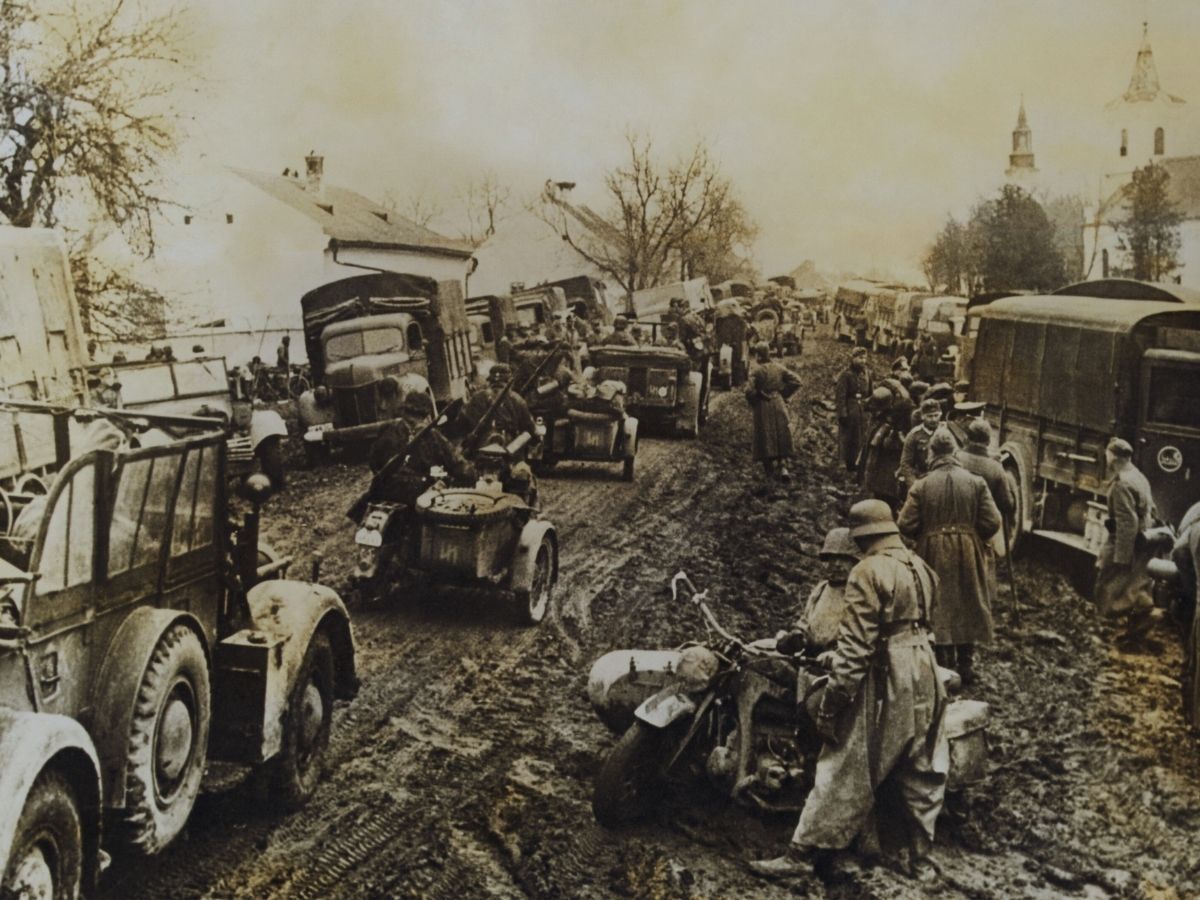
Japan marks WWII end with a solemn ceremony on August 15. China celebrates with a military parade on September 3, in contrasting commemorations that experts say reflect deep historical and political divides. (Photo: Canva image used for representation only)
Japan and China both observe the end of World War II, but on different dates and in different ways. Japan commemorates the day on 15 August, when Emperor Hirohito delivered a radio broadcast message announcing the country’s surrender in 1945. The message — reportedly delivered in archaic language and poor audio — was deeply symbolic as many Japanese had never heard the emperor’s voice before, archival reports suggest.
“The speech is a reminder of what it took to end the wrong war,” Nihon University professor Takahisa Furukawa told The Associated Press.
Japan’s current emperor, Naruhito, and the country’s prime minister Shigeru Ishiba will lead a solemn ceremony in Tokyo which will be televised nationwide via NHK to commemorate the victims, AP reported. Last year, Naruhito expressed deep regret over the war, even as some cabinet ministers visited the Yasukuni Shrine — a halt that reignited criticism from China and South Korea.
In contrast, China observes Victory Day on September 3, the day following the formal surrender by Japan aboard the USS Missouri on 2nd September, 1945. This year’s commemoration ceremony will reportedly include a military parade in Beijing featuring hypersonic missiles, fighter jets and advanced electronic gear among other things.
A senior People’s Liberation Army (PLA) officer told the US-based news agency that this year’s parade will underscore the Chinese military’s “strong ability to adapt to technological trends and evolving warfare.”
Observers say such displays reinforce the country’s narrative of strength and readiness at a time of heightened regional tensions, especially in the East China Sea. A museum in Benxi showcasing anti-Japanese resistance fighters from rural area of Manchuria are expected to further reflect on the country’s wartime legacy, the report said.
The devastating invasion by Japan’s wartime regime reportedly resulted in as many as 20 million deaths in China, in what experts say is a historical legacy that continues to cast a long shadow over today’s geopolitics. As Japan discusses ramping up its defense capabilities, China appears to be using the opportunity to demand historical responsibility, analysts say.
“We urge Japan to deeply reflect on its historical culpability … stop using hype over regional tensions … to conceal its true intent of military expansion,” AP quoted Chinese Foreign Ministry spokesperson Guo Jiakun as saying.
ALSO READ: China Ups Military Incursions Around Taiwan: Here’s What We Know So Far
Nifty 50 leads crash, falls to 23,002 as Sensex tanks 2,500 points; ₹11.5 lakh crore…
NCERT Admit Card 2026 Released: Check Exam Dates And Key Details Here
The National Council of Educational Research and Training (NCERT) has released the NCERT admit card…
With the IPL 19th season approaching, AB de Villiers backs Virat Kohli's legendary trait to…
