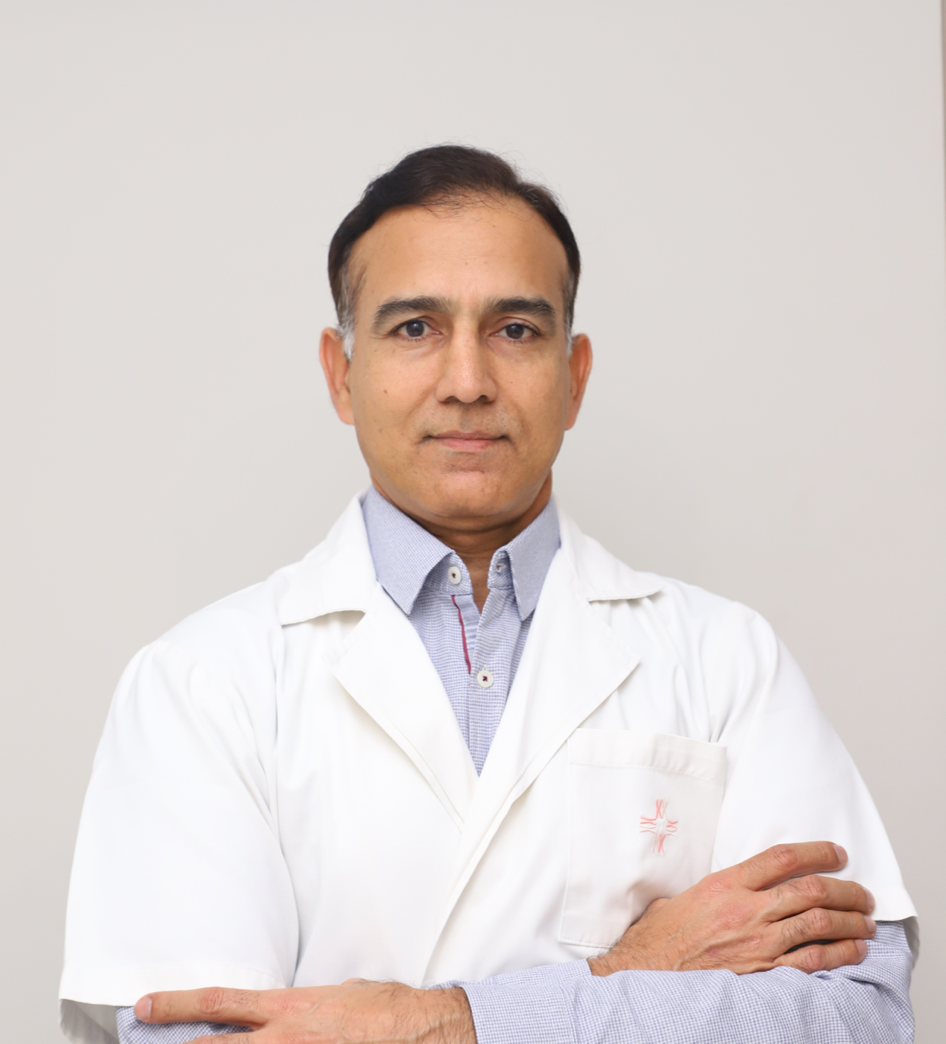
For patients battling Ankylosing Spondylitis, hip damage can become so severe that joint replacement is often the only path to restoring mobility. While surgical advancements have brought renewed hope, there remains an ongoing debate within orthopedic practice, cemented versus non-cemented implants.
According to Dr. Ashwani Maichand, the conventional preference for cemented implants may not always serve the long-term interests of patients, especially younger individuals or those with progressive conditions like AS.
“Cemented implants have traditionally been popular because they offer immediate fixation and are technically less demanding during surgery,” explains Dr. Maichand. “From a surgeon’s perspective, they can be easier to place and provide quick stability.”
However, this perceived ease comes with significant trade-offs. Dr. Maichand points out that cemented implants do not allow for natural bone integration. “There is no biological bonding between the implant and the bone. Over time, the bone does not grow into the implant, which limits long-term adaptability and strength.”
One of the most critical concerns arises when a revision surgery is needed, a reality for many patients, particularly younger ones. “In cemented implants, the bond created by the cement can make revision extremely complex,” says Dr. Maichand. “When you attempt to remove the implant, it often involves taking out a substantial portion of the surrounding bone along with it.”
This can lead to compromised bone stock, making subsequent surgeries more difficult and less predictable. “It’s not just about replacing an implant. It becomes a much more invasive reconstruction,” he adds.
Dr. Maichand is candid in his assessment. “Relying on cemented implants, in many cases, is an escapist route,” he says. “It may simplify the procedure in the short term, but it shifts the burden to the patient in the long run.”
Instead, he advocates for non-cemented implants, which allow the bone to grow into the implant surface over time, a process known as biological fixation.
“This approach respects the body’s natural healing ability,” he explains. “It offers better long-term outcomes and makes future revisions more manageable.”
As surgical techniques evolve, including minimally invasive approaches like the bikini incision, there is a growing emphasis on durability, preservation of bone, and patient quality of life.
“The goal should not just be to complete a successful surgery today,” says Dr. Maichand. “It should be to ensure that the patient has the best possible options 10, 15, or 20 years down the line.”
For patients living with ankylosing spondylitis, this perspective could make all the difference, not just in how they move today, but in how they live tomorrow.
Is Virat Kohli heading to the FIFA World Cup 2026? A viral social media post…
Is Hardik Pandya leaving Mumbai Indians? Amid exit rumours a viral Instagram story from Mahieka…
Haj At Risk? Pakistan Prepares Emergency Airlift Plan If US-Iran War Resumes
Pakistan says it has prepared an emergency airlift plan for Hajj pilgrims if the suspended…
