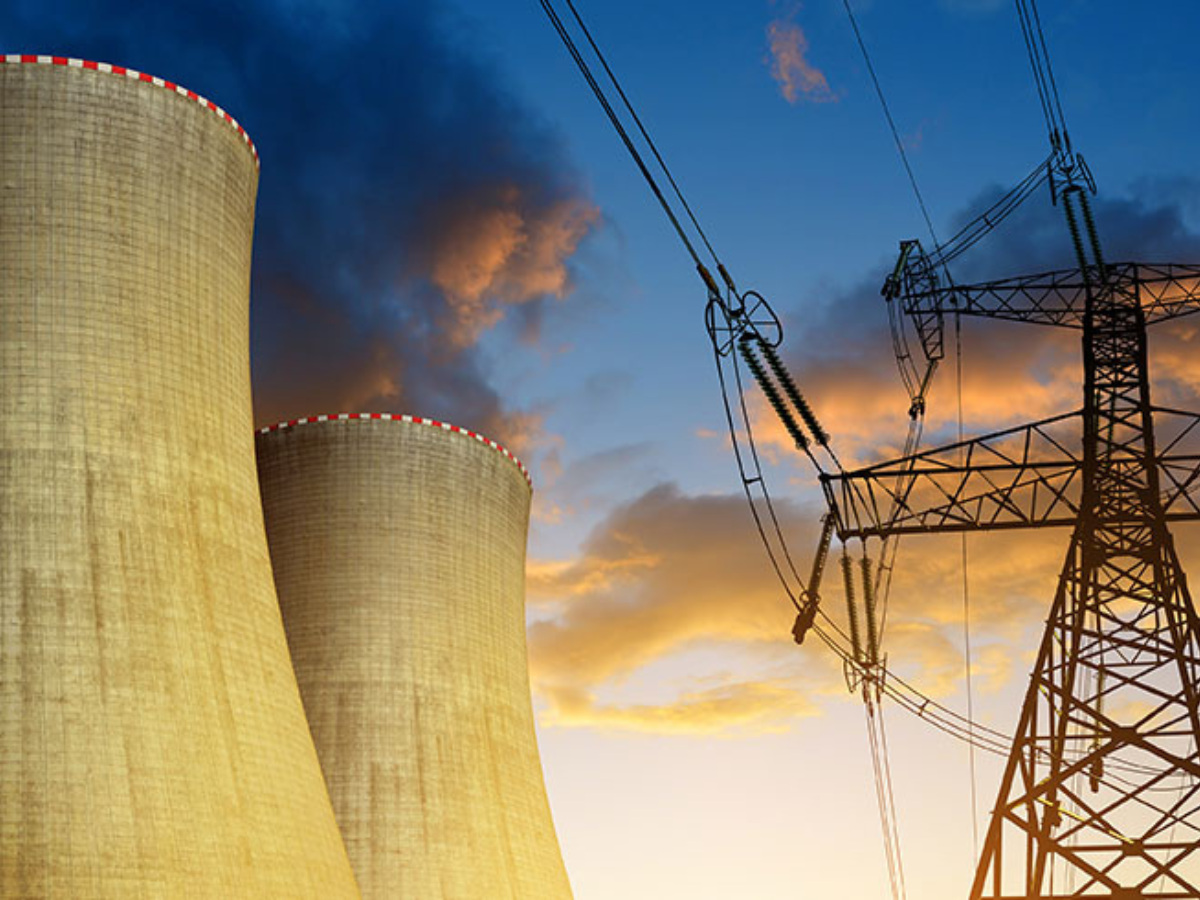
India’s decision to relax its mandate on flue gas desulphurisation (FGD) systems at coal-fired power plants is being viewed internationally not as environmental regression, but as a shift toward more nuanced and evidence-led regulation.(Photo: Social)
India’s decision to relax its mandate on flue gas desulphurisation (FGD) systems at coal-fired power plants is being viewed internationally not as environmental regression, but as a shift toward more nuanced and evidence-led regulation. The move aligns with broader global trends, where countries are increasingly tailoring emissions policies to local conditions and life-cycle climate considerations.
The Ministry of Environment, Forest and Climate Change (MoEFCC) announced that FGD systems, which remove sulphur dioxide (SO₂) from flue gases, will now be mandatory only for plants near dense urban zones or in critical pollution areas. Roughly 80% of India’s installed coal capacity, most of it running on low-sulphur domestic coal, will be exempt.
The decision follows independent assessments by three Indian research institutions, which concluded that ambient SO₂ levels are well within national standards even in regions without FGDs. Meanwhile, full-scale retrofitting was projected to increase CO₂ emissions by nearly 70 million tonnes over five years, largely due to added limestone mining and auxiliary energy use.
The revision is also expected to reduce power generation costs by Rs 0.25 – Rs 0.30 per kilowatt hour, offering a direct benefit to consumers and easing pressure on India’s cash-strapped power distribution companies. Industry experts have described the move as “regulatory realism” that will preserve affordability without compromising core environmental goals.
India is not alone. The US, Europe and China — all of which pioneered FGD rollouts in earlier decades — have since shifted toward differentiated enforcement and performance-based compliance. China, after an aggressive FGD deployment from 2004 to 2012, now applies zonal standards and is placing more emphasis on PM2.5 reduction and system-level efficiency.
Critics continue to argue that any relaxation risks delaying clean air goals. But those in government insist that the new framework targets pollution where it matters most and frees up billions in capital for higher-impact interventions such as electrostatic precipitators, real-time monitoring and renewable grid upgrades.
For many developing economies still reliant on coal, India’s recalibration may serve as a practical template – ambitious where necessary, economical where possible and always informed by data.
Also Read: Pope Leo XIV’s Emphasis On Climate Care: Will It Bring US Policy Under Scrutiny?
Ankur Mishra is a journalist who covers an extensive range of news, from business, stock markets, IPOs to geopolitics, world affairs, international crises, and general news. With over a decade of experience in the business domain, Ankur has been associated with some of the reputed media brands. Through a sharp eye on global marketplaces along with deep insights and analysis of business strategies, Ankur brings simplicity to the complex economic matrix to decode market trends and empower people.
He is committed to entrenched data, facts, research, solutions, and a dedication to value-based journalism. He has covered trade tariff wars, international alliances, corporate policies, government initiatives, regulatory developments, along with micro- and macroeconomic shifts impacting global fiscal dynamics.
New Zealand and South Africa will lock horns with each other in Christchurch. Here's a…
Dhurandhar 2: Ranveer Singh’s Dhurandhar 2 continues its strong run at the box office, maintaining…
Sourav Ganguly hailed IPL’s massive growth after record-breaking Rajasthan Royals and Royal Challengers Bengaluru sales…
