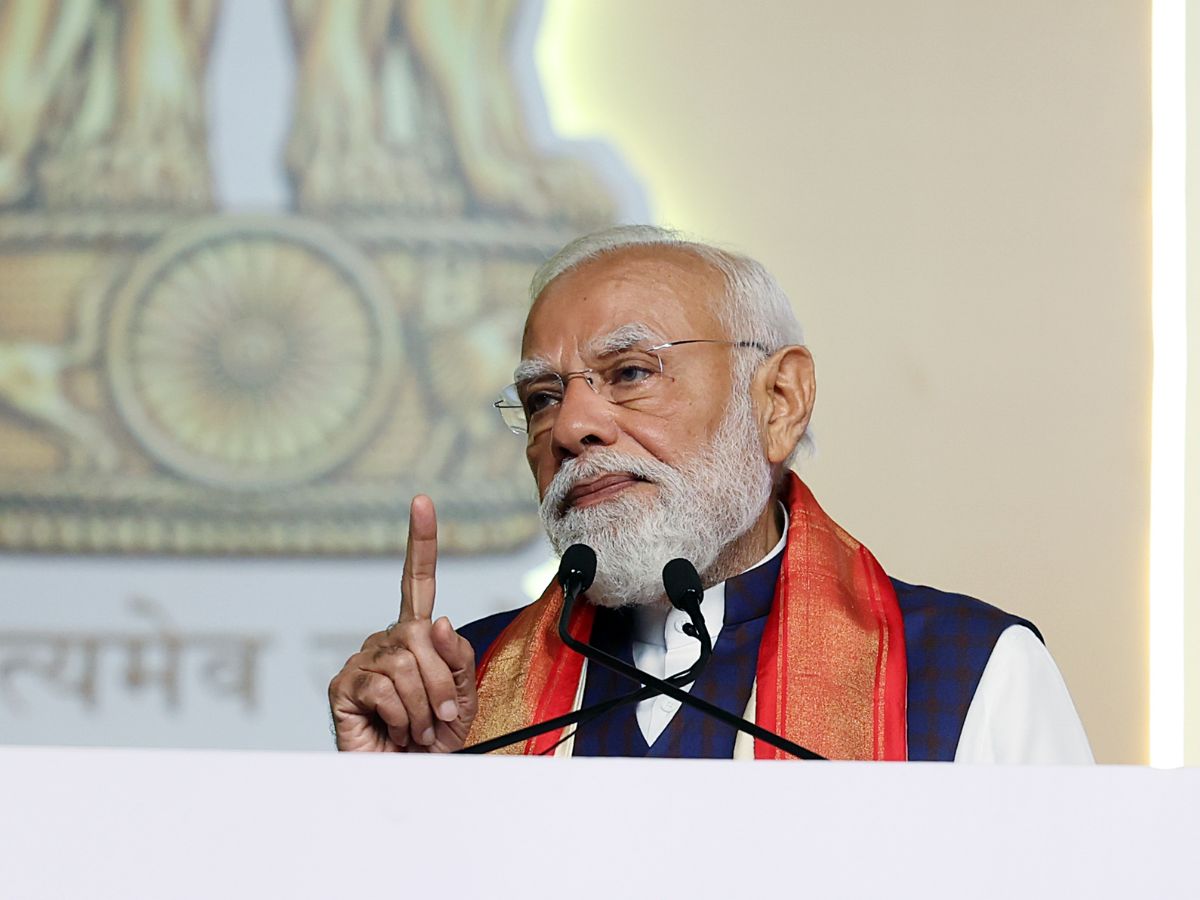
PM Modi urged Indians to avoid buying gold for a year amid rising crude oil prices, global uncertainty and pressure on India’s forex reserves. (Image: PIB)
Gold has always been India’s emotional safe haven — especially during uncertain times. But against the backdrop of surging global crude oil prices, the West Asian crisis and mounting pressure on import-dependent economies, Prime Minister Narendra Modi has made a rare request of the country: don’t buy gold jewellery for one year.
The appeal, made at a public function in Hyderabad on May 10, comes when gold prices are already near record highs and India’s import bill is ballooning on the back of high crude prices and geopolitical disruptions. For millions of Indian families planning for weddings or festive shopping, the message strikes a raw nerve of deep-seated cultural and financial tradition.
Calling it a matter of “national responsibility,” PM Modi urged citizens to voluntarily pause gold purchases and reduce non-essential foreign exchange outflows to help India navigate global volatility.
Addressing a BJP rally in Hyderabad, PM Modi made the appeal in direct reference to the ongoing West Asia conflict and the pressure it is putting on India’s economy through higher oil prices, disruptions in supply chains and rising dollar outflows.
PM Modi recalled how people once donated gold to help the country in difficult times and said that though such donations are not needed now, people should voluntarily refrain from buying gold jewellery for the greater national interest.
The Prime Minister underlined the need for India to conserve its foreign exchange reserves in a period when crude oil and fertiliser prices are rising globally.
“We need to save foreign exchange by any means. I would request the countrymen to postpone foreign tours and cut down on fuel consumption,” PM Modi said.
The broader message was positioned as a form of “economic patriotism”, where citizens collectively contribute toward protecting the economy during a period of global uncertainty.
India is among the world’s largest gold importers, and almost all domestic demand is met through overseas purchases paid for in US dollars.
That becomes a big concern when:
Crude oil prices rise
Rupee slips
Uncertain International trade routes
Disruptions to supply chains
In FY26 alone, India imported gold worth a record $72 billion. At the same time, the country imports nearly 85% of its crude oil requirements.
This means India is simultaneously spending massive amounts of foreign exchange on both oil and gold, increasing pressure on:
India’s trade deficit
The rupee
Forex reserves
Inflation management
By cutting down on discretionary imports such as gold, you take pressure off dollar reserves in times of geopolitical instability.
The Prime Minister also stated that supply chain disruptions typically amplify the difficulties even when the government is taking several steps to tackle the crisis.
PM Modi has appealed to citizens not to buy gold for now and also called for a set of austerity-style measures to cut fuel consumption, reduce non-essential imports and conserve foreign exchange amid growing global uncertainty.
The Prime Minister asked people to bring back some of the Covid-era habits like work-from-home and virtual meetings, saying such steps could help cut down fuel usage and ease pressure on India’s import bill. He also encouraged greater use of public transport to lower dependence on petrol and diesel at a time when global crude oil prices remain elevated due to the West Asia conflict.
Reduce Fuel Consumption and Non-Essential Travel
As part of the broader push to conserve foreign exchange, PM Modi asked citizens to reduce fuel consumption wherever possible. He encouraged people to use metro rail services more frequently, adopt car-pooling practices, shift towards EVs and rely more on railway freight services.
“Petrol and diesel have become extremely expensive globally. It is our responsibility to save fuel and thereby conserve foreign exchange,” he said.
The Prime Minister also urged people to cut down on unnecessary travel and postpone foreign vacations as India navigates rising global economic pressures.
Bring Back Covid-Era Work Practices
PM Modi also suggested bringing back certain pandemic-era practices such as work-from-home systems and virtual meetings to help reduce daily commuting and fuel demand.
The idea, according to the government’s broader messaging, is to reduce pressure on oil imports and improve economic resilience during a period of geopolitical instability and supply-chain disruptions.
Push For ‘Made In India’ Products
PM Modi once again stressed his self-reliance agenda and urged people to give priority to swadeshi and locally manufactured products over imported products.
The appeal is in line with the government’s broader “Made in India” push to reduce import dependence, promote domestic industries, and build resilience in the Indian economy in the long run.
Also Read: Work From Home To Return? PM Modi’s Big Appeal Amid US-Iran War Sparks Buzz
That is precisely why the appeal is so significant.
Gold in India is more than just an investment asset or a piece of jewellery. It is deeply embedded in religion, tradition, family identity and financial security.
Gold is related to Goddess Lakshmi and prosperity. Jewellery for a wedding is often treated as sacred and auspicious, symbolising wealth, blessings and the continuity of family heritage.
Gold has also traditionally been a source of financial security for women through ‘Streedhan’ – gifts given to a bride that remain her sole property.
For many middle-class families, gold buying is emotional economics as much as financial planning.
Families often begin accumulating gold slowly from a child’s birth through purchases during Akshaya Tritiya, Dhanteras and festive occasions. By the time of marriage, the jewellery reflects years — sometimes decades — of savings and sacrifice.
That is why PM Modi’s appeal is not merely economic. It challenges one of India’s strongest cultural consumption habits.
Despite the cautionary tone, India’s foreign exchange reserves remain relatively strong.
According to the Reserve Bank of India’s latest half-yearly reserves management report:
India’s forex reserves stood at $691.11 billion at the end of March 2026
The reserves provide nearly 11 months of import cover
Gold’s share in forex reserves rose to 16.7% from 13.92% in September 2025
India currently has 880.52 metric tonnes of gold reserves, and the RBI’s recent repatriation efforts have ensured that more than two-thirds of the total gold is stored domestically.
This is part of a broader global trend of central banks increasing their bullion holdings as insurance against geopolitical and economic volatility.
While India’s reserves are not yet under immediate threat, policymakers seem to be pre-emptively trying to build buffers before external pressures escalate.
Market experts said the psychological impact of PM Modi’s appeal on India’s gold market could initially be stronger than the structural impact. Any sharp fall in consumption is unlikely in the near term, given that gold demand in the country is closely linked to weddings, festive buying and rural savings, as well as its traditional role as a hedge against inflation.
Analysts say demand is unlikely to take a major hit unless gold prices rise substantially further or the global economic uncertainty takes a major turn for the worse. However, the Prime Minister’s comments could still have a marginal impact on consumer behaviour.
The appeal may slow down discretionary jewellery buying, make families opt for lighter wedding jewellery and spur interest in alternatives like digital gold or sovereign gold bonds. It could also temporarily curb gold import demand in general if consumers decide to postpone big purchases for the next few months.
But geopolitical uncertainty itself tends to drive up global gold prices as investors flee to safe-haven assets.
That creates a curious paradox for Indian consumers: the government wants to see less gold coming in, but global instability is making gold a more attractive financial bet.
PM Modi’s appeal indicates that policymakers are increasingly worried about the combined impact of rising crude oil prices, increasing dollar outflows, geopolitical tensions and ongoing supply-chain disruptions on import-dependent economies like India.
The message comes as the West Asia conflict has increased pressure on global energy markets, pushing up import costs for countries that rely heavily on crude oil and other overseas supplies. It appears that the government’s objective is to save foreign exchange and increase the economy’s resilience by asking people to reduce non-essential spending such as purchasing gold and travelling abroad.
Similar to calls for collective action during the Covid-19 pandemic, the latest appeal attempts to psychologically prepare citizens for what could be a long period of global economic uncertainty and volatility.
Whether Indians actually curtail their gold purchases, particularly during the wedding and festive season, remains to be seen, given the importance of gold in Indian culture. But the message itself is an indication of the seriousness with which India is looking at the current global economic environment and the risks from external shocks.
Priyanka Roshan is a business writer and chief sub-editor at the NewsX website who tracks everything from stock market swings and corporate earnings to personal finance trends and policy shifts. Known for turning fast-moving business developments into sharp, reader-friendly stories, she combines speed, accuracy, and a data-driven approach to break down complex financial news for everyday audiences.
With over 9.5 years of newsroom experience, Priyanka has worked with leading media organisations, including Moneycontrol, Times Now, and Ping Digital, covering diverse beats such as business, politics, technology, auto, travel, sports, and the world. From live breaking news desks to SEO-led digital storytelling, she specialises in creating engaging content that keeps readers informed without overwhelming them.
India Has 60-Day Crude, LNG Reserves And 45 Days Of LPG; No Supply Concerns: Hardeep Singh Puri
Hardeep Singh Puri said the government managed the energy supply problems caused by the West…
Lawrence Bishnoi gang has claimed responsibility for the firing outside the house of singer-actor Diljit…
Can Cristiano Ronaldo finally lift the Saudi Pro League trophy? Explore the title race scenarios…

