
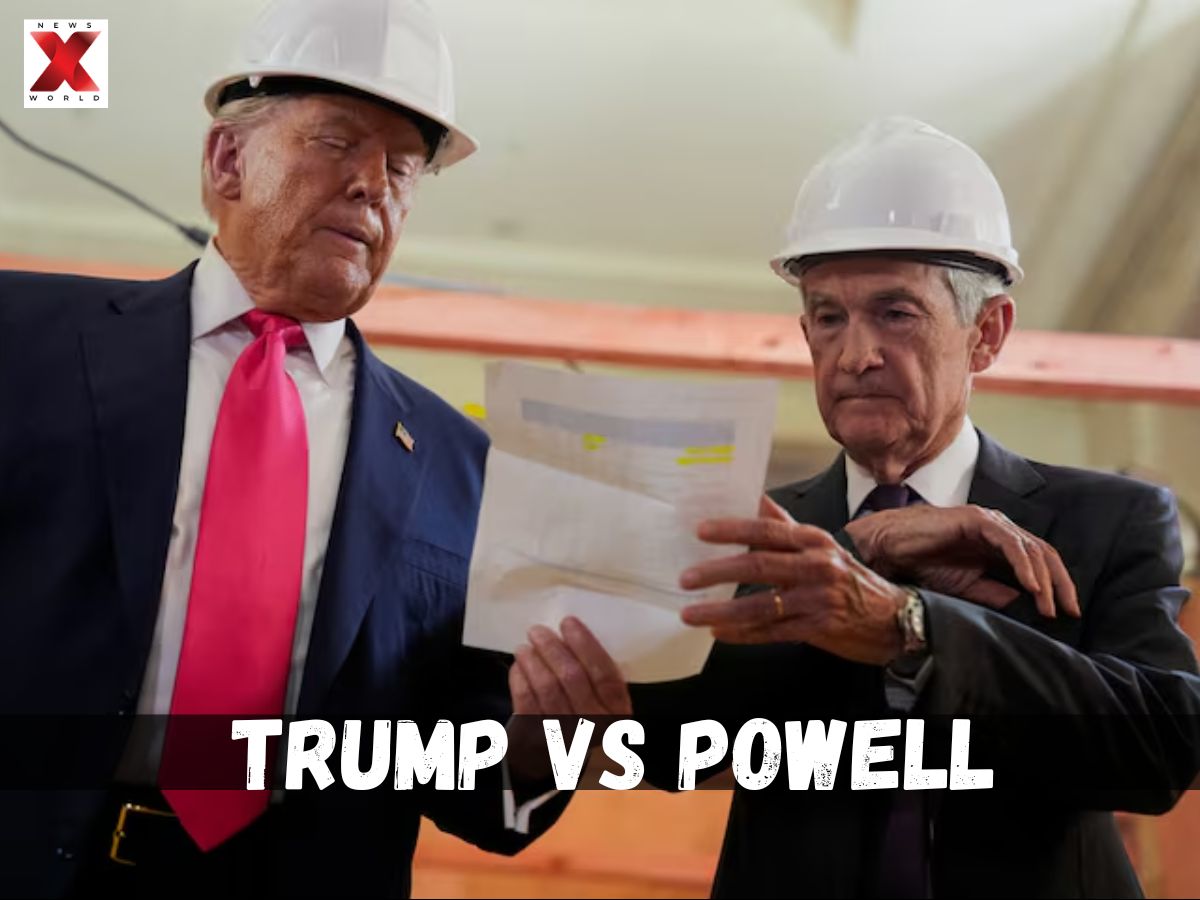
Powell vs Trump: A High-Stakes Power Struggle Over the Fed’s Independence
The US Department of Justice’s criminal investigation into Federal Reserve Chair Jerome Powell, stemming from his June 2025 congressional testimony on the Fed’s $2.5 billion headquarters renovation, adds a fresh dose of drama to what has long been Washington’s most predictable love-hate story. Powell and President Donald Trump were never meant to fit into the same frame, and now the plot has thickened. Calling the probe a “pretext,” Powell has accused the Trump administration of weaponising the investigation to pressure the central bank on interest rate policy. Trump has criticised Powell openly for years, but directly bruising a Fed chair has always been politically taboo, unless, of course, a criminal red flag appears. That’s what makes this moment a major plot twist. With Powell’s term ending in May 2026, the timing is hard to ignore.
Is this an attempt to weaken Powell before he hands over the reins?
By law, the Fed chair holds significant sway during leadership transitions, and loosening that grip could quietly tilt the balance of power. While the Federal Reserve is structurally independent and guided by global market forces, a Trump-aligned successor could make market influence far easier. Powell, notably, never played that game, and perhaps that’s exactly why this showdown is unfolding now.
Why Is It A Trump VS Powell? Rate Cuts, Red Lines, and a Battle for Control of the Fed
-
The probe deepens the long-running clash between President Donald Trump and Fed Chair Jerome Powell.
-
Trump has consistently pushed for aggressive interest rate cuts to boost growth.
-
Powell has stood firm on the Fed’s independence and data-driven decision-making.
Related Post -
The standoff highlights rising political pressure on US monetary policy.
Powell Under Fire: DOJ Probe Sends Shockwaves, Stocks and Dollar Wobble, Impacts Market
The investigation has made Wall Street jittery, but aside from the market clatter, there is a much more serious concern: the Federal Reserve’s independence being compromised. This incident has dismayed all those who enjoyed the sight of Jerome Powell steering the markets with a gradual, nearly unflappable style. A long-serving Fed chair, Powell created such a reputation that even his calm “good morning” at Fed meetings once made the markets quake all over the world. A very strong reputation takes a long time to build, and it is equally hard to lose.
Most economists and investors consider Powell to be the last bulwark between a data-driven policy and a political one. The investigation has only amplified fears that pressure might be operating behind the scenes in the monetary decision-making process. The markets reacted instinctively: US stock futures fell, the dollar dropped, and investors flocked to safe havens, pushing gold and silver prices to new highs on Monday, January 12, 2026. The equities later managed to stand their ground, but the disquiet did not go away.
When Powell gives in, the markets are concerned. When the Fed’s independence gives way, trust vanishes. For many people, this situation seems to be less about holding someone to account, and more about trying to unseat a person who has always been patient and has never batted an eye.
Economists Warn Of Market Chaos, Powell Gets Bipartisan Backing
Economists are sounding alarms: a Fed dominated by politics risks opening the gates to higher inflation, big fluctuations in the market, and a “political risk premium” on U.S. assets. Both bonds and equities may experience continuous sell-offs, and consequently, the costs of borrowing, including mortgages, may rise. At the same time, the political thriller is intensifying in Washington. There are a lot of opinions on the matter; for instance, former Fed chairs, ex-Treasury secretaries, and bipartisan lawmakers are on Powell’s side, describing the DOJ probe as an unprecedented abuse of power. Furthermore, one Republican senator has gone so far as to promise that he will block future Fed nominations until the situation is clarified. It is very clear that this is not merely a legal investigation; it is a fight for the monetary independence of the U.S.