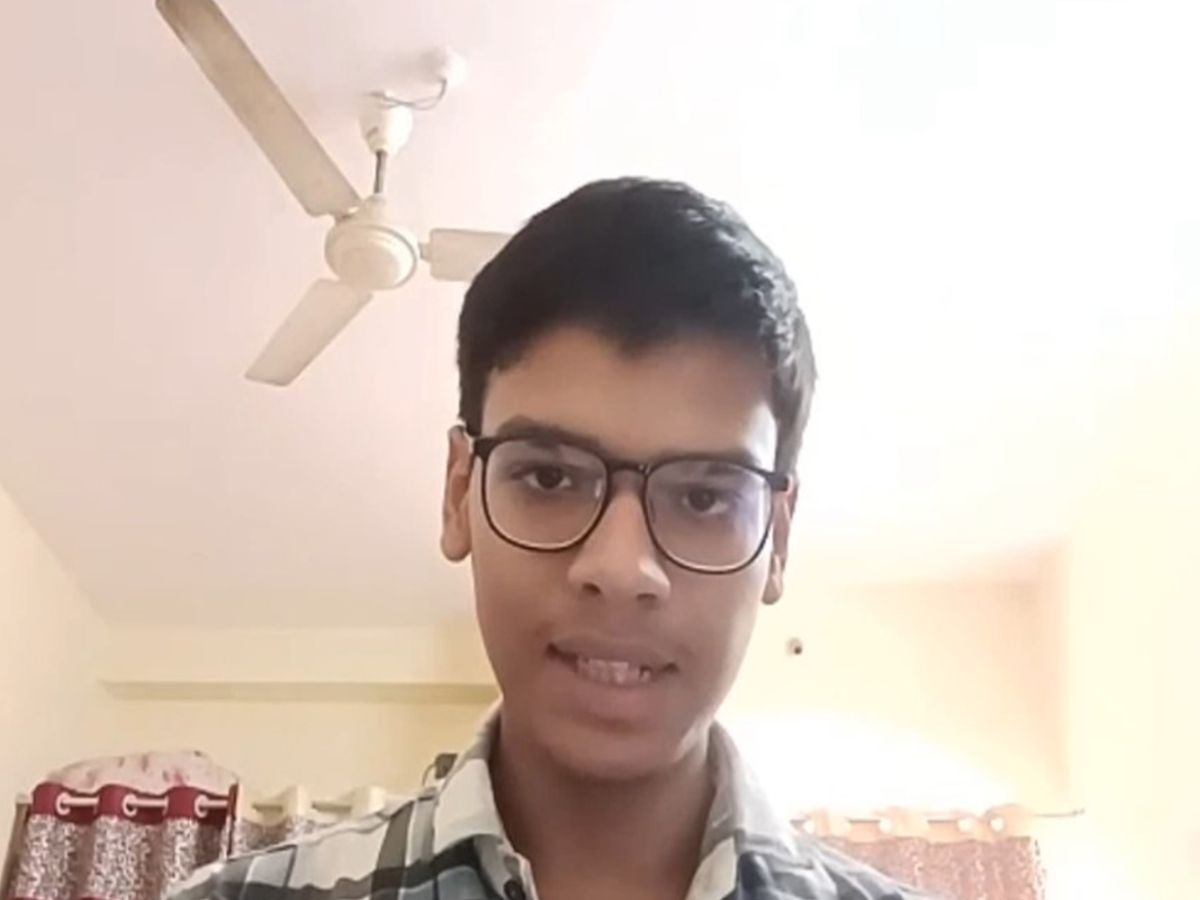
Sarthak Sidhant (Photo: ANI)
A Class 12 student of Jharkhand has become a talking point at the national level over issues pertaining to the Central Board of Secondary Education’s (CBSE) digital evaluation system. Sarthak Sidhant, a student of Ranchi, has attracted attention after revealing an analysis of CBSE’s On-Screen Marking (OSM) system and the tendering process involved in its execution.
Drawing the attention of educationists, political leaders and students alike, his observations were published on a blog based on the procurement documents which are publicly available. Several opposition leaders cited Sarthak’s analysis as they raised questions regarding the functioning of the evaluation system of the board.
Sarthak’s work came to light after his analysis of the documents pertaining to the contract awarded for the purpose of digital evaluation of CBSE Class 12 answer books. His observations were particularly based on the tendering process, through which he referred to changes and updates in eligibility conditions and the technical requirements at various stages of the process.
He posted the analysis on a blog, which quickly spread across social media and within the domain of educationists. However, the headlines grew when the political leaders began referring to the finding leading to the call for accountability and transparency in the evaluation process. Arising when CBSE’s On-Screen Marking system was already under fire from a handful of students who had expressed concerns about evaluation post board results declaration,
Information gathered so far suggests that Sarthak’s interest in the issue began when scanned copies of his own Class 12 answer sheets got to him. While analysing those, he allegedly spotted issues with the marks and got interested in knowing how the digital evaluation process worked.
With debate raging around answer sheet evaluation and accounting for transparency, he then started looking into the technology and administrative framework behind the OSM system. His investigation went beyond the student complaints and went into the procurement process behind the authentic digital marking.
The investigation was later collated in a public piece that scrutinised various documents gathered via government procurement portals.
Sarthak’s analysis is centred on the tender documents related to the OSM project. He alleges that certain terms were amended multiple times across various stages of the bidding procurement process.
The observations list and explain the alterations in eligibility criteria, certification standards and performance factors. The changes should be studied in detail in order to ensure the transparency of public procurement. The observations do not assert conscious wrongdoing but rather question the changes the tender underwent during the selection process. The observations are based on differences and similarities among publicly available official documents.
The 12th standard student apparently used procurement records, publicly available documents and technical inputs in preparing his analysis. He also engaged researchers and journalists according to information reports received.
By comparing a number of versions of these records, he tried to track changes in tender conditions and to document the evolution of the procurement process. The effort has since attracted interest for its granularity considering it was carried out by a school student.
The debate over the OSM has reached beyond social media venues. Sarthak has reportedly presented his findings before the Parliamentary Standing Committee on Education, where questions over evaluation practices and tendering were raised.
But the conversation about digital evaluation, transparency and procurement in India is not over yet, and his effort has become a key milestone in a broader conversation about making the examination system more accountable. Whether or not the findings will surface policy changes or lead to more investigations remains to be seen, but he has already succeeded in bringing national attention to an issue that matters to millions of students.
Radhika is a journalist with two years of experience covering education, competitive exams, and student-focused developments. She reports on exam notifications, results, admissions, scholarships, and academic policies, helping students stay updated with important information.
Known for her clear and reader-friendly writing, she simplifies complex education updates into accessible stories that guide aspirants, students, and parents. She is also interested in highlighting inspiring student journeys and grassroots education initiatives.
For queries or story tips, you can reach out to her on X (formerly Twitter): https://x.com/Hitkariradz
Denial Of Conjugal Rights Is Mental Cruelty: Supreme Court
The Supreme Court has ruled that persistent denial of conjugal rights, including refusal of sexual…
Is Firhad Hakim Joining BJP? Big Blow To TMC As Kolkata Mayor Resigns
The Trinamool Congress is facing mounting turmoil in West Bengal after its crushing Assembly election…
AI company Anthropic has warned that future AI systems could eventually design and build their…
