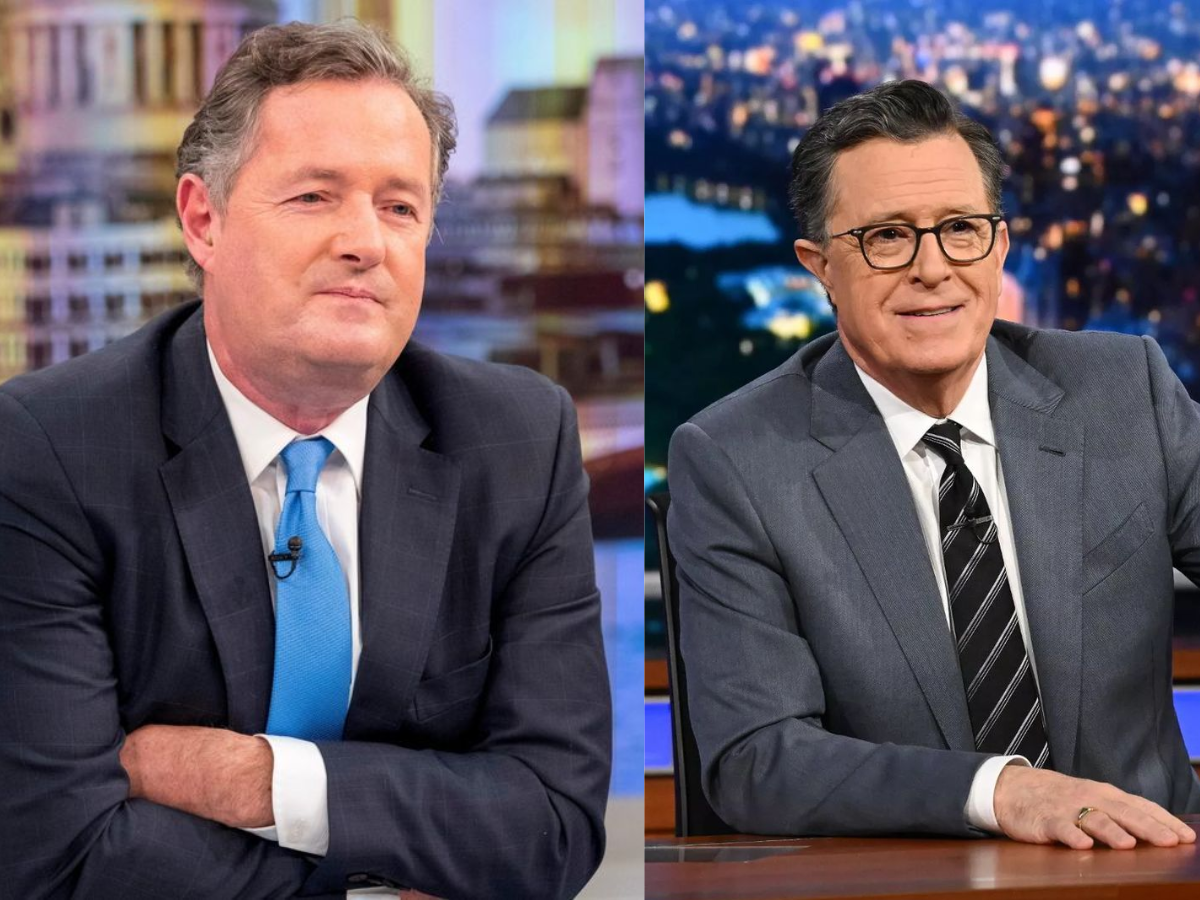
Piers Morgan vs. Late Night TV: A Comedy Crisis?
Piers Morgan, the master provocateur, has done it again, stirring up a raging controversy in the media arena this time going after the recent cancellation of Stephen Colbert’s Late Show. Morgan didn’t sugarcoat anything, asserting it’s “no wonder” Colbert’s show ran into the ground when, in his opinion, most late-night hosts have become “activist hacks for the Democrats.”
This isn’t just a criticism of one show’s ratings; it’s a wider condemnation of what Morgan thinks is a fundamental change in the purpose of late-night television from entertainment and satire to partisan campaigning. His observations ride a current of seething anger on the part of many who believe that mainstream comedy has lost its mass appeal by becoming too political and, in his view, decidedly one-sided.
The face of late-night television has certainly changed dramatically over the last two decades. Historically, hosts such as Johnny Carson or Jay Leno tended to tread a delicate line, providing humor that would appeal to both sides of the political divide, even when their own personal inclinations were well-known.
The joke tended to focus on things such as current events, popular culture, and common human experience. Yet as the culture has become more polarized politically, especially in the United States, most late-night shows have turned strongly to political commentary, frequently presented with a firmly left-leaning inclination. This has created a dynamic where the shows can typically be used as a forum for Democratic opinions and criticism of conservative leaders, particularly when there is increased political tension.
Although some suggest that it is an expression of the personal opinions of the hosts and writers, others, such as Morgan, argue that it drives away a large percentage of the audience, primarily those who are not liberal in their thinking. The nature of humor itself, historically based on universalities and questioning every type of power, is thereby likely undermined when continually aimed at a single end of the political spectrum.
Aside from the ideological points, Morgan’s position also borders on the economic feasibility of such clearly partisan programming. In an extremely competitive media marketplace, ratings are everything. If a large part of the target audience is made to feel lectured to or excluded, then it obviously affects ratings and, by extension, ad money.
Although networks will officially cite “financial considerations” for cancellations, such as with The Late Show, the driving forces can most often be traced to audience interaction and perceived relevance. When hosts are seen less as entertainers and more as political commentators, their popularity suffers.
The conventional function of late-night as a communal cultural experience, where individuals from all walks of life could bond over laughter, is eroded. Not only does this impact the individual programs, it also creates questions about the overall power of the media and its capacity to unite, not divide, a diverse national audience. Morgan’s vigorous words are a powerful reminder that in the unstable realm of television, audience impression and popular appeal will sometimes trump even the most zealous political convictions.
Also Read: Billy Joel Breaks Silence, Slams DUI Rumors With Powerful Comeback: ‘I Am Not A Criminal’
A recent media graduate, Bhumi Vashisht is currently making a significant contribution as a committed content writer. She brings new ideas to the media sector and is an expert at creating strategic content and captivating tales, having working in the field from past four months.
The 98th Oscars arrive on March 16, 2026, with Conan O’Brien hosting at Dolby Theatre,…
Iran’s IRGC launched coordinated missile and drone strikes on four US airbases, damaging key military…
One Piece Anime Season Premiere: When And Where To Watch Pirates’ Thrilling New Episodes!
The legendary One Piece anime returns April 5, 2026, with high-quality animation and a seasonal…
