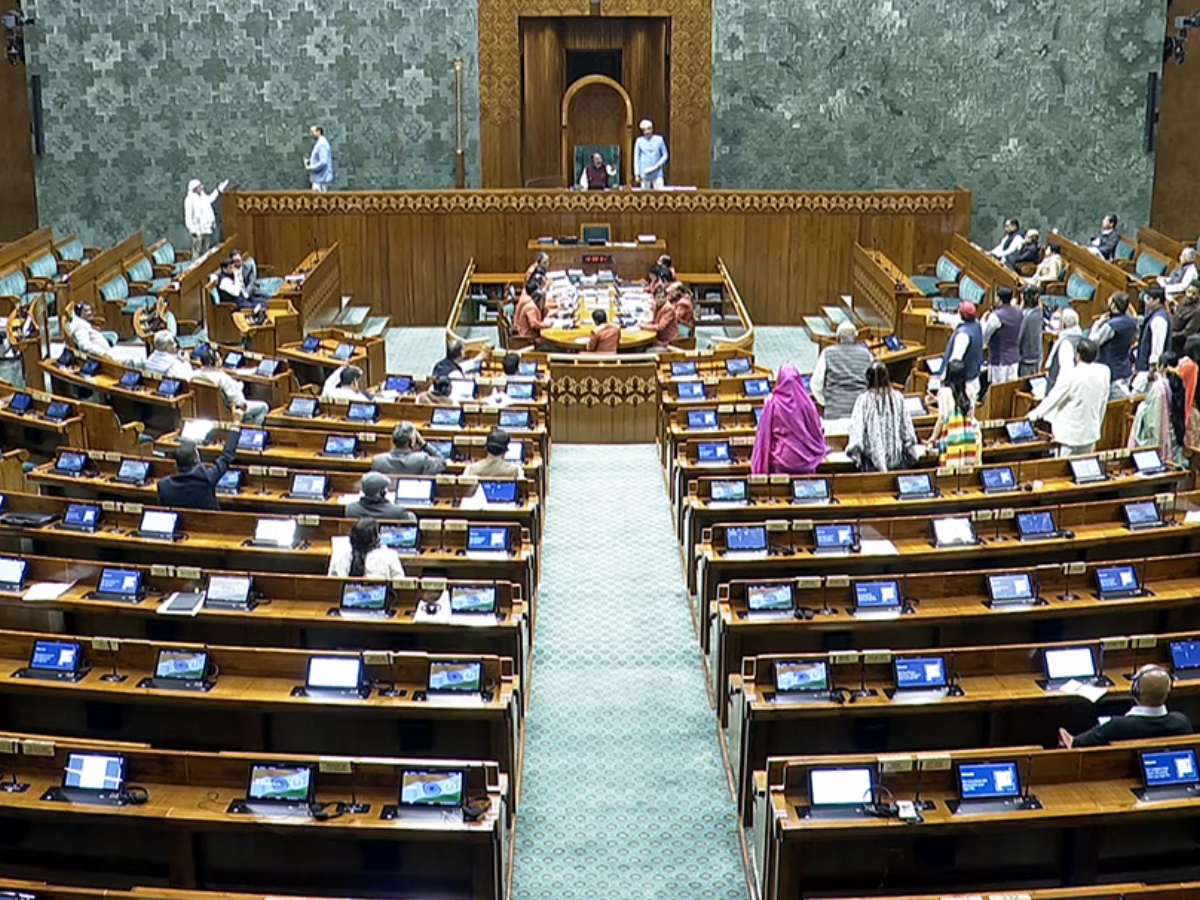
India’s Right to Disconnect Bill proposes legal protection for employees to ignore after-hours work calls and emails. Photo: ANI.
Right to Disconnect Bill: A private member’s bill seeking to give employees the legal right to ignore work-related calls and emails after office hours was introduced in the Lok Sabha on Friday. The proposal has revived the debate around work-life balance and the growing pressures of constant digital connectivity.
NCP MP Supriya Sule introduced the Right to Disconnect Bill, 2025. The bill aims to formally recognise an employee’s right to disengage from work-related communication outside working hours and on holidays.
It proposes the establishment of an Employees’ Welfare Authority, which would be responsible for defining and enforcing this right across workplaces.
Also Read: IndiGo Flight Chaos: Sonu Sood & Vir Das Ask Public Not to Disrespect Airline Ground Staff
The Bill frames the right to disconnect as essential for reducing stress and preventing burnout. Citing findings highlighted by the World Economic Forum, its “Objects and Reasons” note states, “Studies have found that if an employee is expected to be available round the clock, they tend to exhibit risks of overwork like sleep deprivation, developing stress, and being emotionally exhausted.”
The document further warns that “the persistent urge to respond to calls and e-mails (termed as ‘telepressure’)… is reported to have destroyed work-life balance of employees.”
According to one study cited in the bill, constant monitoring of work communication can “overtax employees’ brains,” leading to a condition described as ‘info-obesity’.
The Right to Disconnect Bill lays out several mechanisms and safeguards:
Employers may contact employees outside working hours, but workers will not be obliged to reply. Employees will have the right to refuse work-related calls or emails, and cannot face disciplinary action for doing so.
The proposed authority would confer the right to disconnect to all employees and oversee implementation of the legislation across sectors.
The authority must conduct an extensive study on how employees use digital and communication tools beyond work hours.
Every company with more than 10 employees must negotiate with workers, unions, or representatives on conditions for after-hours work and provide overtime at the normal wage rate for any work done beyond official hours.
The government, along with companies, is required to offer counselling services to help employees manage work-life boundaries and establish digital detox centres for workers.
Companies violating the law would face a penalty amounting to 1% of the total remuneration of employees.
Members of Parliament from both the Lok Sabha and Rajya Sabha can introduce bills on issues they believe require legislation. These are known as Private Members’ Bills. Although they can influence public debate, only a few have ever become law. Typically, most are withdrawn after the government responds to the proposal.
To date, only 14 such bills have been enacted, with six passing in 1956. The last Private Member’s Bill to be approved was the Supreme Court (Enlargement of Criminal Appellate Jurisdiction) Bill, 1968, which became law on August 9, 1970.
Despite the growing conversations around employee welfare and digital overload, the fate of Private Members’ Bills in India remains uncertain.
Also Read: Ambedkar Death Anniversary 2025: Why Modern Feminism Owes A Debt To Ambedkar’s Equality Ideals
Zubair Amin is a Senior Journalist at NewsX with over seven years of experience in reporting and editorial work. He has written for leading national and international publications, including Foreign Policy Magazine, Al Jazeera, The Economic Times, The Indian Express, The Wire, Article 14, Mongabay, News9, among others. His primary focus is on international affairs, with a strong interest in US politics and policy. He also writes on West Asia, Indian polity, and constitutional issues. Zubair tweets at zubaiyr.amin
Tomorrowland Thailand 2026 debuts December 11–13 at Wisdom Valley with six stages, top international DJs,…
TikToker Madhu Raju, known for sharing dance videos on social media, has landed in controversy…
Diyvang People Need a Platform, Not Gifts” – Deputy Chief Minister Harsh Sanghvi
Grand showcase of divyang talents at the Fashion and Talent Show by Love N Care…
