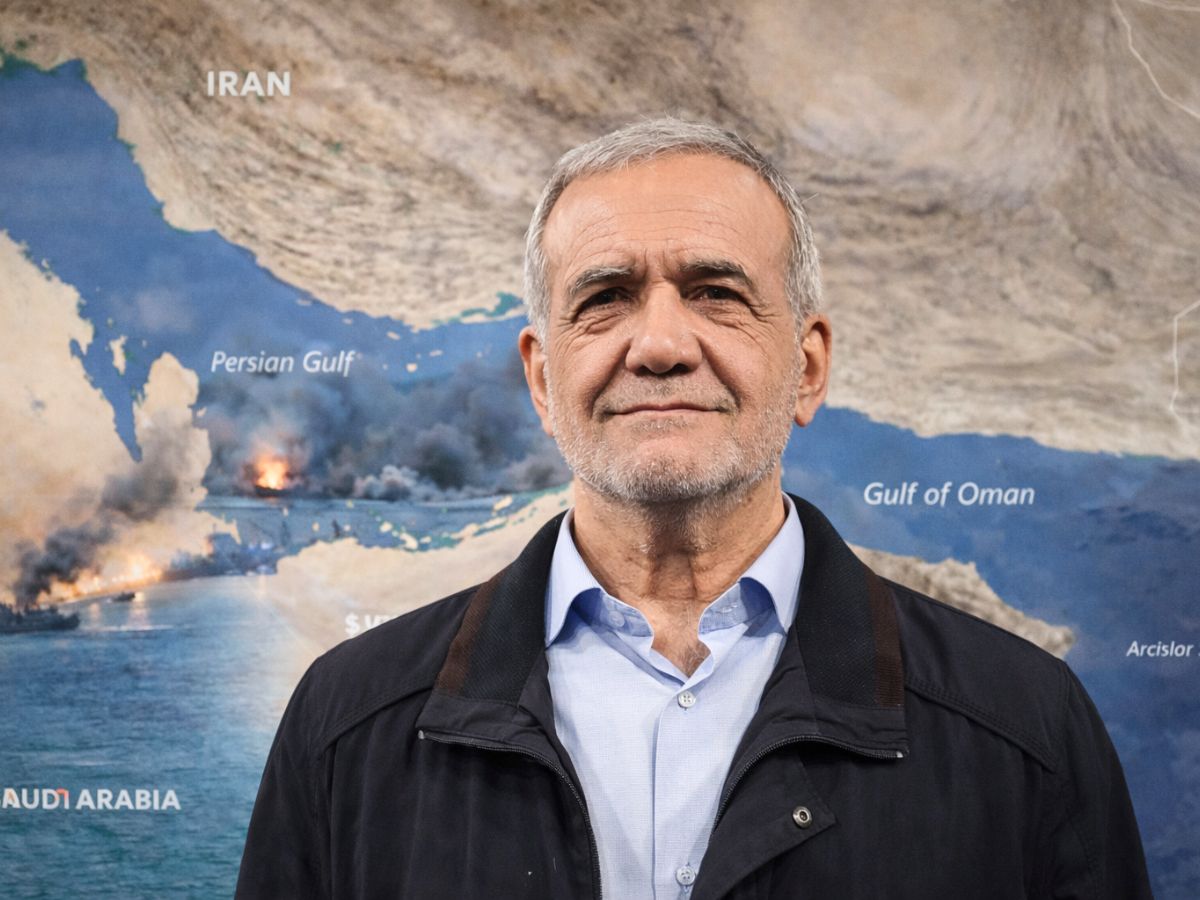
Tehran conducts live-fire drills near Strait of Hormuz. (Photo: AI)
Iran has issued a Notice to Airmen (NOTAM) warning of live-fire military exercises near the Strait of Hormuz, one of the world’s most strategically important maritime chokepoints.
The notice, effective from January 27 to January 29, covers a circular area with a radius of five nautical miles (approximately 9 km), extending from ground level up to 25,000 feet (7,600 meters).
During this period, the designated airspace will be restricted and hazardous for civil and commercial aviation.
According to Anadolu News Agency, the drills form part of routine military activity but come amid a period of escalating tensions between Tehran and Washington.
Analysts have noted that the exercises signal Iran’s readiness to assert control over a critical passage for global oil and gas flows, even as regional powers work to prevent a broader military confrontation.
In response to the rising tensions, US Air Forces Central (AFCENT) has launched multi-day aerial readiness exercises across the Central Command area of responsibility.
The drills are designed to demonstrate rapid deployment and sustainment capabilities, ensuring that American forces can respond swiftly to any perceived threat from Tehran.
Officials emphasized that all options remain on the table, including military action, as the United States and its allies continue to put pressure on Iran’s ruling system.
President Donald Trump has reportedly been considering a range of measures against Iran, particularly in light of domestic protests and ongoing confrontations with Washington’s regional partners.
The Strait of Hormuz links the Persian Gulf with the Gulf of Oman and the Arabian Sea. It is a narrow waterway, yet it carries a disproportionate share of the world’s oil and liquefied natural gas (LNG) shipments.
According to market intelligence firm Kpler, about 13 million barrels per day of crude oil transited the Strait in 2025, accounting for roughly 31% of global seaborne crude flows. Additionally, nearly 20% of global LNG trade passes through this chokepoint.
Industry experts warn that any disruption in the Strait could trigger a global energy crisis. Saul Kavonic, head of energy research at MST Marquee, stated, “A disruption through the Strait of Hormuz could cause a global oil and gas crisis, especially when considering the desperate and ill-advised lengths the current Iranian regime may go to if they feel increasingly cornered.”
Even a temporary disruption of the Strait could send oil prices sharply higher. Andy Lipow, president of Lipow Oil Associates, explained, “The fear of a closure will cause the price of oil to rise a few dollars per barrel, but a complete closure could result in a $10 to $20 per barrel spike.”
Despite these warnings, analysts consider a full closure unlikely. Iran has threatened to block the Strait on several occasions in the past, but actual attempts have never occurred due to the high economic and political cost. A sustained blockade would not only isolate Tehran from international markets but also risk retaliation from the United States and its allies.
Neighboring Gulf states, including Saudi Arabia, the UAE, Qatar, and Oman, have reportedly been working with Washington to prevent any military escalation. Their focus is on maintaining regional balance and protecting energy exports, which are vital for both their economies and the global energy market.
The Strait of Hormuz is particularly crucial for India, which imports over 40% of its crude via this waterway. Any disruption could significantly impact India’s energy security, as the country relies heavily on imported oil to meet over 88% of its consumption.
Despite repeated threats, Iran remains structurally reliant on the Strait of Hormuz. While the country has a few export terminals outside the Persian Gulf, their combined capacity is insufficient to replace the volume of oil transiting the Strait.
Any attempt to block the waterway would provoke international retaliation, further strain Tehran’s relations with Oman, and isolate the regime politically and economically.
Analysts note that Iran is unlikely to fully close the Strait unless it perceives an existential threat. Temporary disruptions, such as harassing tankers or brief blockades, could occur, but the physical impact on global oil supply would be limited.
Kpler estimates the current oil market is leaning toward oversupply, with roughly 2.5 million barrels per day of excess in January and over 3 million barrels per day in February and March.
The Strait of Hormuz is a critical artery for global energy flows. A prolonged disruption could trigger widespread price volatility, affect energy-dependent countries, and destabilize markets already grappling with economic uncertainty.
Homayoun Falakshahi, Head of Crude Oil Analysis at Kpler, describes the Strait as the region’s “strategic vulnerability”, noting that even indirect threats, such as Iranian proxy actions in Yemen, could impact global oil and gas trade.
While the likelihood of a full blockade remains low, the mere prospect keeps global markets on edge. Analysts stress that maintaining stability in the Strait is crucial not only for the Gulf economies but for global energy security and economic stability.
Sofia Babu Chacko is a journalist with over five years of experience reporting on Indian politics, crime, human rights, gender issues, and stories about marginalized communities. She believes journalism plays a crucial role in amplifying unheard voices and bringing attention to issues that truly matter. Sofia has contributed articles to The New Indian Express, Youth Ki Awaaz, and Maktoob Media. She is also a recipient of the 2025 Laadli Media Awards for gender sensitivity. Beyond the newsroom, she is a music enthusiast who enjoys singing. Connect with Sofia on X: https://x.com/SBCism
Jasprit Bumrah and wife Sanjana Ganesan celebrate their fifth anniversary with laughs and love, including…
19 Minute 34 Second Viral MMS: A controversial video of 19 Minutes 34 Seconds has…
IndiGo And Adani Airports Partner To Offer IndiGo BluChips On Duty-Free Shopping
IndiGo, India’s preferred airline, and Adani Airport Holdings Limited (AAHL), the country’s largest private airport…
