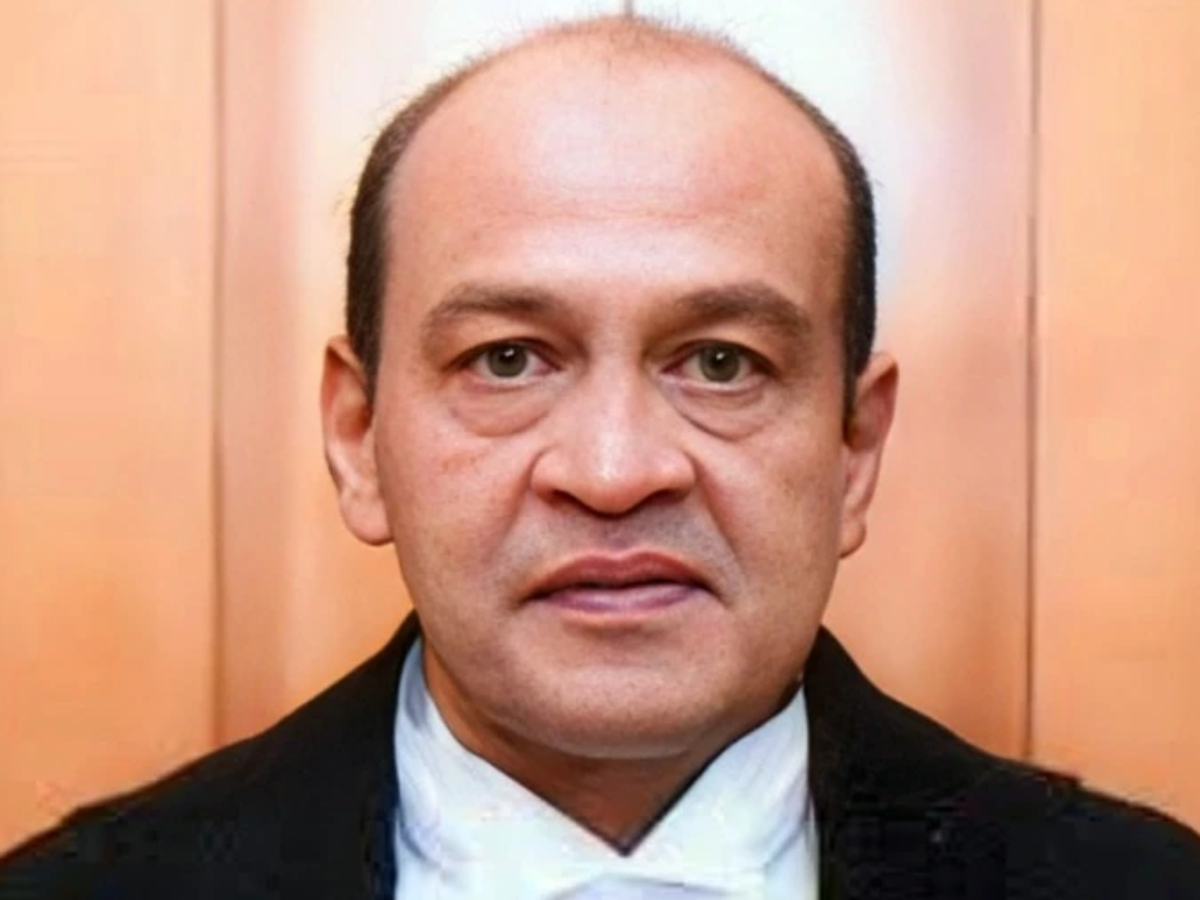
Justice Yashwant Varma (Credit - X)
The Government has decided to bring a motion to impeach Justice Yashwant Varma, who caught up in the controversy after a huge cache of burnt current notes was discovered at his official residence in March this year, during the Monsoon session of Parliament. Parliamentary Affairs Minister Kiren Rijiju said the motion has been signed by more than 100 MPs, the number which crossed the threshold of support required for tabling the impeachment exercise in the Lok Sabha.
Rijuju said the motion has received support from all parties, even the Congress and the INDIA bloc, adding that “Graft in the judiciary is concerning.”
If Justice Varma is impeached, he will be the first judge to be removed by this way.
Justice V. Ramaswami was the first judge for whom removal proceedings were initiated in 1993, but the motion failed in the Lok Sabha due to abstentions.
In 2011, impeachment proceedings were also initiated against Justice Soumitra Sen and the Rajya Sabha voted in favour of the motion but he tendered resignation before the Lok Sabha could vote. In 2018, the Supreme Court recommended impeachment of Allahabad High Court Justice S N Shukla, but the government did not initiate proceedings, and he retired on July 17, 2020.
A huge cache of charred currency notes was recovered from the official residence of Justice Yashwant Varma by emergency service teams following a fire incident on his premises in March this year. An in-house committee appointed by the apex court indicted him. Then Chief Justice of India Khanna submitted the report before President Droupadi Murmu and Prime Minister Narendra Modi, recommending Varma’s removal after he refused to resign.
Now, the Government comes with a plan to bring a motion to remove Justice Yashwant Varma. The motion has gained support from more than 50 Rajya Sabha MPs and over 100 Lok Sabha MPs.
In layman’s terms, impeachment refers to the parliamentary proceedings to examine the alleged misconduct or incapacity of a sitting judge and recommend his/her removal to the President.
Articles 124 and 217 of the Constitution of India explain the process of impeachment for the sitting judges of the Supreme Court and the High Court, respectively. A detailed procedure is given under the Judges Inquiry Act 1968.
The Articles 124(4) read, “A Judge of the Supreme Court shall not be removed from his office except by an order of the President passed after an address by each House of Parliament supported by a majority of the total membership of that House and by a majority of not less than two-third of the members of the House present and voting has been presented to the President in the same session for such removal on the ground of proved misbehaviour or incapacity.”
While Article 124 (5) says, Parliament may by law regulate the procedure for the presentation of an address and for the investigation and proof of the misbehaviour or incapacity of a Judge under clause (4)”
Article 217(1) (b) provides a similar procedure and grounds for impeachment of a High Court judge. The article says, “A Judge may be removed from his office by the President in the manner provided in clause (4) of article 124 for the removal of a Judge of the Supreme Court.”
The procedure for the impeachment is given in the Judges Inquiry Act 1968.
1. To initiate the procedure, a motion can be introduced in either house of Parliament. The condition is that it must be signed by at least 100 members, if it is introduced in Lok Sabha and by at least 50 members, if it is introduced in Rajya Sabha.
2. Then the motion, on the grounds for impeaching the judge, is introduced in the House, where it is signed.
3. Following this, a detailed inquiry is done by a three-member committee against the alleged misconduct or incapacity of the judge.
4. Once the inquiry is done, the report is submitted to both Houses of Parliament for discussion and voting. Notably, the resolution must be passed by a ‘Special Majority’ which mandates (a) a majority of the total members of each house and (b)a 2/3rd majority of the members present and voting in each of the houses.
5. After the impeachment resolution is passed in both houses, the judge is officially removed by the President.
ALSO READ: CJI BR Gavai Rebukes Advocate For Referring Justice Yashwant Varma As Only ‘Varma’
Cuba’s entire electrical grid failed, leaving about 11 million people without power as aging infrastructure collapsed…
Dubai’s Civil Aviation Authority has banned all foreign flights to DXB and DWC indefinitely due…
Over 20 explosions shook Kabul, targeting the 5th district and security sites, while fighter jets…
