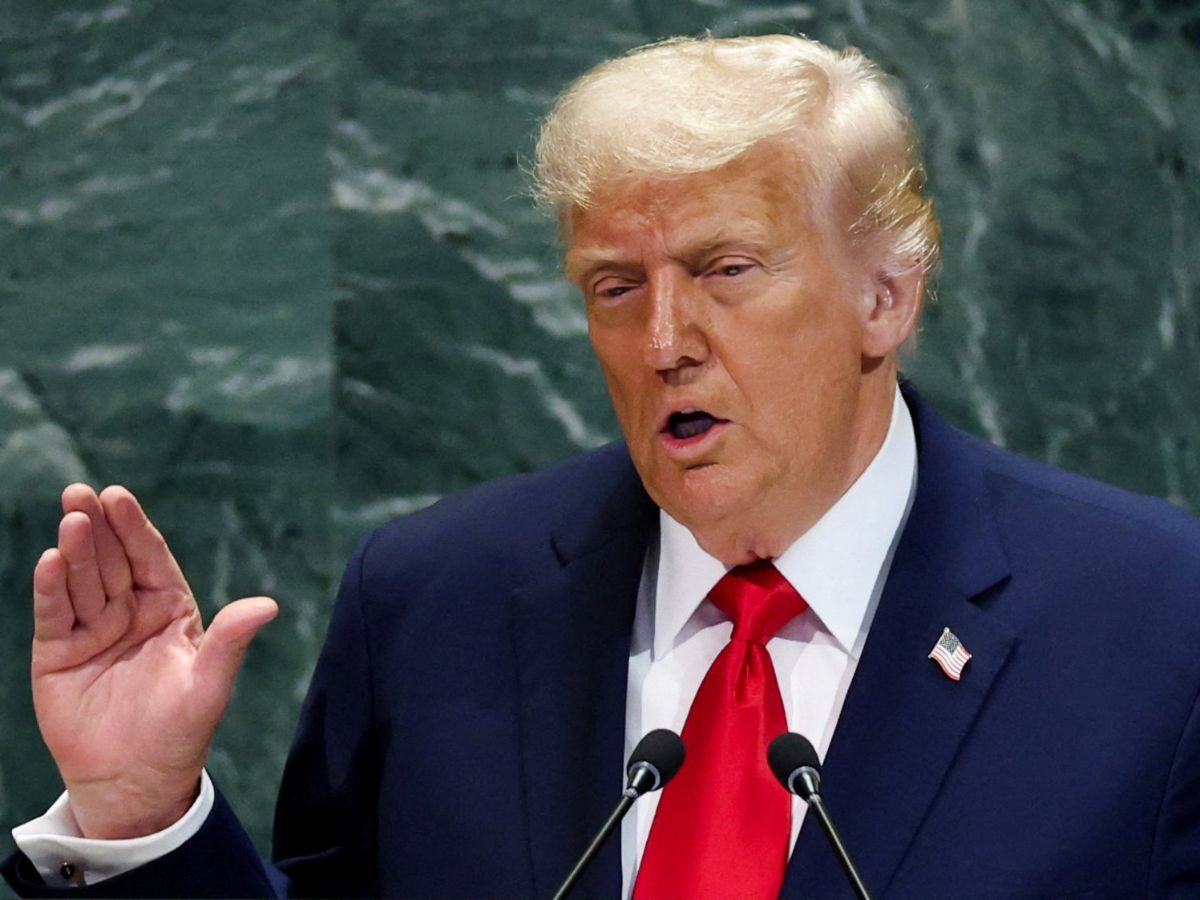
United States is moving to tighten scrutiny on Chinese technology companies. (Photo: ANI)
The United States is moving to tighten scrutiny on Chinese technology companies amid rising national security concerns. Nine US lawmakers have urged Defence Secretary Pete Hegseth to add 17 Chinese firms to the Pentagon’s Section 1260H list, citing their alleged links to China’s military and intelligence ecosystem. The request signals a renewed push by Washington to curb Beijing’s access to advanced technologies developed by civilian companies.
The Pentagon 1260H list is maintained by the US Department of Defense under Section 1260H of the National Defense Authorization Act for Fiscal Year 2021. It tracks Chinese companies that are believed to be directly or indirectly connected to the People’s Liberation Army and are operating in or engaging with the United States.
The purpose of the list is to counter China’s Military-Civil Fusion policy, a strategy through which Beijing integrates civilian research, commercial technology and private firms into its military development.
US lawmakers argue that this approach allows the Chinese military to acquire cutting-edge technologies originally developed for civilian use, posing risks to US national security.
Although inclusion on the 1260H list does not amount to formal sanctions, it acts as a warning to US government agencies, defence contractors and suppliers about the Pentagon’s assessment of these firms.
In their letter to Defence Secretary Pete Hegseth, US lawmakers said the companies recommended for inclusion represent the “next logical tranche” of contributors to China’s military-industrial and internal security capabilities. They stressed that adding these firms to the list would help ensure that US taxpayer funds do not indirectly support China’s defence, surveillance or intelligence infrastructure.
The lawmakers pointed to the growing military applications of artificial intelligence, semiconductors, advanced displays, robotics and sensing technologies. According to them, firms operating in these sectors are increasingly central to China’s military modernisation and internal security apparatus under the Military-Civil Fusion framework.
The 17 companies named by the lawmakers span key strategic technology sectors. These include artificial intelligence firm DeepSeek, smartphone maker Xiaomi, semiconductor manufacturers Hua Hong Semiconductor, Kingsemi and Shennan Circuit, display makers BOE Technology Group and Tianma Microelectronics, and several sensing, surveillance and robotics companies such as RoboSense, Livox, Unitree Robotics, CloudMinds, LeiShen and Tiandy Technologies.
US officials have previously alleged that some of these firms develop or supply dual-use technologies that can serve both civilian and military purposes, including surveillance systems, autonomous platforms and advanced data processing tools.
DeepSeek has drawn particular attention after Reuters reported that a senior US official claimed the AI firm had assisted China’s military and bypassed US export controls. Meanwhile, BOE Technology Group, a major global display manufacturer and supplier to Apple, has been flagged as part of a broader US effort to remove Chinese display companies from sensitive supply chains by 2030.
Both companies have denied wrongdoing, and several Chinese firms previously added to the 1260H list have challenged their inclusion in US courts.
While the Pentagon’s 1260H list does not impose direct sanctions, it carries significant consequences. Companies named on the list may face restricted access to US government contracts, reduced business opportunities with American firms and increased pressure from global partners wary of regulatory risks. The list often serves as a precursor to tougher measures by other US agencies.
Major Chinese companies such as Tencent Holdings and battery giant CATL are already included, highlighting the expanding scope of US scrutiny.
The push to expand the 1260H list comes amid broader geopolitical tensions and heightened concerns over cybersecurity. It also follows reports of suspected Chinese cyber intrusions targeting Western government systems, including a recent breach of the UK Foreign Office’s digital infrastructure.
As Washington continues to reassess its technological and economic ties with Beijing, analysts expect the Pentagon 1260H list to play an increasingly prominent role in shaping the future of US-China relations, particularly in critical and emerging technologies.
ALSO READ: Epstein Files: New Documents Refer To Ayurveda And Massage Techniques From India | Report
Sofia Babu Chacko is a journalist with over five years of experience covering Indian politics, crime, human rights, gender issues, and stories about marginalized communities. She believes that every voice matters, and journalism has a vital role to play in amplifying those voices. Sofia is committed to creating impact and shedding light on stories that truly matter. Beyond her work in the newsroom, she is also a music enthusiast who enjoys singing.
Nancy Guthrie Kidnapping Case: Nancy Guthrie is the mother of prominent US news anchor and…
The photograph was published in a massive document release commissioned by the Epstein Files Transparency…
Happy Propose Day 2026 is the perfect occasion to express your deepest feelings and turn…
