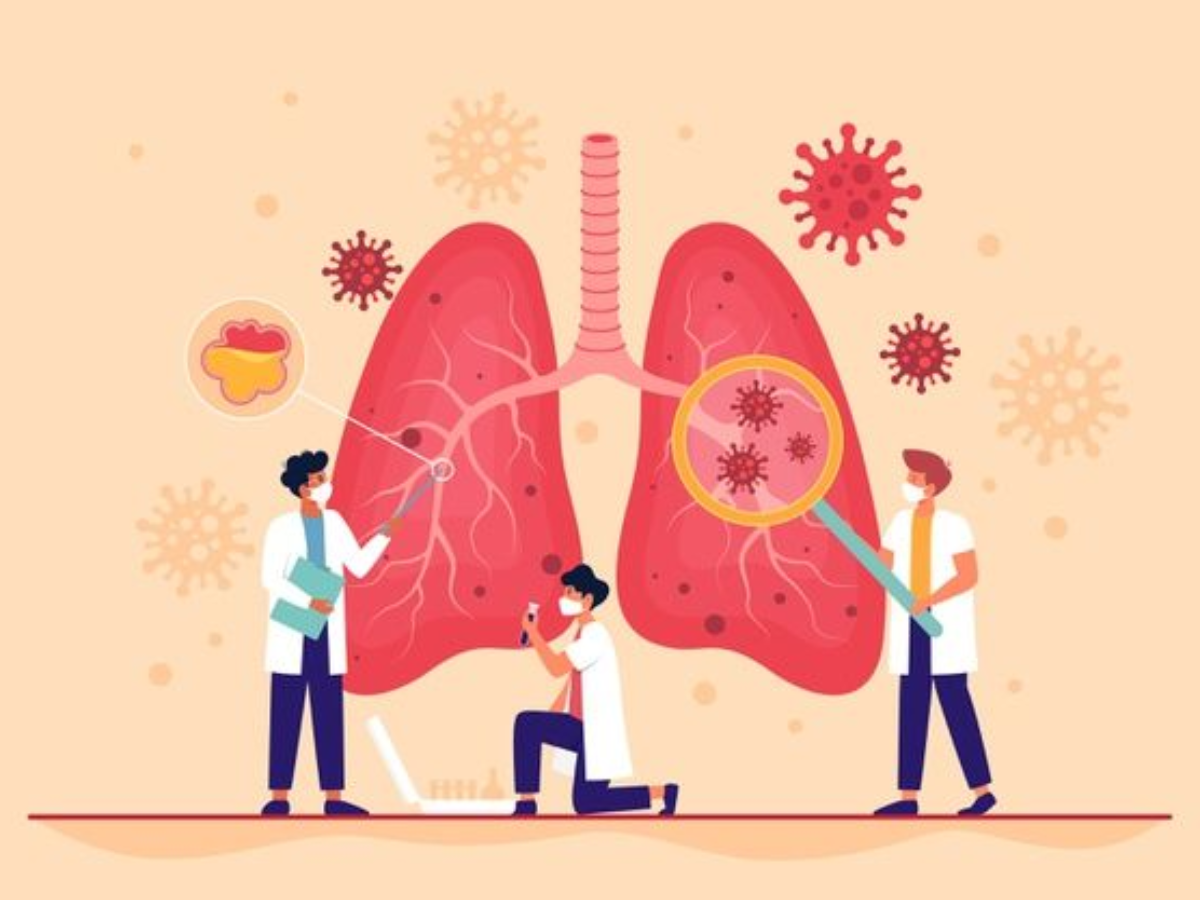
Lung Cancer: All You Need To Know (Image Credit: Pinterest)
One of the most common and fatal kinds of cancer is lung cancer in the world. It is a major health issue in the world with a late onset of the disease, and is a highly aggressive disease despite medical breakthroughs. The proposed article seeks to offer an in-depth description of lung cancer and its nature; what it is, the manner in which it develops, the signs to watch out as well as how it can be treated.
Lung cancer is a cancer that starts in the lungs; the two air-filled organs present in the chest that work to carry in oxygen and to remove carbon dioxide. It appears when cells in the lungs start to multiply uncontrollably, becoming a mass or a tumor that has the potential to affect the functionality of the lungs and spread to other areas of the body.
1. Non-Small Cell Lung Cancer (NSCLC)
The most widely occurring type constitutes approximately 85 percent of the cases.
The subtypes are adenocarcinoma, squamous cell carcinoma, and large cell carcinoma.
2. Small Cell Lung Cancer (SCLC)
Greater aggressive and rapidly growing.
The common feature of it is usually linked to heavy smokers and is often spread rapidly.
Lung cancer is a result of the mutation of lung cells. This mutation may be brought about by:
Lung cancer often does not have symptoms in its early stages. The symptoms can be as follows:
In its advanced forms, lung cancer may spread (metastasize) to other body organs, causing some specific symptoms such as bone pains, headaches, or nervous disorders.
Staging of lung cancer is dependent on the size of the tumor, the spread of cancer to the lymph nodes, and metastasis:
Stage 0: The top layer of the lung cells only has cancer.
Stage I: Tumor is small and is localized.
Stage II-III: A Bigger nodule or extension to the lymph nodes in neighboring areas.
Stage IV: Spreading of cancer to another body organ (metastatic lung cancer).
Treatment is based on the type, stage as well and health of the patient. The most common treatments are:
1. Surgery
Excises a malignant part of the lung.
Best when used in early stages.
2. Radiation Therapy
Destroys cancerous cells using high-energy rays.
Can be applied singly or in conjunction with other treatments.
3. Chemotherapy
Chemotherapeutics destroy cancer cells multiplying at extremely fast rates.
It is frequently employed following an operation or when an operation cannot be performed.
4. Targeted Therapy
Anticancer agents that bind specific genetic mutations (e.g., EGFR, ALK).
More focused and, in most cases, having fewer side effects.
5. Immunotherapy
Increases the immunity of the body to attack and kill the cancerous cells.
Effective in the case of advanced NSCLC in particular.
6. Palliative Care
Concentrates on palliation and quality of life later stages.
Although not every condition can be prevented, the incidence of lung cancer can be heavily mitigated with the assistance of:
Apple is preparing to launch the iPhone 18 Pro and iPhone 18 Pro Max with…
Over 400 killed in Kabul as a Pakistani airstrike hits a hospital. Afghanistan stars Rashid…
Explosions rocked Dubai early Tuesday after residents received urgent alerts warning of a possible missile…
