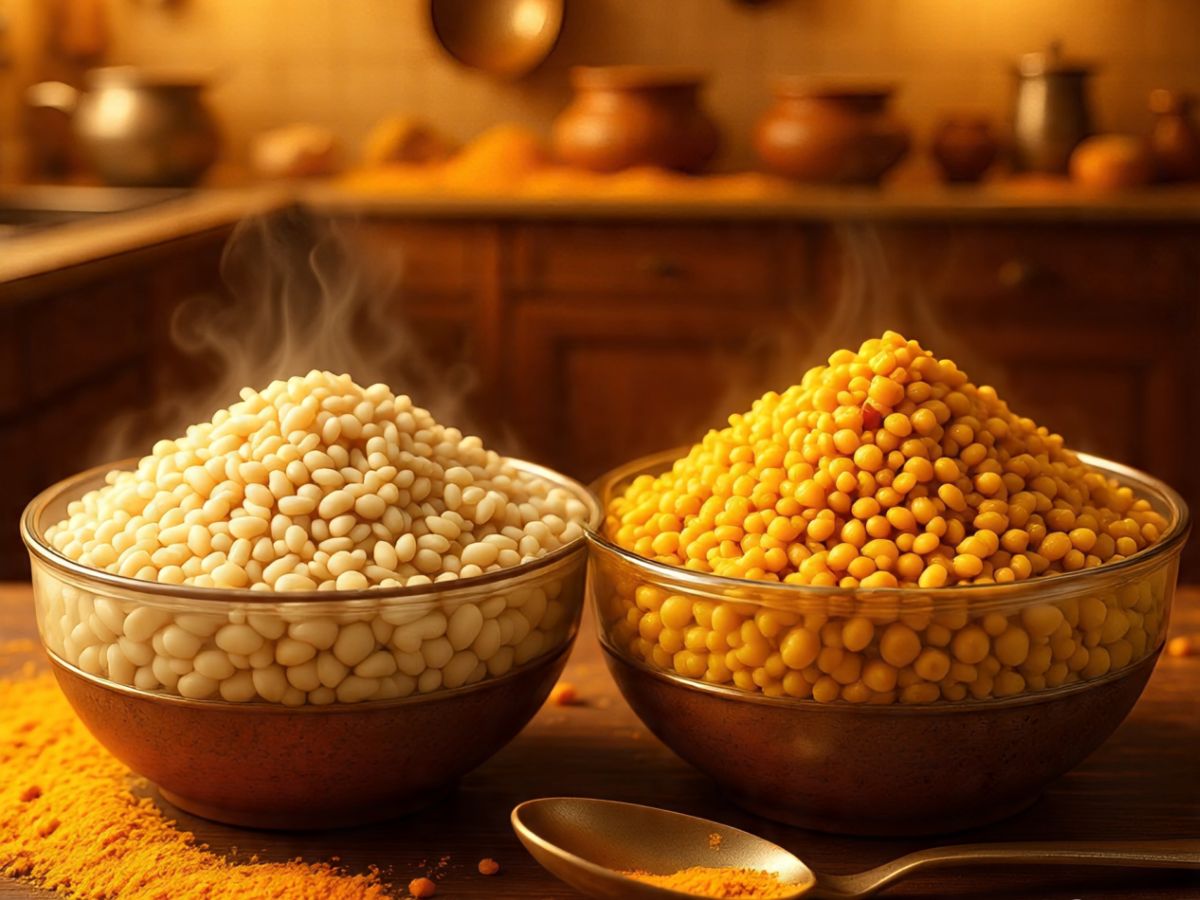
Moong Dal vs Toor Dal: Which Dal Packs More Nutrition? Check Nutritional Value, Health Benefits (Picture Credits: AI)
Which Dal Is Healthy: Dal remains a cornerstone of Indian meals, offering a rich blend of protein, fiber, and essential nutrients. Among the many varieties cooked daily across the country, moong dal and toor dal are two of the most popular choices.
While both are considered healthy, the debate often arises: Is moong dal actually healthier than toor dal?
Moong dal, commonly known as green gram, is a split mung bean widely consumed across Asia. Loved for its light texture and easy digestibility, it is especially popular among vegetarians due to its high-quality plant protein.
Key nutrients in moong dal (per 100g):
Protein: 24g
Fiber: 7.6g
Iron: 1.8mg
Potassium: 1152mg
Folate: 156mcg
Low in calories and fat, moong dal is often recommended for weight management and clean eating.
Supports digestion: The high fiber content aids smooth bowel movement and helps prevent constipation.
Promotes heart health: Its potassium levels assist in keeping blood pressure under control.
Helps regulate blood sugar: With a low glycemic index, moong dal is a safe choice for diabetics.
Toor dal, also known as pigeon pea, forms the base of several Indian dishes, especially the classic dal tadka and sambar. It is dense in nutrients and provides sustained energy.
Key Nutrients In Toor Dal (per 100g):
Protein: 22g
Fiber: 5.1g
Iron: 3.9mg
Potassium: 1152mg
Folate: 173mcg
Despite being slightly heavier than moong dal, it is still low in fat and calories, making it a reliable option for balanced meals.
Boosts heart health: Potassium in toor dal helps reduce hypertension risk.
Prevents anemia: Its higher iron content supports healthy red blood cell production.
Strengthens bones: The calcium present aids in maintaining strong bone density.
Nutrient- Moong Dal (per 100g), Toor Dal (per 100g)
Protein- 24g, 22g
Fiber- 7.6g, 5.1g
Iron- 1.8mg, 3.9mg
Potassium- 1152mg, 1152mg
Folate- 156mcg, 173mcg
Moong dal leads in protein and fiber, making it a preferred choice for weight-watchers and those with digestive concerns. However, toor dal stands out for its higher iron content, which is beneficial for individuals battling low hemoglobin levels.
Both moong dal and toor dal offer strong nutritional benefits, but moong dal takes a slight lead because of its higher protein and fiber levels. On the other hand, toor dal remains a great option for individuals who need to boost their iron intake. Ultimately, choosing between the two comes down to personal dietary goals and health requirements.
Incorporating both moong dal and toor dal into your meals can significantly enhance overall nutrition. Moong dal supports better digestion and protein needs, while toor dal helps improve iron levels. Including a mix of both in your diet allows you to enjoy their combined health benefits and maintain overall well-being.
ALSO READ: Why You Should Eat Dinner Earlier In Winter: Science Explains The Ideal Timing For Better Health
In Delhi’s Uttam Nagar, a dispute between two families escalated into a violent clash that…
India’s External Affairs Minister S. Jaishankar strongly responded to comments made by Christopher Landau, the…
Sangeetha Sornalingam files fresh court plea seeking residential rights and alimony amid divorce from Tamil…
