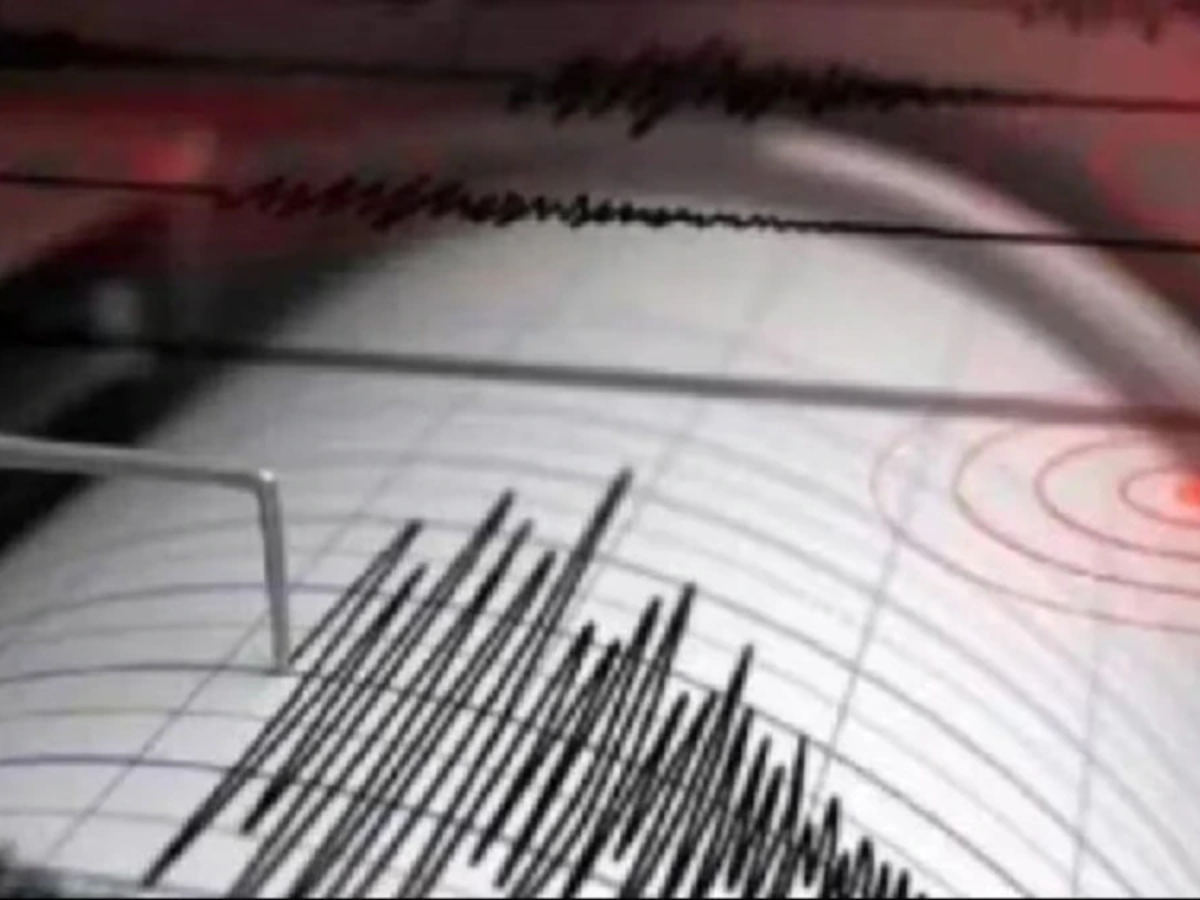
Earthquake in Delhi
With rains and waterlogging, the national capital also witnessed massive earthquake of magnitude 4.4 today (thurdsay) morning at 9:04 am. The epicentre in known to be Haryana’s Jhajjar. It must be known that the shake lasted for 15 seconds, despite the relatively low magnitude, residents across Delhi-NCR felt strong tremors.
Delhi falls under Seismic Zone 4, classified as a high-risk earthquake zone by the Delhi Disaster Management Authority (DDMA). This zone frequently experiences strong tremors, with magnitudes typically ranging between 5 and 6, and occasionally reaching 7 or 8. The city’s location near the Himalayan Belt, one of the world’s most active seismic zones, contributes significantly to its vulnerability. The boundary between the Indo-Australian Plate and the Eurasian Plate lies nearby, and any tectonic movement in this region often triggers seismic activity felt across northern India.
Multiple geological structures make Delhi susceptible to frequent earthquakes. The Aravalli Fault System, a deep fault line below Delhi, poses seismic risks. Shifts along these fault lines have caused several historical earthquakes. Notably, the 1905 Kangra earthquake and the 2015 Nepal earthquake were widely felt in Delhi. Since 1720, the city has experienced at least five quakes measuring above 5.5 on the Richter scale.
Geological studies identify multiple fault lines and weak zones near the capital that contribute to its seismic risk. These include the Delhi-Moradabad Fault, the Yamuna River lineament, the Ganga River lineament, the Sohna Fault, the Mahendragarh-Dehradun Subsurface Fault, the Delhi-Haridwar Ridge, the Delhi-Sargodha Ridge, and the major border fault. These intersecting tectonic features increase the potential for recurring tremors in the region. The DDMA links the frequency of earthquakes around Delhi directly to these geological structures, urging continued monitoring and preparedness.
Swastika Sruti is a Senior Sub Editor at NewsX Digital with 5 years of experience shaping stories that matter. She loves tracking politics- national and global trends, and never misses a chance to dig deeper into policies and developments. Passionate about what’s happening around us, she brings sharp insight and clarity to every piece she works on. When not curating news, she’s busy exploring what’s next in the world of public interest. You can reach her at [swastika.newsx@gmail.com]
Amid intensifying efforts to end the ongoing Iran war, US President Donald Trump has claimed…
The Trump administration has shared a 15-point peace plan with Iran through intermediaries, including Pakistan,…
Alan Ritchson, star of Reacher and War Machine, is under investigation after a physical altercation…
