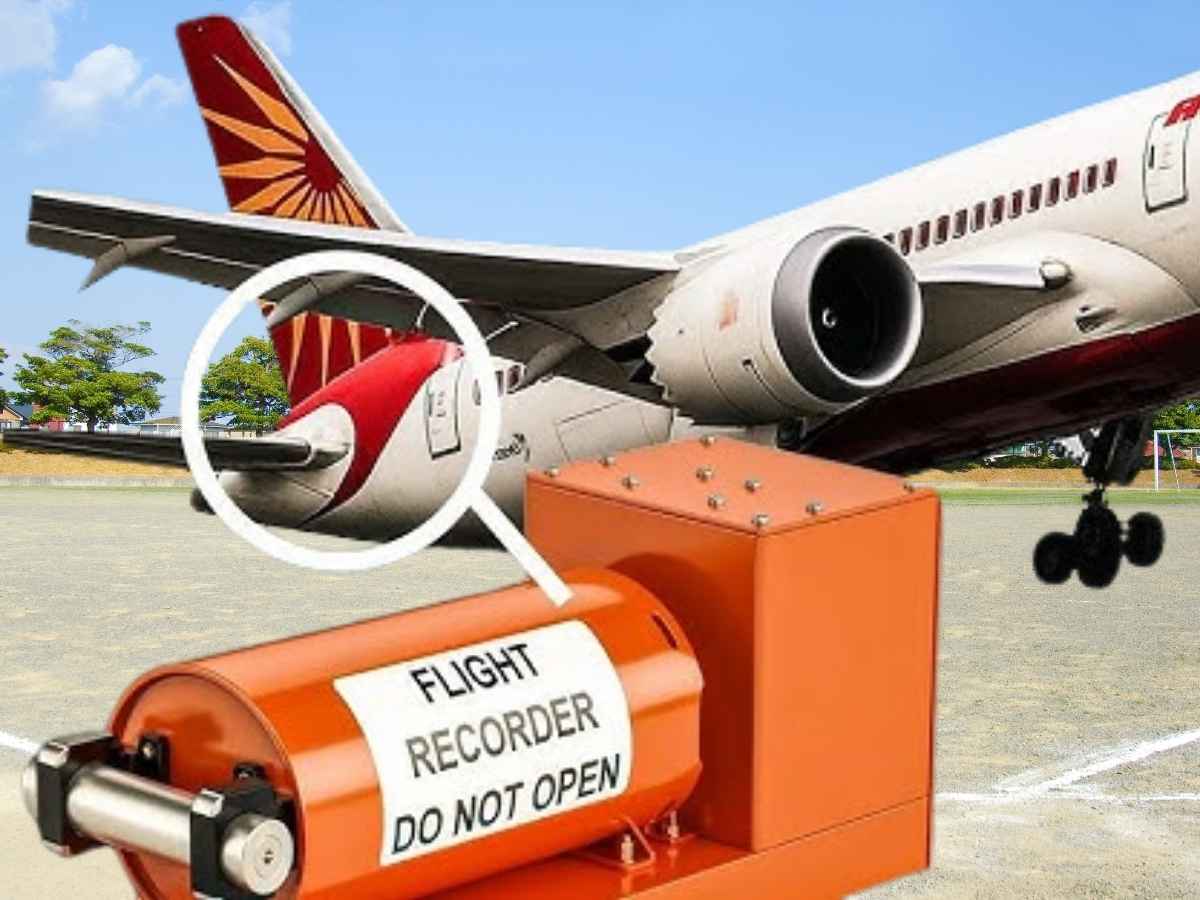
India has sent the severely damaged black box of the ill-fated Air India Boeing 787 Dreamliner to the United States for detailed analysis, as the investigation into one of India’s deadliest aviation disasters in decades continues to unfold. The aircraft, operating Flight AI171 from Ahmedabad to London, crashed shortly after takeoff on June 12, killing 241 people on board and 33 people on the ground, with only one survivor.
The Digital Flight Data Recorder (DFDR) and Cockpit Voice Recorder (CVR) commonly known as the black box were recovered two days after the crash, but the external damage to the devices was so severe that Indian officials could not extract any data locally. According to a source quoted in The Economic Times, the black box will be analyzed at the National Transportation Safety Board (NTSB) laboratory in Washington, under the supervision of Indian authorities to ensure proper protocol.
“While AAIB had established a laboratory at its headquarters in Delhi last year, it is yet to be properly equipped to extract data from recorders which have sustained heavy damage,” the source explained.
The United Kingdom’s Air Accidents Investigation Branch (AAIB) will also join the investigation as 53 British citizens were among the deceased passengers. The plane, a 12-year-old Dreamliner, crashed into a building at BJ Medical College in Meghaninagar, triggering a massive fire and causing additional casualties on the ground.
The black box consists of two parts the Flight Data Recorder (FDR) and the Cockpit Voice Recorder (CVR). Painted in bright orange for visibility during recovery, these devices are built to survive severe crash impacts and fires. However, given the intensity of the Air India crash, both units sustained substantial damage, delaying the data extraction process.
The CVR records audio from the cockpit, including conversations between pilots, warning alarms, and communication with air traffic control. In contrast, the FDR logs thousands of technical parameters, such as altitude, airspeed, flap positions, and engine performance.
“Since the recorder has been damaged, the chip will need to be extracted by removing the memory board carefully to avoid any data loss. The electronic circuit will also have to be assessed for damage,” a technical expert involved in the analysis stated.
Depending on the level of damage, the extraction of usable data could take anywhere from two days to several months.
Globally, over 1,200 Boeing 787 Dreamliners are currently in operation. While the aircraft is praised for its advanced safety systems, redundancy features, and fuel efficiency, the AI171 crash marks the first fatal accident involving this model in its 16 years of service.
The Boeing 787 is equipped with backup systems and multiple redundancies, enabling it to fly for up to 345 minutes on a single engine. It can even continue flight during various system failures. Despite these safety features, investigators are now examining possible causes ranging from electronic malfunctions to wing flap issues, fuel contamination, or landing gear failure.
In the aftermath of the crash, authorities have launched comprehensive inspections of Air India’s entire fleet of 33 Boeing 787 Dreamliners. The airline is taking precautionary measures to ensure that all aircraft meet operational safety standards and that no similar issues go undetected.
The crashed aircraft, delivered in 2014, had undergone routine maintenance and was reportedly in active service before the incident. However, the pilot’s final communication a lone Mayday call has raised red flags, as there was no follow-up response to the control tower.
Under international aviation rules, the country where the accident occurs is responsible for leading the investigation. In this case, India’s Aircraft Accident Investigation Bureau (AAIB) is heading the probe, with assistance from the US-based NTSB and the UK’s AAIB.
Specialists from both countries are expected to collaborate with Indian officials throughout the data retrieval and analysis process. The presence of international investigators underscores the gravity of the incident and the global effort to understand what went wrong.
Meanwhile, authorities are also examining the wreckage for clues. Investigators are analyzing aircraft logs, maintenance records, and flight history. The aim is to piece together a complete picture of what led to such a devastating outcome despite the aircraft’s modern design and safety mechanisms.
The aircraft plunged into a section of BJ Medical College’s hostel complex, causing an inferno that destroyed buildings and resulted in the deaths of 33 people on the ground, including medical students and staff. Rescue operations continued for hours, with emergency crews battling flames and recovering bodies amid the rubble.
This dual tragedy casualties both in the air and on the ground has sparked national mourning and raised serious questions about flight safety in India’s expanding aviation sector.
ALSO READ: Justice Varma Cash Gate: Full Report Accessed By NewsX Indicts Former Delhi HC Judge
Dharma Productions announces Chand Mera Dil, starring Ananya Panday and Lakshya, releasing May 22, 2026.…
ZoarSoar Enters the Wellness Market with a Clear Mission of Pure Organic Nutrition
ZoarSoar is a new organic nutrition brand with a simple belief: Indian families deserve the…
Jasprit Bumrah is all set to play for Mumbai Indians in their first match of…
