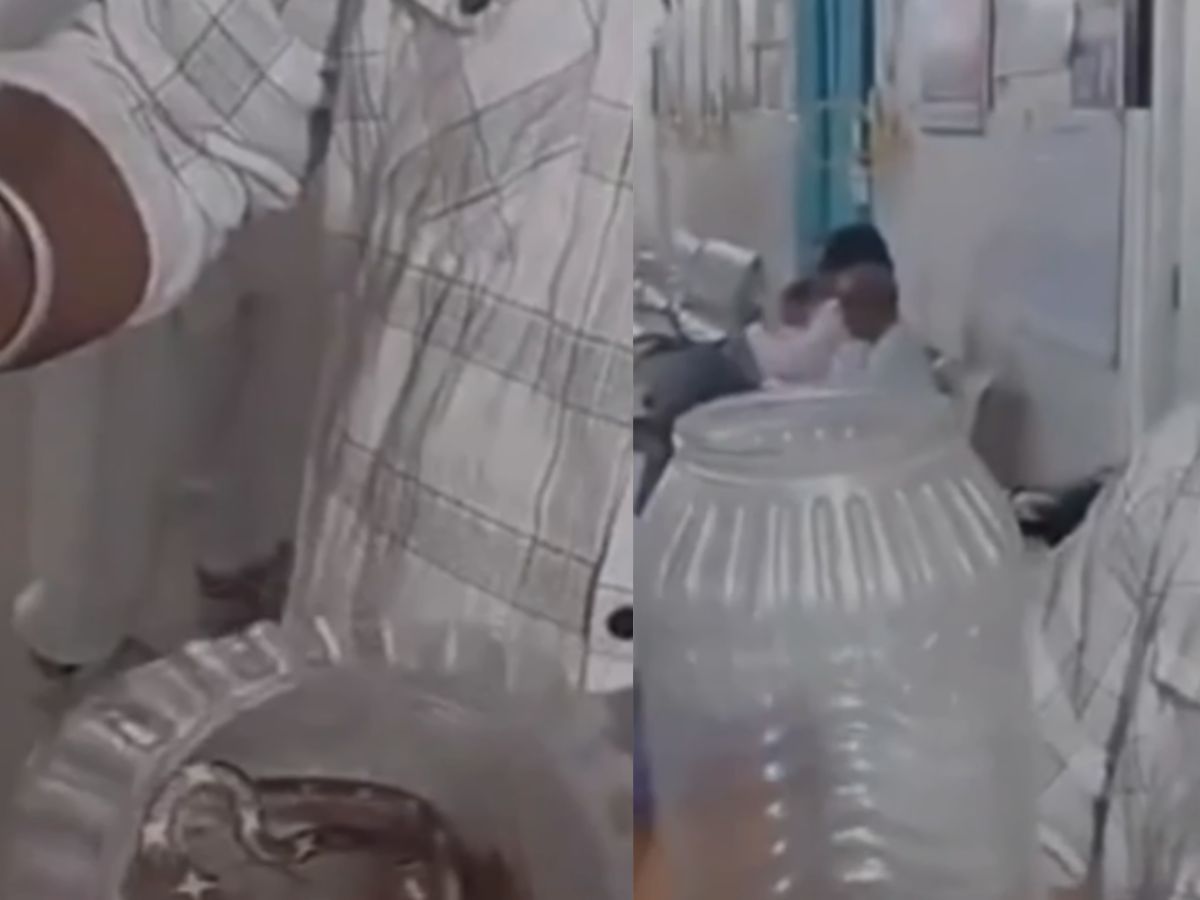
Bihar Home Guard Brings Snake to Hospital After Bite
In a remarkable demonstration of both quick thinking and courageous behavior, a Home Guard jawan from Bihar’s Shivhar district transformed a dangerous emergency situation into a successful rescue operation that astonished hospital personnel. On a typical Saturday evening, Narendra Kumar, a dedicated jawan stationed at the Shivhar Press Club, began his routine trek back to his village, Harpur Rain. The chilling sensation of a serpent coiling around his leg abruptly interrupted his transition from duty to rest. The poisonous snake attacked him before he had time to defend himself by delivering its deadly bite.
Narendra maintained his composure during the emergency after his military training and natural strength enabled him to handle the situation; he not only requested assistance but also brought the attacker to the police. The Saroj Sitaram Government Sadar Hospital presented a visual experience that resembled a scene from a movie. The medical staff members, together with the patients, experienced intense fear when Narendra entered the facility carrying a container that held a live, dangerous snake. He presented the snake to the doctors because this method established the exact snake species, which needed specific anti-venom treatment.
The established method sent dangerous medical conditions through a period, which delayed doctors from making accurate diagnoses. The combination of his fast acting and the medical team’s immediate response enabled doctors to bring Narendra’s condition under control. The jawan demonstrated his ultimate moment of bravery after doctors declared him safe when he took the animal back to its natural environment, which existed far away from the hospital.
The actual snake specimen changes emergency snakebite treatment because it creates different medical results. The boxed reptile, which Narendra Kumar delivered to Sadar Hospital staff, served as a vital diagnostic instrument that eliminated the requirement for “symptomatic observation.” The identification of an elapid or viper snakebite becomes an essential medical decision that determines whether rural patients will survive or die.
The soldier secured the dangerous snake, which enabled targeted venom treatment because he needed biological antidotes that corresponded with the toxins present in his system. This tactical approach to a medical emergency highlights a rare bridge between field survival instincts and hospital protocols.
The incident demonstrates how frontline workers possess strong bio-resilience because they work in environments that present them with unpredictable environmental dangers during their daily travel to work. Narendra’s ordeal required him to show extreme physical endurance while maintaining complete mental control through all his body stress. The story reaches its peak when the characters discover a solution after receiving medical care because the soldier decided to protect the animal according to his personal environmental protection standards.
He chose to release the snake after his recovery because he viewed his responsibilities as extending to both humans and all living creatures. The “capture-and-release” methodology provides a special research example about how emergency services can operate alongside wildlife protection when they start handling situations that involve deadly animal attacks.
A recent media graduate, Bhumi Vashisht is currently making a significant contribution as a committed content writer. She brings new ideas to the media sector and is an expert at creating strategic content and captivating tales, having working in the field from past four months.
Surat Hosts Grand Gita Course, Igniting a Wave of Positivity and Awareness
Surat (Gujarat) [India], April 13: In an inspiring convergence of spirituality and community engagement, Surat…
FEFSI and the Editors Association deny involvement in the Jana Nayagan leak, calling the accusations…
Saudi Arabia Makkah Entry: Saudi Arabia is tightening rules ahead of the upcoming holy Hajj…
