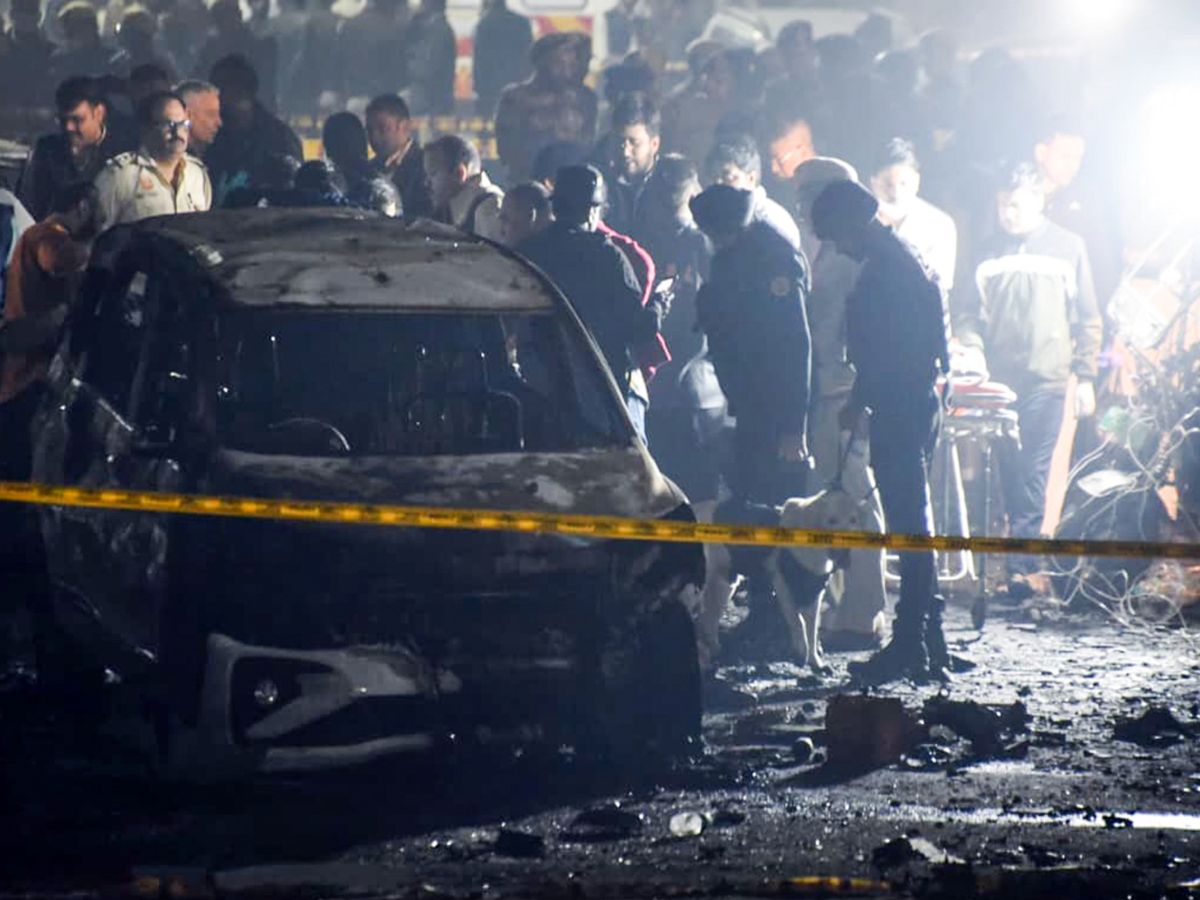
Delhi Blast (Image Credit: ANI)
Following the deadly car explosion near Delhi’s Red Fort on November 10, which killed 13 people, investigators have uncovered shocking details about a terror module allegedly linked to Jaish-e-Mohammed. The probe has raised serious questions about the involvement of certain doctors from Haryana’s Al-Falah University.
According to the Daily Jagran, police sources revealed that Dr Muzammil Shakeel, Omar Mohammed, and Shahid Saeed communicated using a highly secretive method. They maintained a shared email account and drafted their plans in the draft box, which others would access later. Since no emails were actually sent, this “dead drop email” method made tracing their communication extremely difficult. The suspects also used secure messaging apps like Threema (banned in India) and Telegram to hide their activities.
The driver of the Hyundai i20 car that exploded has been identified as Umar Mohammad. Dr Muzammil Shakeel and Shahid Saeed were arrested just before the blast, while the Jammu and Kashmir Police later helped expose the full terror module.
Police raids at their hideouts recovered nearly 3,000 kilograms of explosives, bomb-making materials, a rifle, and ammunition. Investigators say the suspects planned the attacks from Muzammil’s room at Al-Falah University.
Delhi Police have detained three people so far, including two doctors from the university. Two other doctors, Mohammad and Mustakim, known to Umar, were also taken into custody. They were allegedly in contact with Dr Muzammil Ganaie, arrested for his role in a so-called “white-collar terror module.” The group had pooled around Rs 26 lakh to buy explosive substances, spending Rs 3 lakh on NPK fertilizer, commonly used for making bombs.
The initial case under the Unlawful Activities (Prevention) Act (UAPA) has now been handed over to the National Investigation Agency (NIA). CCTV footage from the Red Fort Metro station shows commuters going about their routine when the blast occurs, causing tremors and jolting passengers.
Authorities have registered multiple FIRs, including two against Al-Falah University for alleged irregularities flagged by UGC and NAAC.
ALSO READ: Red Fort Reopens For Tourists After Deadly Delhi Blast As ASI Issues Major Safety Update
Shivam Verma is a journalist with over three years of experience in digital newsrooms. He currently works at NewsX, having previously worked for Firstpost and DNA India. A postgraduate diploma holder in Integrated Journalism from the Asian College of Journalism, Chennai, Shivam focuses on international affairs, diplomacy, defence, and politics. Beyond the newsroom, he is passionate about football—both playing and watching—and enjoys travelling to explore new places and cuisines.
The IMD has issued a yellow alert for Delhi-NCR as a western disturbance triggers three…
Invincible Season 4 Arrives: How to Watch Episodes 1–3 Globally, Release Times, and What to Expect
Invincible Season 4 premieres March 18, 2026, on Amazon Prime Video with three episodes. Mark…
Iran confirms Ali Larijani, secretary of the Supreme National Security Council, was killed in a…
