India’s rise as an emerging major power picked momentum in the 21st century. While her growth rate is the fastest among major economies, her GDP is poised to soon be the third largest globally. As a large EMDC, India is not only plugged into global supply and value chains but is seen as a substantial factor in geopolitics and geoeconomics. This trans- formation was built on the foundation of an economic policy of reforms and liberalization and consistency in foreign policy that adjusted to the challenges of a new era. India needs the world, and the world needs India.
In this new era, a major area of success was in the reframing of diaspora policy. Led by PM Narendra Modi himself, the new approach invited the Indian pravasis to join the national priorities of the country. Sushma Swaraj, who shared a strong bond with pravasis, crafted a policy approach to integrate them into the mainstream. It recognised their role and contributions and provided opportunities to integrate them into the domestic development effort, while they maintained their identity in their adopted homes. Indians constitute the largest diaspora globally, with more than 35 million residing overseas. There are 17 million Indian citizens overseas, who are NRIs, and 19 million persons of Indian origin who have adopted foreign nationality. The NRIs constitute only 6% of the global migrant population of 281 million, and they represent just 1.2% of India’s population. India’s youthful demography can sustain higher levels of migration demands from destination countries, and India can be a source country well into the second half of 21st century. The Indian diaspora occupies prominent positions in society, business, academia, arts, and even as heads of state or government in several countries. Many Indian pravasis are influential change makers, while many others are skilled workers, illegal migrants, and there is a new trend of high-net-worth individuals and digital nomads.
The policy perspective prioritised the integration of migration policy with national development objectives as the foundation for governance of India’s diaspora. The intention was to maximise the potential of each Indian going overseas through better skills, higher incomes, new pathways and new agreements. As an initial step, the Ministry of Overseas Indian Affairs was re-integrated into the Ministry of External Affairs for efficiency in delivery of governance and in accordance with the Rules of Business of the Government of India. The new governance approach sought to provide citizen-centric responses that empowered NRIs for safe and orderly migration and mobility, safety and security to vulnerable Indian workers, improved opportunities for professionals, close communication with students and engagement with persons of Indian origin. In the last decade, India adopted differentiated policies for skilled migrant workers, highly qualified professionals and students. This approach, based on stakeholder analysis and conditions of migration and mobility, helped evolve specific targeted actions for the welfare and security of those who were vulnerable, economic opportunities for those highly qualified and mobility opportunities for students. The key objectives of the new policy were to facilitate migration through new legislative and institutional structures, incentivise safe and orderly migration, discourage illegal migration, negotiate better working conditions and create new pathways. Although the new Emigration Bill is yet to be enacted by Parliament, many of the proposals for improvement in systems and the practice of evidence-based policy have already been introduced. The new Act will give more teeth to a regime that facilitates mobility, restricts irregular migration and align with multilateral understandings such as the Global Compact for Migration.
For the most vulnerable workers, India’s migration governance developed the e-Migrate digital platform. It promoted verified overseas employment, curbed exploitation by agents or foreign employers, provided higher wages for certified skills, orientation sessions on destination country and an insurance package to protect their interests. At the same time, negotiations with Gulf countries, the destination of most workers, improved working conditions, wage levels, skill-based incentives and harmonised migration platforms. These measures provided accessibility, transparency and predictability, through an interactive model to embark on safe and orderly mobility.
To achieve similar objectives for highly skilled professionals and students, practical steps were initiated to secure advantage for job opportunities and third country mobility as well as obtain an “India advantage” through Migration and Mobility Partnership Agreements. MMPAs have been concluded with seven European countries while Special Skill Agreements have been signed with several countries in Asia. Social Security Agreements are now being concluded such that social security contributions, often significant in developed countries, kept in the name of the individual, can be transferred under an equalisation principle when they move to another country. These new generation mobility agreements empower those preparing to go overseas with a secure passport, safeguards in employment, upgrade in the earning capacity through skills and new pathways, and welfare measures if in distress overseas.
In response to the difficult conditions encountered by Indians in distress overseas, the government also introduced new welfare measures for NRIs. The Indian Community Welfare Fund was created to support local communities tide over difficult circumstances, provide legal assistance to those in distress, safe houses for workers abandoned, etc. The MADAD portal was developed for the registration of grievances and for quick remedial action; MADAD has a response rate of over 95% making it one of the most successful e-governance platforms in the government. In times of conflict or natural disasters, the government has launched evacuation plans to bring back stranded citizens from affected areas. These measures were designed from a citizen-centric governance approach; the implementation has contributed to goodwill for government initiatives and better recognition of the role of embassies abroad.
There are a few dark clouds that deserve mention. Certain citizens end up as illegal migrants in foreign countries, often victims of unscrupulous agents and sometimes the subject of difficulties at home; the government remains committed to helping them return to their motherland. There are also certain elements, including those having secessionist ideology or economic offenders who need to be dealt with in accordance with the provisions of law and the government seeks the cooperation of foreign governments in this regard.
The policy for Indian diaspora who are Persons of Indian Origin (PIO) and foreign citizens has a different approach. For them, the most important step was to recognise their affection for the motherland they had left long ago and to provide opportunities to reconnect. India introduced an Overseas Citizen of India (OCI) card for PIOs, which provides many facilities including freedom to travel, seek employment, own property, etc. but does not confer dual citizenship. The older migrants, who had left India over 150 years ago as indentured labour, are recognised as girmitiya, and benefits are passed on to the current generation. Even recent migrants, who have taken on foreign citizenship, can have OCI cards. The focus of diaspora engagement and diaspora policy has been to mainstream them in national development efforts by providing options to those who are keen to engage in their motherland. For this, the central and state governments work with civil society and diaspora associations across the world.
There are many among the diaspora who wish to play an active role in India’s rise. India’s engagement with the foreign citizens of Indian origin is through a policy of four Cs – care, connect, celebrate and contribute. India values their sentiments for the motherland, facilitates their search for roots, encourages contacts with the home country, develops channels for remittances and welcomes participation in development programmes. In recent years, diaspora members from scientific, medical and education sectors have established presence in India that advances research and activity in their specialised areas under preferential schemes launched by the Government.
The Pravasi Bharatiya Divas, a mega diaspora meeting, is organized on January 9, the anniversary of Mahatma Gandhi’s homecoming from South Africa. Hosted by the President and Prime Minister, it features the granting of the Pravasi Bharatiya Samman Award, the highest national award for diaspora. These gatherings also organize events to cooperate in investments, technology projects and national development missions, which have been very successful.
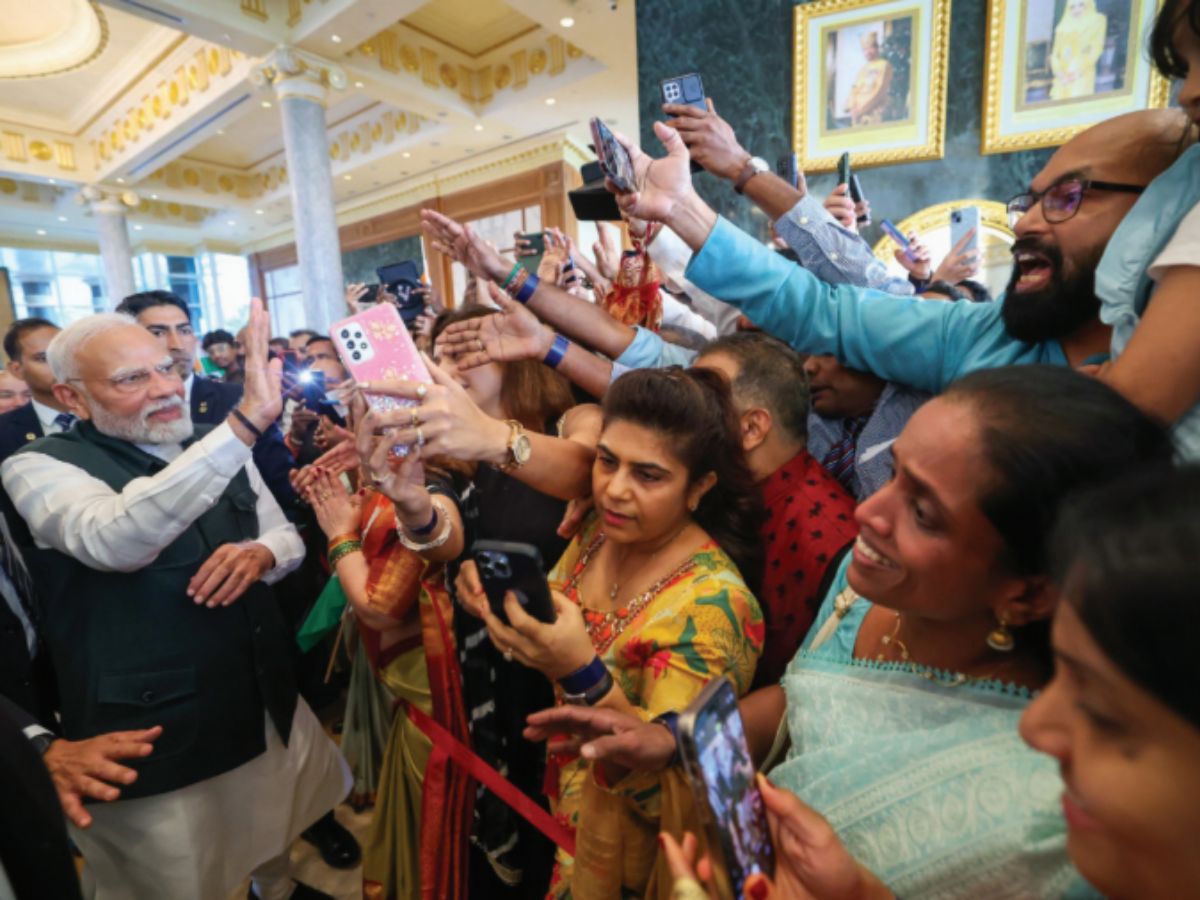
PM Modi has made it a point to attend diaspora events during his foreign tours. His charismatic persona has infused new enthusiasm among pravasis in the rise of a new India. Often, he has invited foreign leaders to join him at these events, providing greater recognition to the role and contribution of Indians in their adopted homes. These exchanges have not only enhanced cultural exchanges and economic and scientific ventures with India but also built bridges with local communities overseas. The diaspora has more expectations from the government, particularly voting facilities for NRIs and dual citizenship for OCI. But for the present they all are happy to be part of the narrative of a new and resurgent India.
(The writer is a former diplomat and currently Professor in Jindal Global University)
Manisha Chauhan is a passionate journalist with 3 years of experience in the media industry, covering everything from trending entertainment buzz and celebrity spotlights to thought-provoking book reviews and practical health tips. Known for blending fresh perspectives with reader-friendly writing, she creates content that informs, entertains, and inspires. When she’s not chasing the next viral story, you’ll find her diving into a good book or exploring new wellness trends.
The Election Commission of India (ECI) is expected to announce the election schedule for several…
A fan-made AI poster for Dhurandhar 2, officially titled Dhurandhar: The Revenge, has recently appeared…
Meanwhile, aviation operations across the Middle East remain volatile as the ongoing conflict continues to…

