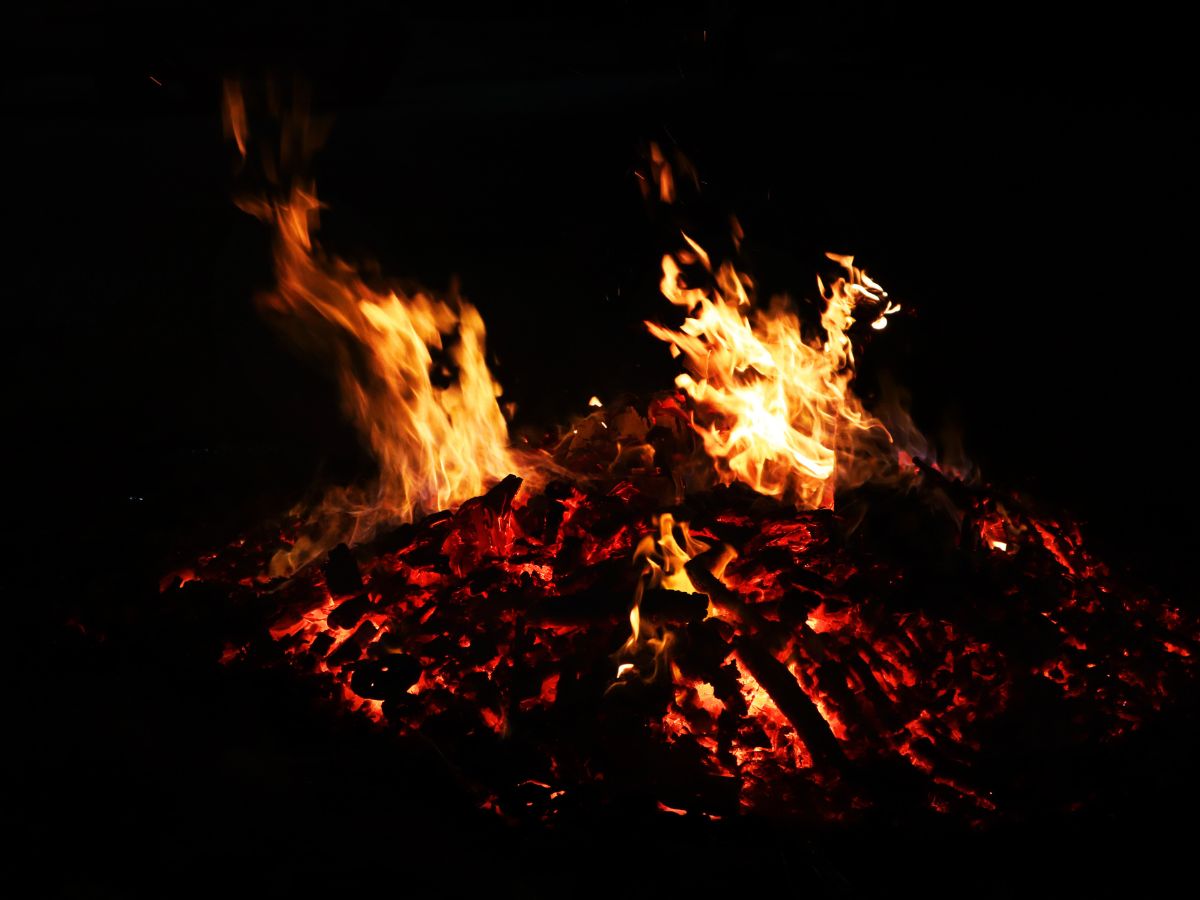
Holika Dahan 2026 on March 2. (Photo: Canva)
The Hindu festival of Holi begins with the sacred celebration of Holika Dahan, a ritual that symbolizes the victory of good over evil.
Devotees across India light bonfires, perform prayers, and make offerings to cleanse negativity and welcome positivity into their lives.
In 2026, Holika Dahan is set to take place on March 2, with rituals extending into the early hours of March 3 in certain regions.
Holika Dahan also called Holika Dahanam or Chotti Holi, is a traditional Hindu festival in which a bonfire is lit to commemorate the burning of the demoness Holika.
According to legend, Holika, the sister of Hiranyakashipu, attempted to kill her nephew Prahlada by placing him on her lap in a fire. Miraculously, Prahlada survived due to his devotion, while Holika was burnt, symbolizing the triumph of good over evil.
In South India, the same occasion is observed as Kama Dahanam, associated with Lord Shiva burning Kamadeva with his third eye. Effigies and pantomimes are performed in rural Tamil Nadu, marking the tradition’s regional variations.
According to the Hindu lunar calendar, Holika Dahan is observed on Phalguna Purnima, the full moon day of the Phalguna month. In 2026:
March 2, Monday – Holika Dahan rituals begin after sunset.
March 3, Tuesday – A pause occurs due to a rare lunar eclipse (Blood Moon) and the Sutak period.
March 4, Wednesday – Dhulendi, the festival of colors, is celebrated.
The auspicious muhurat varies by region, but generally starts after sunset on March 2 and continues into the early morning of March 3, ensuring that all rituals are performed at the most favorable times according to local Panchang and temple guidelines.
Holika Dahan is a symbolic celebration of the victory of devotion and righteousness over arrogance and evil. The bonfire represents the burning away of negativity, impurities, and past misdeeds. Families gather around the sacred fire to pray for health, happiness, prosperity, and spiritual renewal.
Beyond its religious significance, the festival marks the end of winter and the arrival of spring, celebrating new beginnings, rejuvenation, and the joy of life. It also promotes community unity, as neighbors and families come together to participate in the rituals.
Devotees perform traditional rituals during Holika Dahan, which include:
Collecting wood for the bonfire.
Placing offerings such as grains, coconuts, and flowers around the fire.
Circumambulating the fire while chanting hymns and mantras.
Lighting the pyre at the auspicious time to symbolize the destruction of evil forces.
In North India, East India, Assam, Nepal, and parts of South India, the pyres are burnt on the eve of Holi, strengthening social ties and reinforcing cultural traditions. Regional variations exist: in Purvanchal and Nepal’s Terai regions, it is called Sammat Jaarna, while in West Bengal, it is referred to as Chanchor or Nyara Pora.
Across the country, communities come together to celebrate Holika Dahan with devotion and joy. From small towns to large cities, bonfires will blaze on March 2, 2026, casting light and warmth as families prepare for the vibrant Holi festivities that follow.
This Holika Dahan, the sacred fire, continues to remind devotees that goodness always triumphs over evil, while reinforcing traditions, unity, and the joyous spirit of the spring season.
Sofia Babu Chacko is a journalist with over five years of experience covering Indian politics, crime, human rights, gender issues, and stories about marginalized communities. She believes that every voice matters, and journalism has a vital role to play in amplifying those voices. Sofia is committed to creating impact and shedding light on stories that truly matter. Beyond her work in the newsroom, she is also a music enthusiast who enjoys singing.
Hyderabad braces for thunderstorms, hail as IMD issues yellow alert across Telangana; heavy rain likely…
Jessica Johanna Oseguera González, the US-born daughter of slain cartel boss Nemesio “El Mencho” Oseguera…
As per the primary investigation, the woman and the attacker lived in the same locality…
