The current geopolitical environment provides a historic opportunity for India to solidify its leadership on a global scale.
The challenges facing democratic free-loving nations are immense and complex. Since 1917, the United States has taken the lead to inspire and implement actions to thwart tyrants and protect its allies. Unfortunately, the US can no longer be relied upon to fulfil this responsibility.
President Joe Biden’s foreign policy, national security and intelligence teams are the weakest and least prepared to meet global challenges of any administration in American history. Possible foreign influence and business ties between Biden’s family members and China undermine the usual resolve to stand firm for democratic principles and honour treaty obligations.
America’s leaders, from both political parties, have failed in grappling with China’s aggression. China has filled the void. Instead of rising up to meet China’s expansion, US naval capabilities, and those of its allies in the region, are declining.
China’s aggression in the South China Sea positions it to accomplish its long-stated goal of ‘reunification’ with Taiwan. It further positions China to dominate and intimidate all countries that border this body of water and control a vital international trade waterway. China sees Asia, and the Pacific and Indian Oceans, as its ‘Go’ game board. It is winning.
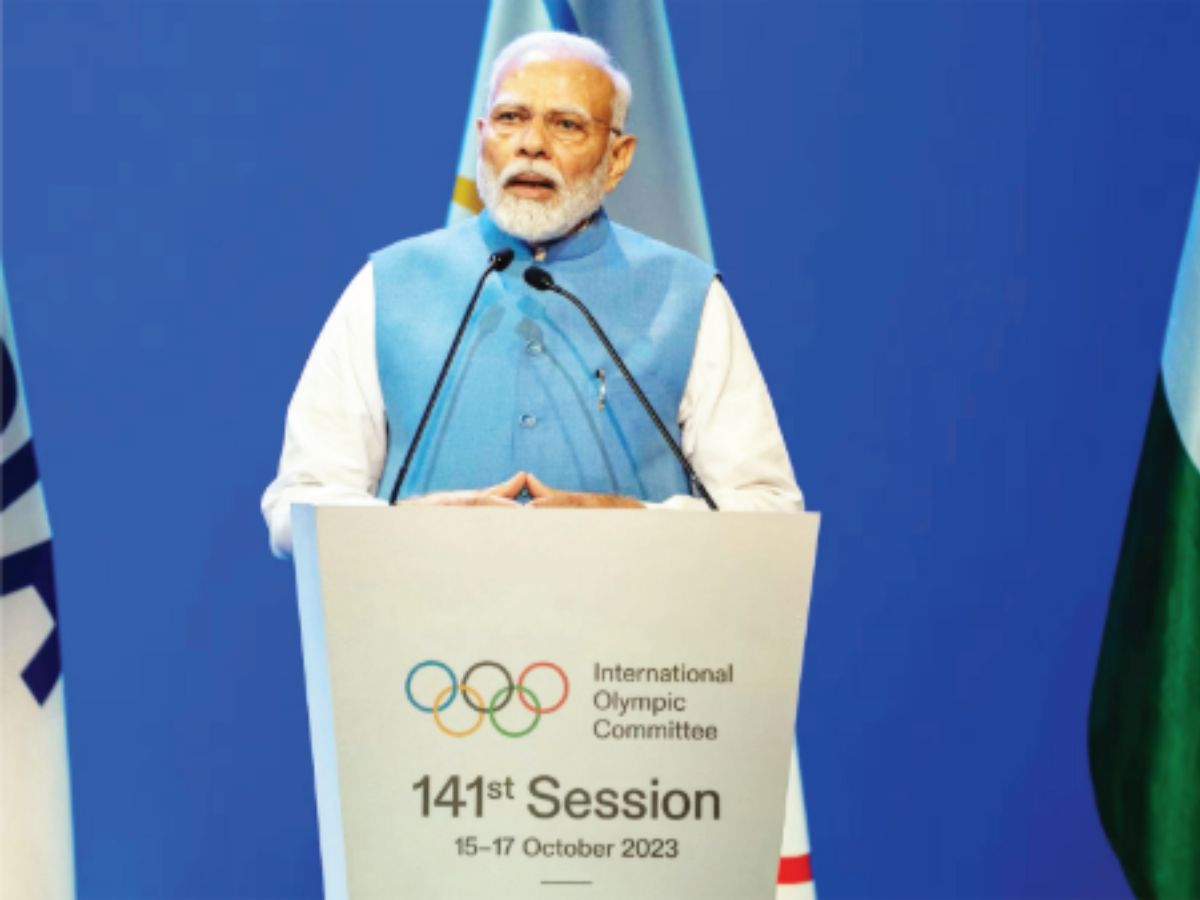
Prime Minister Modi can lead India and the Indo-Pacific in effectively countering China’s aggression. He could deploy a holistic approach that addresses economic, cultural, political and military aspects of China’s challenge. He can become the new ‘Go Master’.
India has a tradition of balancing global power blocs. At its very inception, India was a driving force in countering Cold War divisiveness. In March 1947, Jawaharlal Nehru organised and led the Asian Relations Conference to assess Indo-Asian regional issues. Other international conferences followed, leading up to the Asian–African Summit on 18–24 April 1955 in Bandung, Indonesia. The result was the Non-Aligned Movement, which served as a third sphere of influence during the Cold War.
Today, India continues to be a pivotal influence centre as a member of the G20 and the host of its 2023 summit. India is part of the BRICS nations, which is redefining global relations. It is India’s role in the Quad nations that may guide its future leadership in the region.
In 2004, the Quad nations were formed to address the historic tsunami that devastated the countries surrounding the Indian Ocean. Australia, India, Japan and the US found common cause in the region’s recovery. In the process, they expanded regional cooperation to strengthen their socioeconomic and cultural bonds.
The Quad became a typical activity trap for career diplomats to plan meetings and issue general policy statements. Under President Biden it has further fallen from relevance.
The Quad was briefly revitalised through the close friendships among Prime Minister Modi, Japanese Prime Minister Shinzo Abe, Australian Prime Minister Scott Morrison and US President Donald Trump. Modi remains the only member of this team still serving in office. He can harness the fundamentals of the Quad and its shared values to prevail in winning the hearts and minds of people throughout the Indo-Pacific region.
India’s unique network of relationships within the BRICS and G20 can strengthen the Quad as a more cohesive force for peace and deterrence in the Indo-Pacific.
An India-led Quad revitalisation could focus on two complementary projects:
Promoting investment and partnerships.
Promoting ‘shared values’ and a ‘free and open Indo-Pacific’.
The West realises its mistake in becoming dependent on China for manufacturing and pharmaceuticals. ‘Decoupling’ from China is the West’s new goal. Decoupling is complex and will take time. India can expedite this process and reap substantial benefits. Western firms are seeking supply chain partners that can assure consistency, quality and sustainability, while being cost-effective.
Pacific Rim nations have started to meet this need. Decoupling has spurred economic growth in Indonesia, Japan, the Philippines, South Korea, Thailand and Vietnam. Taiwan remains a viable alternative, especially for chip manufacturers. However, the ongoing invasion threat from China is a fundamental uncertainty. The future could be India’s.
A recent medical conference in Manipal showcased India’s emerging leadership in the critical medical equipment industry. The Manipal conference could serve as a model for other forums. These conferences could be bolstered, by government policy and incentives, to attract investment and partnerships throughout India across multiple economic sectors.
India could create investment funds, in cooperation with public and private sectors, utilising innovation, ingenuity and tapping the expertise of key experts in private equity and venture capital among the Quad nations. India could promote training for entrepreneurs seeking to utilise these human, technical and financial resources to prepare Indian professionals in digital technologies, including cybersecurity and aerospace.
India could incentivise students returning home after studying at US universities. A record 2,68,923 Indian students attended US colleges and universities, but 80 per cent remain in the US instead of returning to help the Indian economy.
India remains on the periphery of US political concerns. Indian-Americans comprise only 1 per cent of those voting. Over 1.3 million Americans visit India each year, but the country remains ‘exotic’. Few Americans are aware of India’s economic vitality. India could develop a cultural and political outreach drawing on lessons learnt from China’s Confucius Institute.
China’s programme was revealed as a hub of propaganda and espionage activities. India could avoid this by endowing scholarly centres and faculty positions for studying India and Indo-Pacific history, culture, economics and geopolitics. ‘Sister School’ partnerships could be expanded between India and US institutions.
The goal is to raise positive awareness about India and its emerging global leadership role with decision-makers, influencers and the media. This could include developing a resource network of Indian subject matter experts who would be available to speak at conferences, engage at forums and provide media commentary on issues and news arising from the Indo-Pacific region.
These ideas can become part of a long-term, holistic strategy for institutionalising India’s role in promoting the Quad countries’ shared values, transcending domestic politics. This includes clear and consistent messaging of the Quad countries’ aspirational vision of a free and open society, universal economic opportunity, and regional peace and stability.
India’s vision and role could be reinforced, reaffirmed, aligned and embedded through organisational development within government and private entities, education/professional development, economic/professional incentives, and cultural exchange.
No one action will assure India’s leadership in the Indo-Pacific region and globally. Understanding the interrelated challenges, and identifying the way forward, would position India to dominate the geopolitical ‘Go’ board of the twenty-first century.
— Scot Faulkner is former Chief Administrative Officer, US Congress, and advisor on economic development. He was also Director of Personnel for President Ronald Reagan. This article is extracted from the essay India’s Future: Global Leadership published in the book Indian Renaissance: The Age of PM Modi, edited by Aishwarya Pandit.
Manisha Chauhan is a passionate journalist with 3 years of experience in the media industry, covering everything from trending entertainment buzz and celebrity spotlights to thought-provoking book reviews and practical health tips. Known for blending fresh perspectives with reader-friendly writing, she creates content that informs, entertains, and inspires. When she’s not chasing the next viral story, you’ll find her diving into a good book or exploring new wellness trends.
Social Media Influencer Adnaan Shaikh was recently spotted shopping with his wife, Riddhi Jadhav, ahead…
CBSE Class 10 Result 2026: When And Where To Check Board Exam Results
The Central Board of Secondary Education (CBSE) has completed the Class 10 board examinations for…
Stand-up comedian Zakir Khan has sparked concern among fans after appearing in a hospital uniform…
