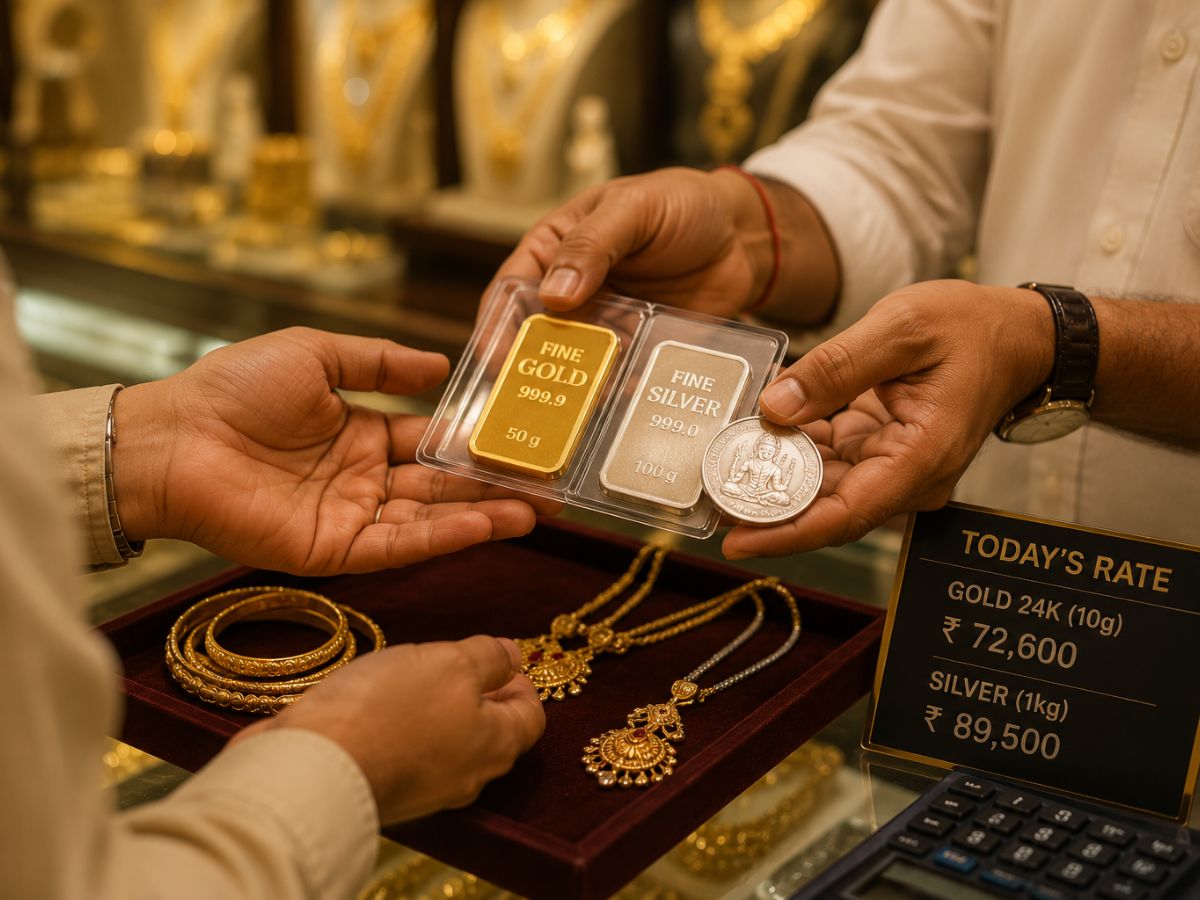
India’s Gold Duty Hike Explained: How Higher Import Taxes Could Boost UAE Jewellery Sales (Representative Image)
India’s decision to sharply raise import duties on gold and silver has started to reshape global bullion buying patterns, with the biggest ripple effects being felt in the United Arab Emirates. The policy change, combined with high international gold prices and evolving consumer behaviour in India, is creating a clear price divide between Indian and Gulf markets. This gap is now pushing more Non-Resident Indians and international travellers to consider the UAE, especially Dubai, as a preferred destination for jewellery purchases during the busy summer travel season.
India has increased customs duties on gold and silver to 15 per cent from 6 per cent as part of its broader effort to control non-essential imports and manage pressure on its current account deficit. The tariff hike also aligns with broader policy messaging that encourages citizens to limit discretionary gold purchases and focus more on productive financial assets. Alongside this, India’s gold import bill has surged despite lower volumes, largely because international prices have climbed sharply over the past year.
These combined factors have created what market participants describe as a “triple shock” for India’s gold demand outlook. Rising duties, higher global prices and government messaging are all working together to cool domestic demand and reduce import pressure. In contrast, the UAE continues to benefit from its position as a global gold trading and retail hub. Dubai, in particular, has a strong ecosystem built around bullion trading, jewellery manufacturing and retail exports. A significant portion of demand comes from Indian expatriates, tourists and traders who traditionally purchase jewellery in the Gulf before travelling home for weddings and festive occasions.
The latest duty increase in India has widened the price gap between domestic and international markets, making gold in the UAE roughly 10 to 12 per cent cheaper compared to India, according to industry estimates. This difference is important in a commodity where margins and taxes play a big role in purchase decisions. The UAE offers additional perks such as lower making charges, VAT refunds for tourists and tax-free investment-grade bullion, making it all the more attractive. Industry experts say this pricing advantage could trigger a strong buying cycle in the Gulf this summer.
Jewellery retailers expect increased footfall from NRIs preparing for weddings and seasonal travel. However, the outlook is not entirely uniform. Record-high global gold prices have already reduced affordability for middle-income consumers, leading many buyers to shift toward lighter jewellery, exchange purchases or smaller transactions rather than large discretionary spending.
India’s revised duty-free allowances for travellers also play a role in shaping demand. Women can now carry up to 40 grams of gold jewellery duty-free, while men can carry up to 20 grams, allowing families to legally transport significant quantities without additional customs costs. This has led to new incentives for expatriate families to make bulk purchases in the UAE before returning home.
Demand could get a temporary lift, but overall consumption could remain under pressure from high prices and economic uncertainty, analysts warn. There is also a risk that widening price gaps could trigger informal trade flows if domestic premiums in India continue to rise.
It is a case of opportunity and caution for UAE jewellers. The immediate outlook is for a stronger seasonal demand, but the longer-term growth will depend on the movement of global prices and how consumers react to the continuing high cost of bullion.
Harshita is a journalist and digital content writer specializing in breaking news, current affairs, travel, education, and trending stories. She is focused on delivering accurate, timely, and engaging content with a strong emphasis on clarity and audience relevance.
Uber Partners With Adani Group For Its First Data Centre Project In India
Uber CEO Dara Khosrowshahi announced a new partnership with Adani Group to launch Uber’s first…
Prateek Yadav died due to cardiopulmonary collapse caused by massive pulmonary thromboembolism, according to the…
Reliance Jio IPO is set to become India’s largest public issue, potentially raising ₹33,000–₹38,000 crore,…
