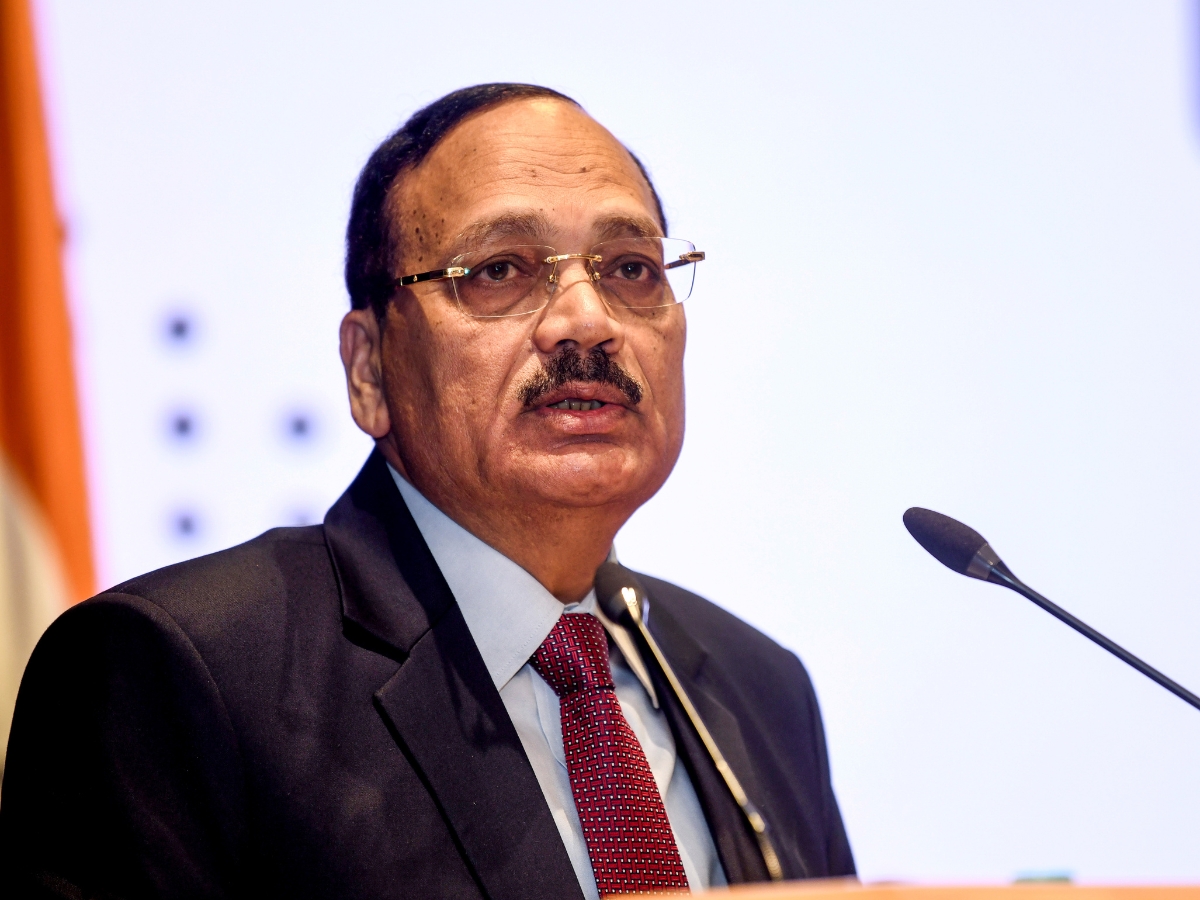
India's New Chief Justice Surya Kant: A Look At His Legal Journey And Transformative Key Verdicts (Photo Credit: ANI)
Justice Surya Kant: Justice Surya Kant on Monday took oath as the 53rd Chief Justice of India (CJI), with President Droupadi Murmu administering the oath of office at Rashtrapati Bhavan. Taking his oath in Hindi, Justice Kant affirmed his commitment to uphold the Constitution and discharge his duties with integrity.
Prime Minister Narendra Modi, Home Minister Amit Shah, and several senior dignitaries were present at the ceremony.
Justice Kant succeeds Justice B.R. Gavai, who retired on November 23. Appointed on October 30 as the next CJI, he will now serve a tenure of nearly 15 months, demitting office on February 9, 2027, when he turns 65.
Justice Surya Kant’s rise from a humble background in Haryana’s Hisar district to the highest judicial office in India is marked by perseverance, academic achievement, and decades of judicial engagement across constitutional, civil, and service law.
Born on February 10, 1962, he began his legal practice at the Hisar District Court in 1984 before moving to Chandigarh a year later. Over the years, he represented prominent universities, boards, banks, and corporations. His appointment as Haryana’s youngest Advocate General on July 7, 2000, marked a turning point in his career.
He was elevated as a permanent judge of the Punjab and Haryana High Court on January 9, 2004, and went on to become the Chief Justice of the Himachal Pradesh High Court on October 5, 2018. His judgments in these courts showcased his views on federalism, individual liberties, and constitutional values.
Recognising his judicial clarity and temperament, the Supreme Court Collegium recommended his elevation, and he was appointed to the Supreme Court on May 24, 2019. Since November 12, 2024, he has also served as chairman of the Supreme Court Legal Services Committee.
During a recent address at the National Law Conference hosted by the Bar Association of Sri Lanka, Justice Kant spoke on the delicate balance between technology and justice.
He said while technology is a valuable aid, the essence of justice remains firmly human. “The essence of our calling lies not in data or algorithms, but in conscience and compassion,” he noted.
Beyond the courtroom, Justice Kant has actively contributed to legal institutions, having served two terms on the governing body of the National Legal Services Authority and participating in committees under the Indian Law Institute.
Academically too, he distinguished himself by earning a Master’s in Law from Kurukshetra University in 2011, securing “first class first”.
Landmark Rulings: Sedition, Article 370, OROP, Pegasus
During his time at the Supreme Court, Justice Kant has been associated with several historic and high-impact judgments.
He was part of the bench that effectively put the colonial-era sedition law on hold, directing that no new FIRs be registered while the government undertook a review.
Justice Kant also contributed to the Article 370 verdict, which upheld the abrogation of Jammu and Kashmir’s special status.
His role in the Pegasus spyware case was significant; he supported forming a committee of independent cyber experts to examine allegations of unlawful surveillance. His remark that the state cannot be granted a “free pass under the guise of national security” became a landmark observation.
Justice Kant consistently pushed for gender equality and fairness in governance. He headed a bench that reinstated a woman sarpanch who was wrongfully removed, highlighting the gender bias behind the action.
He also directed that one-third of seats in all bar associations, including the Supreme Court Bar Association, must be reserved for women.
His intervention in the Bihar electoral rolls issue compelled the Election Commission to disclose data regarding 65 lakh voters omitted from the draft rolls during the Special Intensive Revision.
He also upheld the One Rank-One Pension (OROP) scheme as constitutionally valid and continues to hear cases on granting permanent commission to women officers in the armed forces.
Justice Kant was on the seven-judge bench that overturned the 1967 Aligarh Muslim University ruling, opening the door to re-examining the university’s minority status.
He was part of the bench that appointed a committee led by Justice Indu Malhotra to probe the security breach during the Prime Minister’s 2022 visit to Punjab, noting that such matters require “a judicially trained mind”.
READ MORE: Hyderabad Tragedy: Woman Doctor Dies By Suicide After Failing To Secure US Visa
Petrol-Diesel Price Today in India: Petrol and diesel prices remained unchanged across major cities in…
Punjabi singer Karan Aujla has announced a Mumbai 2.0 concert on April 12, 2026, after…
Was Andrew Tate Arrested In Saudi Arabia Over A ‘Terror Check’? Here’s What Really Happened
The rumor spread following a video made by Andrew Tate on social media concerning the…
