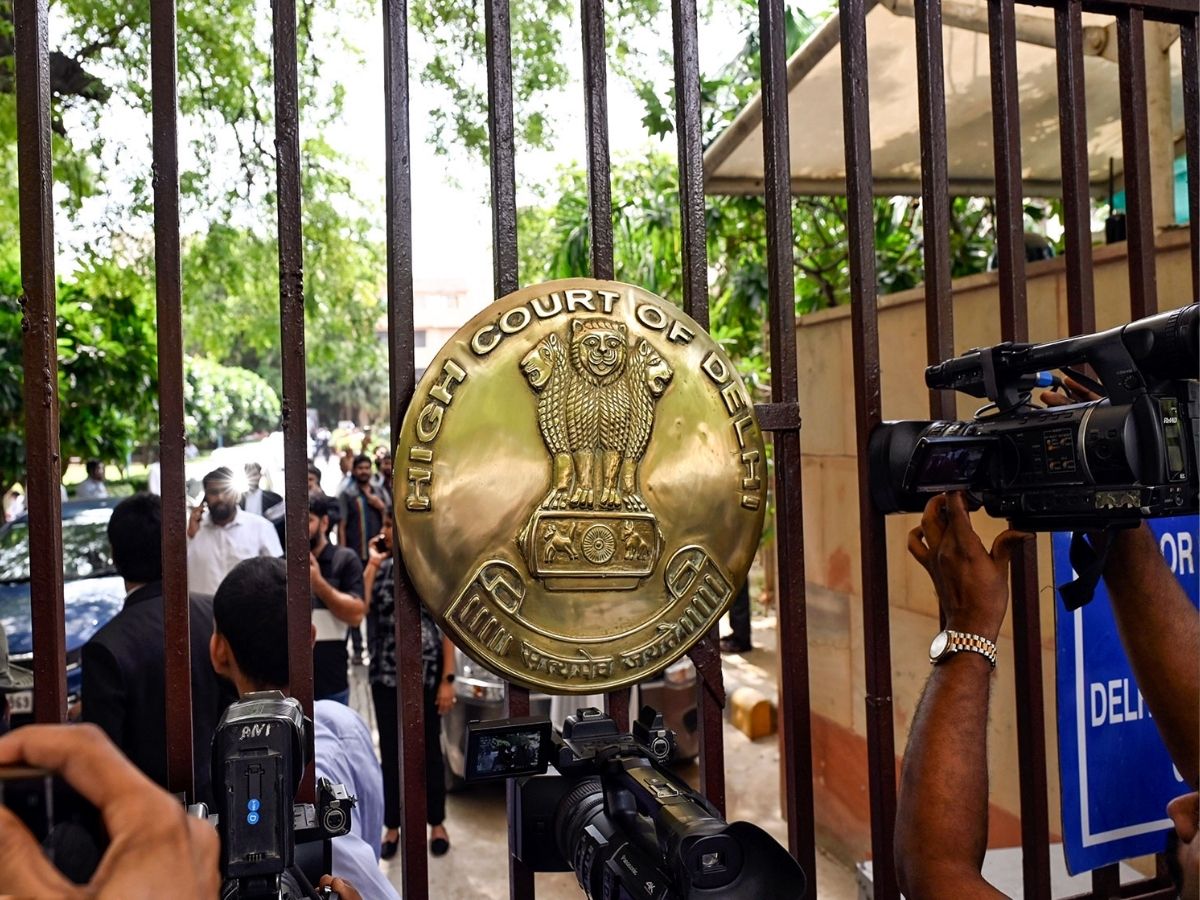
'Every Citizen Requires Fresh Air': Delhi High Court Expresses Displeasure Over Lack Of Action On Air Pollution; Questions 18% GST On Air Purifiers (Pic Credit: ANI)
Justice Swarana Kanta Sharma dismissed the appeal filed by the convicted man, upholding charges under Section 18 read with Sections 5(m) and 5(n) of the POCSO Act, 2012, as well as Section 511 read with Section 376AB of the IPC.
The Court observed that the combined evidence of the victim’s testimony, parental statements, and forensic reports has conclusively established the accused’s guilt beyond a reasonable doubt.
“The unchallenged concordance of ocular testimony and forensic report materially strengthens the prosecution’s case,” Justice Sharma noted.
Furthermore, the Court clarified that the act of changing the child’s clothes prior to medical examination does not weaken the prosecution’s evidence under the POCSO Act.
The incident occurred while the minor was sleeping in her aunt’s room, where her maternal uncle allegedly attempted to assault her. The child’s mother reportedly saw the accused exiting the room, adjusting his clothing. Subsequent investigation revealed semen stains on the child’s garments, and DNA analysis confirmed a match with the accused.
Rejecting the defence argument that an intact hymen disproved the offence, the court referred to Supreme Court precedents, emphasising that any act towards penetration constitutes an attempt, and the absence of hymenal rupture does not negate the crime.
The Court also dismissed the accused’s claim of intoxication, highlighting the lack of evidence showing that he was incapable of forming criminal intent. Justice Sharma clarified, “Even if the appellant was under some level of intoxication, such a plea cannot automatically exonerate his criminal liability.”
Upholding the trial court’s findings, the High Court stated that the conclusions regarding credibility, motive, and consistency of the prosecution’s evidence were justified.
Abhishek Banerjee is a senior leader of the All India Trinamool Congress and a three-time…
Indian Navy Agniveer Sailor Recruitment 2026 Announced: Check Eligibility, How To Apply
The Indian Navy has started the online application process for the Agniveer Sailor Recruitment 2026…
Mohammed Salim, Communist Party of India (Marxist) veteran leader and state secretary, is steering the…
