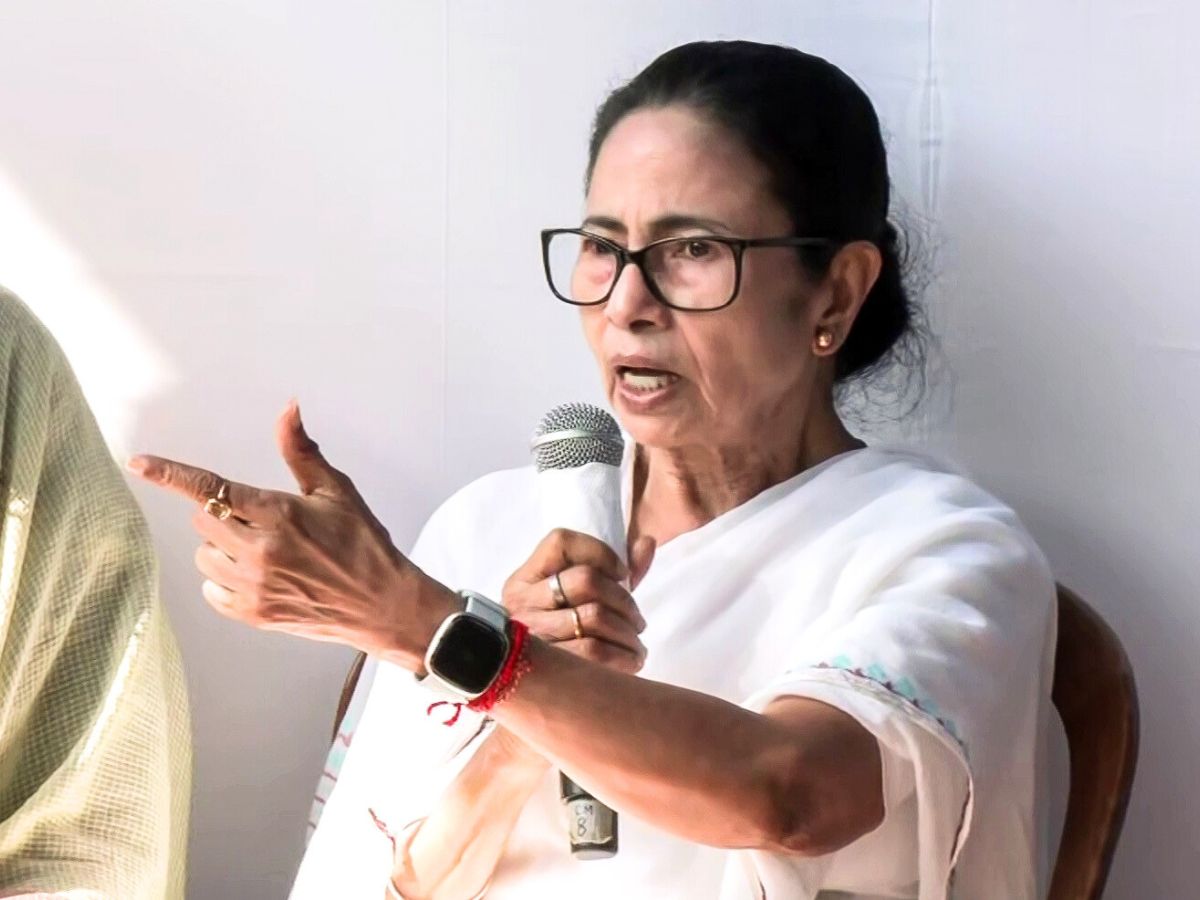
West Bengal Yuva Sathi scheme offers ₹1500 monthly aid to unemployed youth. (Photo: ANI)
As West Bengal heads into an election year, Chief Minister Mamata Banerjee’s government has unveiled a welfare-heavy interim budget with a sharp focus on women voters.
The main announcement is a ₹500 monthly increase in financial assistance under the state’s flagship Lakshmi Bhandar scheme, a move widely seen as both a social welfare expansion and a politically significant decision ahead of the Assembly polls.
Presented by Finance Minister Chandrima Bhattacharya for FY 2026–27, the ₹4.06 lakh crore vote-on-account budget places women, informal workers, and low-income households at the centre of the government’s spending priorities.
Under the revised structure, women from the general category will now receive ₹1,500 per month, up from ₹1,000, while women from SC/ST households will receive ₹1,700, up from ₹1,200. The Lakshmi Bhandar scheme, launched in 2021, already covers around 2.2 crore women across the state, making it one of the largest direct benefit schemes for women in India.
The hike significantly enhances the cash support provided to economically vulnerable women and strengthens the scheme’s appeal at a time when electoral mobilisation is intensifying.
The move is also being viewed in the political context of similar welfare schemes rolled out by BJP-ruled states. The BJP’s Ladali Behan Yojana in Madhya Pradesh offers ₹1,250 per month, while Maharashtra provides ₹1,500. In Delhi, the BJP has promised ₹2,500 for eligible women if voted to power.
By raising the Lakshmi Bhandar amount, the Trinamool Congress government appears to be pre-emptively countering any such electoral promise by the BJP in Bengal, especially among women voters who form a decisive electoral bloc.
As per the January 2025 electoral roll, West Bengal has over 3.76 crore female voters, making women-centric schemes politically crucial.
Launched in February 2021, Lakshmi Bhandar is aimed at providing monthly financial assistance to women aged 25 to 60 years from economically weaker households.
To be eligible, the woman’s household must be enrolled under the Swasthya Sathi health scheme, and she should not be a permanent or retired government employee receiving salary or pension.
The scheme was designed to promote women’s financial independence by ensuring a steady income flow for essential household needs. With the latest revision, the government has reinforced its commitment to women’s economic empowerment.
Apart from the Lakshmi Bhandar hike, the budget also announced several other welfare measures targeting vulnerable sections:
The state will bring gig workers under existing social security schemes such as Swasthya Sathi. Wages of Anganwadi workers and Anganwadi Sahayaks will be increased by ₹1,000 from April 2026. Allowances for ASHA workers and civic volunteers will also see significant hikes.
Additionally, unemployed youth will receive ₹1,500 per month for up to five years under a newly announced assistance scheme.
In a move aimed at government employees, the Finance Minister also announced a 4% increase in Dearness Allowance (DA).
The announcement came on the same day the Supreme Court directed the West Bengal government to clear 25% of pending DA dues immediately and form a committee for phased clearance of the rest.
The announcements were part of the customary vote-on-account ahead of the full budget and are being widely interpreted as a calibrated welfare push before the Assembly elections, where the Trinamool Congress will aim for a fourth consecutive term.
With over 2.2 crore beneficiaries and a direct cash transfer model, the enhanced Lakshmi Bhandar scheme stands out as the centrepiece of this strategy, reinforcing Mamata Banerjee’s long-standing emphasis on women-centric governance.
As the political battle for Bengal intensifies, the ₹500 hike in Lakshmi Bhandar is likely to remain at the heart of both welfare discussions and campaign narratives in the months to come.
Sofia Babu Chacko is a journalist with over five years of experience reporting on Indian politics, crime, human rights, gender issues, and stories about marginalized communities. She believes journalism plays a crucial role in amplifying unheard voices and bringing attention to issues that truly matter. Sofia has contributed articles to The New Indian Express, Youth Ki Awaaz, and Maktoob Media. She is also a recipient of the 2025 Laadli Media Awards for gender sensitivity. Beyond the newsroom, she is a music enthusiast who enjoys singing. Connect with Sofia on X: https://x.com/SBCism
PNG Gas: In a major policy shift, the Centre has tightened rules around domestic gas…
Apple has released iOS 26.4 with new features like AI playlists in Apple Music, offline…
Chennai Super Kings captain Ruturaj Gaikwad has cleared the air on the opening combination for…
