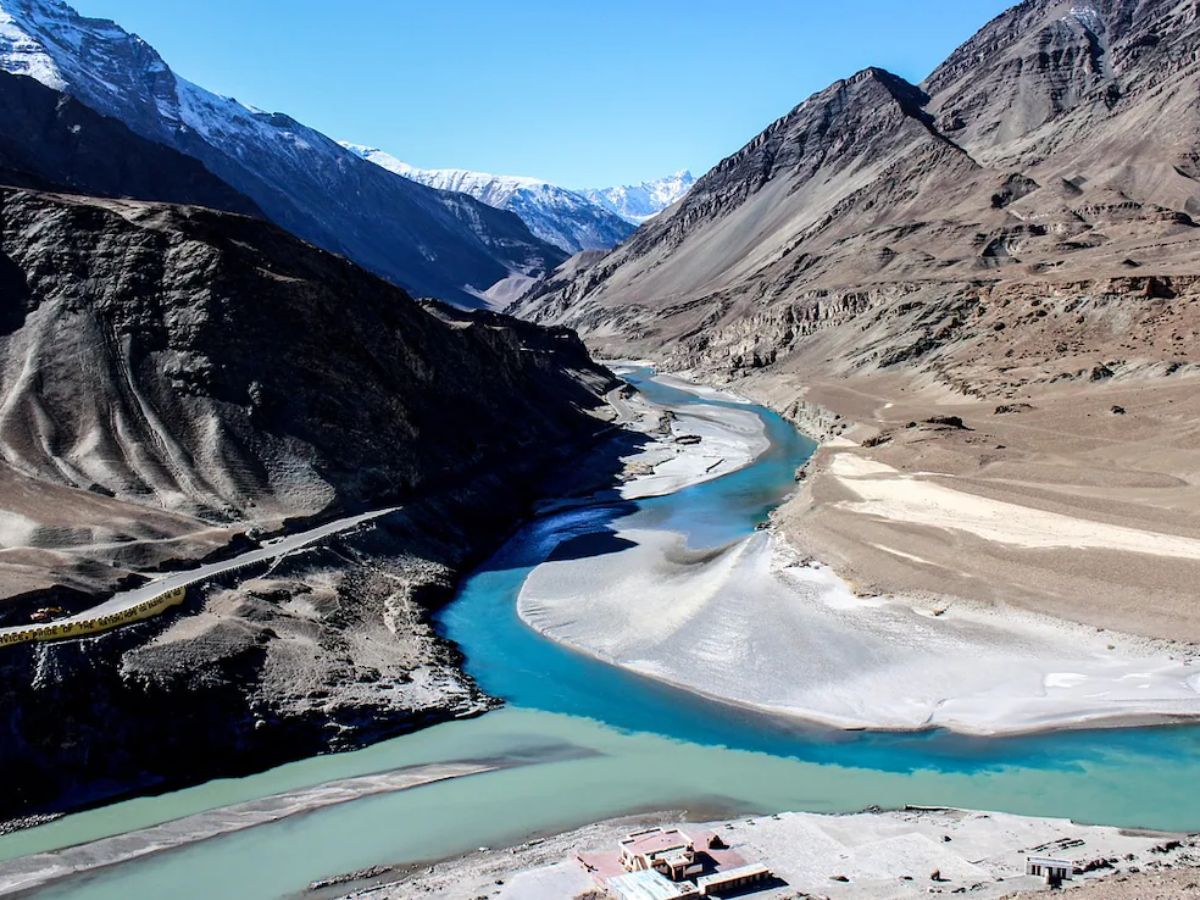
Union ministers to lead outreach drive explaining how Indus Treaty suspension will boost irrigation, water access, and development across northern India. (Photo credit: NDTV)
Following the suspension of the Indus Waters Treaty (IWT) with Pakistan in the aftermath of Pahalgam attack, the central government is now preparing to launch a massive public outreach program to justify the move and spell out the long-term advantages it has for India.
The government campaign will inform citizens, especially from the northern states of Punjab, Jammu & Kashmir, Haryana, Rajasthan, and Himachal Pradesh, about how India can strategically and developmentally benefit from taking back control of the waters of the Indus river.
According to the government sources, Senior Union ministers such as Agriculture Minister Shivraj Singh Chouhan, Environment Minister Bhupender Yadav and Jal Shakti Minister CR Patil will lead the campaign. These ministers will go out into the major regions and talk directly to the farmers, local leaders, civil society groups and officials. They will seek to tell them in simple and clear language about how the pause on the treaty can lead to improved water management, more productive agriculture in water-scarce regions and better irrigation.
The official move to suspend the decades-old Indus water treaty was made after the April 22 Pahalgam terrorist attack, which India attributes to Pakistan-based terror outfits. It is part of a strategy to counter Islamabad’s ongoing patronage of cross-border terrorism diplomatically and more economically.
The government’s long-term plan for water management includes a 160-kilometre-long link canal to connect the Chenab river with the Ravi, Beas, and Sutlej river networks. Adding to this, a 13-kilometre tunnel is planned to make way for the shift of Indus waters from Jammu and Kashmir to Punjab, Haryana, and Rajasthan. The Centre has also planned to connect the Indus waters to Sri Ganganagar in Rajasthan within three years by integrating those existing canal systems in these states.
It is believed that this reallocation of water resources will help in resolving increasing issues of water shortages and will enable India to better use its share of river water for both irrigation and hydroelectric power generation.
The campaign of the centre’s outreach is scheduled to be initiated in the next few weeks, will involve visits at the district level, people’s meetings, and wider usage of local media so as to generate awareness on the advantages of shifting.
ALSO READ: Congress MP Randhawa Hits Out At J-K CM Omar Abdullah Over Indus Waters Remarks
Sofia Babu Chacko is a journalist with over five years of experience reporting on Indian politics, crime, human rights, gender issues, and stories about marginalized communities. She believes journalism plays a crucial role in amplifying unheard voices and bringing attention to issues that truly matter. Sofia has contributed articles to The New Indian Express, Youth Ki Awaaz, and Maktoob Media. She is also a recipient of the 2025 Laadli Media Awards for gender sensitivity. Beyond the newsroom, she is a music enthusiast who enjoys singing. Connect with Sofia on X: https://x.com/SBCism
Dhurandhar 2: Ranveer Singh’s Dhurandhar 2 continues its strong run at the box office, maintaining…
Sourav Ganguly hailed IPL’s massive growth after record-breaking Rajasthan Royals and Royal Challengers Bengaluru sales…
Amid fresh speculation about its global strategy, OnePlus is facing renewed questions over whether it…
