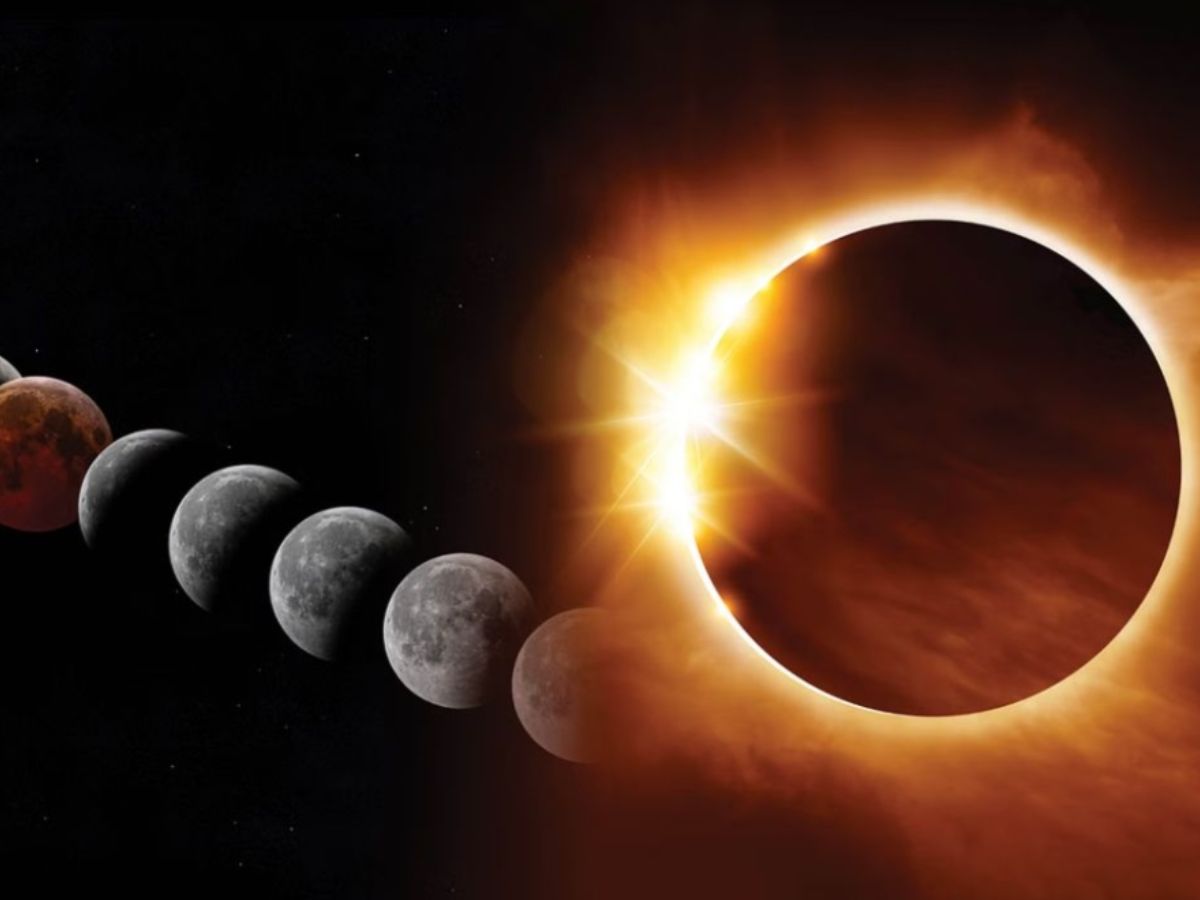
Lunar Eclipse (Photo: X)
A Chandra Grahan, or lunar eclipse, is a fascinating astronomical event that has both scientific importance and deep cultural and spiritual meaning—especially in India. Let’s explore what it is, why it happens, and how it is observed.
A Chandra Grahan (lunar eclipse) occurs when the Earth comes between the Sun and the Moon, casting its shadow on the Moon. This can only happen on a full moon night (Purnima). Scientifically, it is a natural celestial event. In Hindu tradition, however, it also carries mythological and spiritual significance.
1. Is it safe to watch Chandra Grahan?
Yes, a lunar eclipse is completely safe to view with naked eyes. No protective glasses are required.
2. Why does the Moon turn red during a total lunar eclipse?
The red color appears due to Earth’s atmosphere scattering shorter (blue) wavelengths of sunlight and allowing longer (red) wavelengths to pass through.
3. How often does Chandra Grahan occur?
Lunar eclipses occur about 2–5 times a year, but total lunar eclipses are less frequent.
4. Can we eat during Chandra Grahan?
Scientifically, yes. There is no harm in eating. However, some people follow traditional beliefs and avoid food during the eclipse.
5. Why are pregnant women advised to stay indoors?
This is a traditional belief in some cultures. Scientifically, there is no proven harmful effect of a lunar eclipse on pregnancy.
6. What should be done after the eclipse?
Traditionally:
7. What is the difference between Surya Grahan and Chandra Grahan?
A solar eclipse (Surya Grahan) occurs when the Moon blocks the Sun. A lunar eclipse (Chandra Grahan) occurs when the Earth blocks sunlight from reaching the Moon.
8. What Pregnant women should do?
9. Can we play Holi with colours during Chandra Grahan?
During this time, performing religious rituals, cooking, eating, and celebrating are traditionally avoided. Because the Sutak Kaal on March 3 begins in the morning (at 09:39 AM), traditional guidelines suggest avoiding playing Holi with colors while the Sutak and Grahan are active.
10. Can we sleep during Chandra Grahan?
As per science, you can safely sleep during a Chandra Grahan, or lunar eclipse, without any health risks tied to myths. Some traditions reportedly advise against it due to beliefs about toxic lunar rays or pollution (dosha), but science debunks these concerns
1. Chant Mantras and Pray
Many people spend time chanting mantras, reading sacred texts like the Bhagavad Gita, or meditating during the eclipse. This period is considered spiritually powerful.
2. Take a Bath Before and After the Eclipse
A ritual bath before and after the eclipse is believed to purify the body and mind.
3. Sprinkle Gangajal or Clean Water
After the eclipse ends, people often sprinkle Gangajal or clean water around the home for purification.
4. Stay Calm and Reflective
Engage in meditation, prayer, or quiet reflection instead of regular routine activities.
5. Remain Indoors
Traditionally, people prefer to stay indoors during the eclipse period, especially during Sutak Kaal.
6. Perform Charity After the Eclipse
Donating food, clothes, or money after the eclipse is considered auspicious.
1. Avoid Eating During the Eclipse
Many people avoid consuming food during the eclipse. Food prepared before the eclipse is often discarded afterward.
2. Do Not Use Sharp Objects
Using knives, scissors, needles, or cutting items is traditionally discouraged.
3. Avoid Sleeping
Sleeping during the eclipse is believed to be inauspicious in some traditions.
4. Do Not Start New or Auspicious Work
Important events such as weddings, housewarmings, business launches, or new ventures are usually avoided.
5. Avoid Touching Idols or Sacred Plants
Home temple idols may be covered, and touching sacred plants like Tulsi is traditionally avoided.
6. Avoid Unnecessary Travel
Many prefer not to travel during the eclipse period.
ALSO READ: Chandra Grahan 2026: Will The Blood Moon Disrupt Your Sleep And Well-Being?
12,000 flights cancelled amid Iran strikes; Dubai airspace disrupted as stranded Indians evacuated and airlines…
The Indian team reportedly postponed the start of its training session in Mumbai on Tuesday…
Iran’s Supreme Leader Ayatollah Ali Khamenei was killed in Israeli airstrikes during a joint US-Israel…
