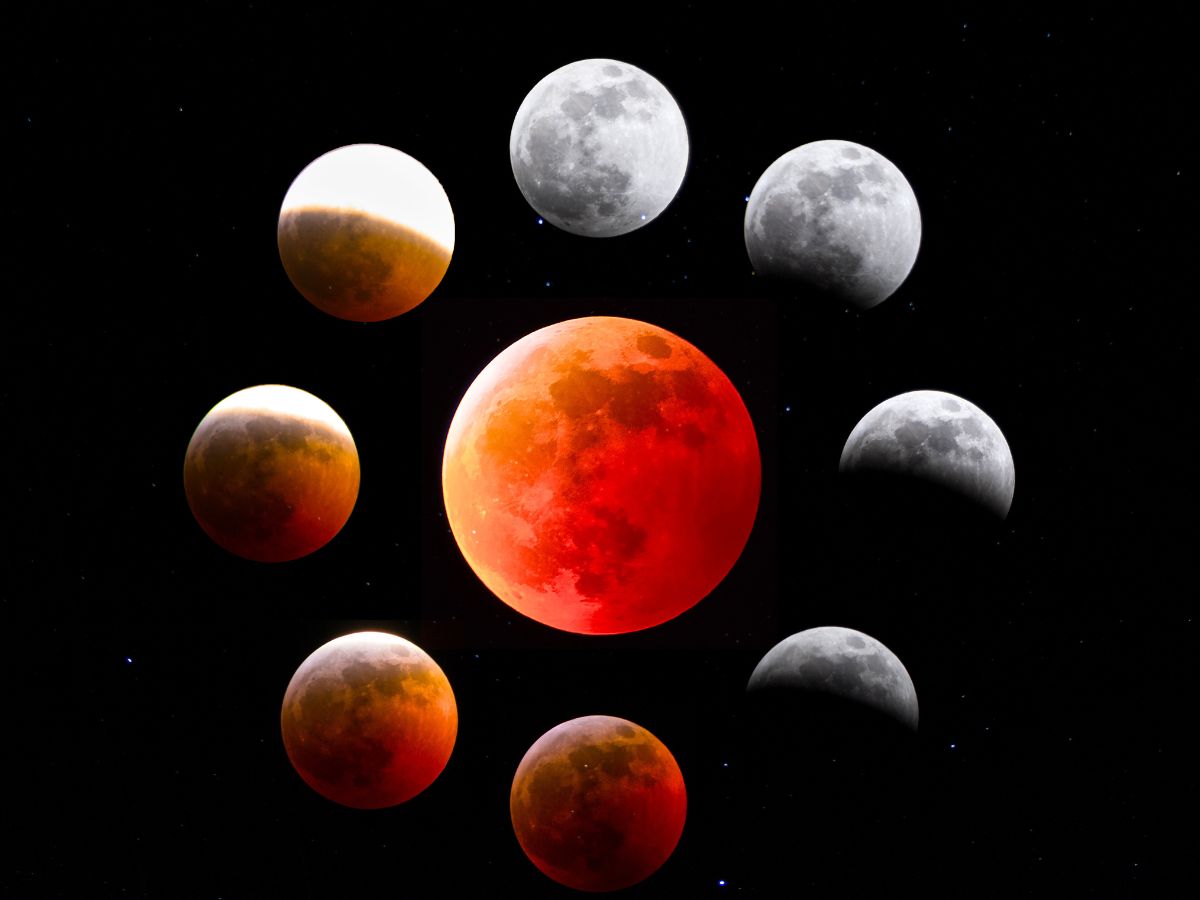
Chandra Grahan 2026 on March 3. (Photo: Canva)
Chandra Grahan, or Lunar Eclipse, is one of the most spectacular astronomical events observed worldwide. In India, it holds both scientific and spiritual significance. Unlike Surya Grahan (solar eclipse), which occurs during the day, Chandra Grahan happens at night when the Earth comes between the Sun and the Moon, casting its shadow and creating the mesmerizing “Blood Moon” effect.
In 2026, India will witness two lunar eclipses, with the first being a Total Lunar Eclipse on March 3, 2026. This eclipse will be partially visible in India during moonrise, making it a Grastodit Chandra Grahan. The second eclipse, a Partial Lunar Eclipse on August 28, will not be visible in India as it occurs during the daytime.
Date: Tuesday, March 3, 2026 (Phalguna Purnima / Holi)
Moonrise Visibility in India: 06:22 PM – 06:26 PM (depending on the city)
Maximum Visible Phase: 06:33 PM – 06:40 PM IST
Eclipse Ends: 06:46 PM – 06:47 PM IST
Penumbral Eclipse Begins: 08:43 UTC
Partial Eclipse Begins: 09:49 UTC
Totality Begins (Blood Moon): 11:03 UTC
Maximum Eclipse: 11:33 UTC
Totality Ends: 12:02 UTC
Partial Eclipse Ends: 13:17 UTC
Penumbral Eclipse Ends: 14:23 UTC
Since the eclipse is visible in India, Sutak Kaal (the inauspicious period) starts approximately 9 hours before the eclipse, around 06:20 AM IST.
The eclipse can be viewed live via online streams from NASA or Time and Date, and skywatchers are advised to observe the moonrise during the total phase for the best experience.
Chandra Grahan is considered spiritually significant in India. People often:
Add Tulsi leaves or Kusha grass to food to protect from negative energies
Chant mantras, meditate, or pray for spiritual growth
Recite sacred texts like the Bhagavad Gita or Ramcharitmanas
Take a bath before and after the eclipse to purify the body
Cover idols and sacred items, cleansing them afterward
Donate food or help the needy after the eclipse
Tradition recommends avoiding:
Eating during the eclipse
Starting new work or ventures
Sleeping during the eclipse
Using sharp objects like knives or scissors
Touching idols or Tulsi plants
Scientifically, a lunar eclipse occurs when the Earth blocks sunlight from reaching the Moon during a full moon (Purnima). The Moon often turns a reddish-orange hue during totality, earning it the nickname “Blood Moon.” This celestial event combines astronomical wonder with spiritual significance, making it one of the most eagerly anticipated events of the year.
Mark your calendars for March 3, 2026, and experience the awe of Blood Moon Rising – Chandra Grahan 2026 in India.
Sofia Babu Chacko is a journalist with over five years of experience covering Indian politics, crime, human rights, gender issues, and stories about marginalized communities. She believes that every voice matters, and journalism has a vital role to play in amplifying those voices. Sofia is committed to creating impact and shedding light on stories that truly matter. Beyond her work in the newsroom, she is also a music enthusiast who enjoys singing.
Sahibzada Farhan’s brilliant knock was not enough as Pakistan defeated Sri Lanka but still crashed…
PV Sindhu Stranded in Dubai Amid US-Israel Strikes on Iran
Star Indian shuttler PV Sindhu is stuck at Dubai International Airport following the total suspension…
United States and Israel strikes on Iran sparked explosions near the office of Supreme Leader…
