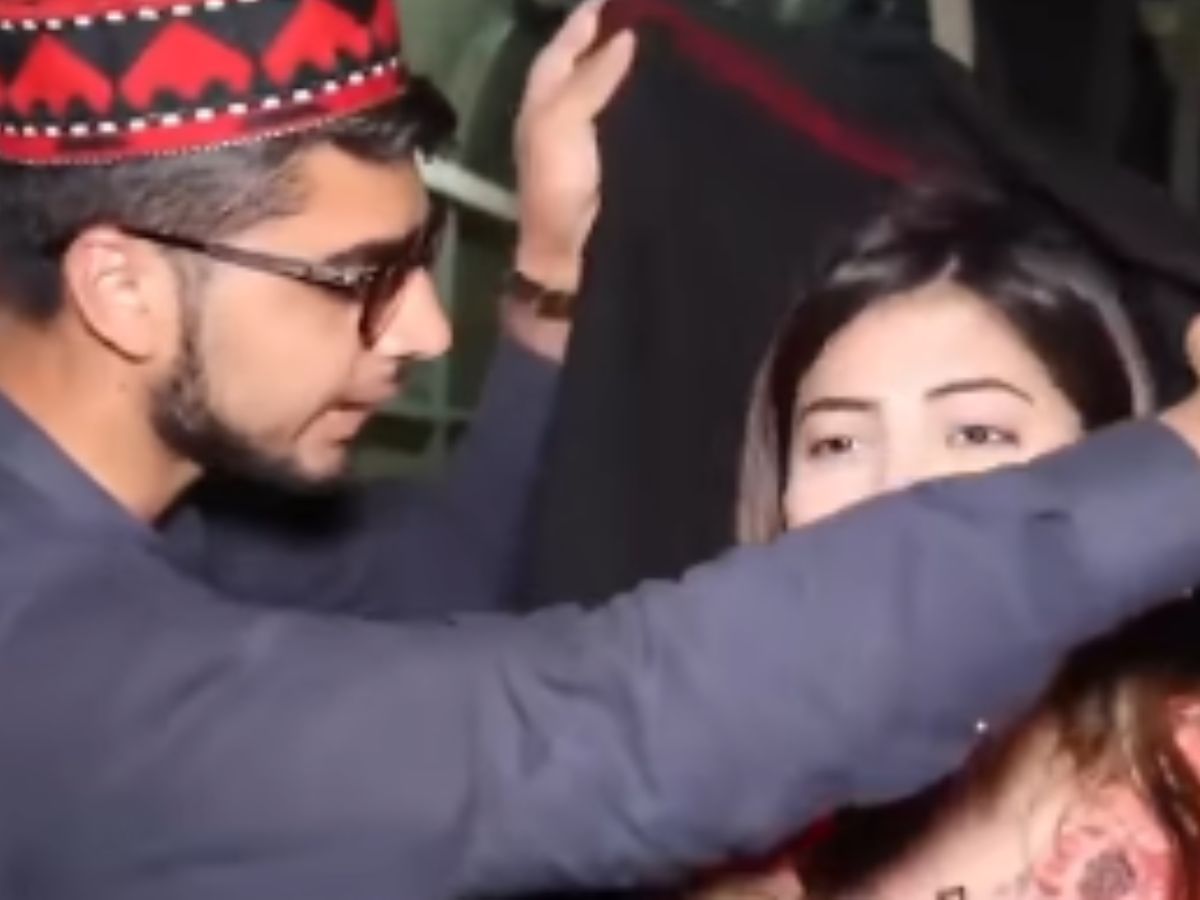
Pakistani YouTuber Shaila Khan Viral Shawl Incident Sparks Debate on Faith
The 2024 street interview from Pakistan has emerged as a worldwide attraction because it shows a critical confrontation that goes beyond basic fighting. The viral footage shows YouTuber Shaila Khan participating in a geopolitical dialogue, which becomes personal when her interviewee tries to impose his religious beliefs through physical force. The discussion about how an Iran-Israel war would affect local areas turned into a conflict that involved two people fighting for their right to control their own bodies and establish their limits of agreement. Khan made an effort to discuss how wars in neighboring countries affect Pakistan’s economic and social stability while the man she interviewed shifted the conversation to her missing head covering.
He claimed that her uncovered head represented the country’s “first transgression” and then proceeded to cover her with his shawl. Khan’s loud protest of “Don’t touch me” immediately reached millions of people, creating a fresh discussion about how faith interacts with “social harassment” and people in public spaces.
The confrontation reaches its essential point because traditionalist policing methods clash with modern individual rights. The man used his religious beliefs to defend his actions, but Khan proved his argument wrong by exposing the man’s physical contact with others. The man showed disrespect to Islamic rules of modesty and respect when he forcefully put a shawl on another person without their consent.
The way Khan answered showed that women need to cover their bodies with dupattas because their faith demands this practice. The younger generation, along with professional women in Pakistan today, creates a major conflict because they demand deeper understanding of how religious teachings differ from physical force.
The digital reaction to the video began to circulate, which turned the event into a representation of “feminist resilience” that exists within South Asian culture. Social media users have praised Khan for her courage when she objected to people touching her without permission after they called her “sister.” The actor shows his deep legal knowledge through this rejection of a “brother-sister” brother-sister relationship, which people in his home region use to lessen the effects of patriarchy.
The clip went viral, creating an online archive of opposition that empowers people to fight against those who accuse others of improper behavior. Khan framed the incident as a legal matter and “social harassment,” shifting the discussion from a religious argument to a personal violation case, which led to her recognition as an “educated reporter” who defended her principles against societal pressure.
A recent media graduate, Bhumi Vashisht is currently making a significant contribution as a committed content writer. She brings new ideas to the media sector and is an expert at creating strategic content and captivating tales, having working in the field from past four months.
The vivo x300 fe is expected to launch in India soon with a strong focus…
Ramsha Khan confirms marriage to Khushhal Khan after leaked nikah photos, slams privacy breach, urges…
The BCCI has revised the IPL 2026 schedule for Gujarat Titans and Chennai Super Kings.…
