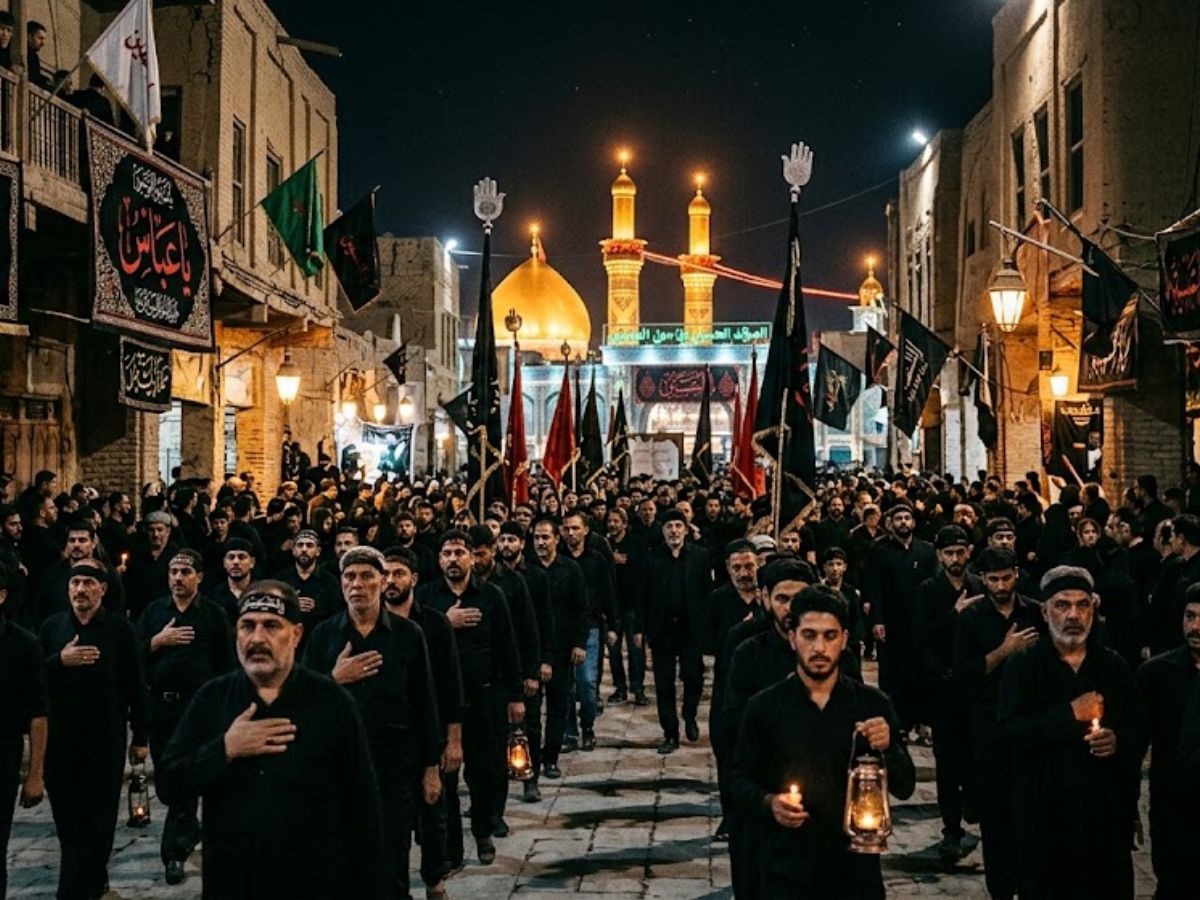
Muharram is considered the first month of the Hijri calendar (Islamic calendar). The month of Muharram is highly significant in Islamic history in both the pre-prophetic and post-prophetic eras. This year, the month of Muharram is expected to begin on Tuesday, 16 June 2026, marking the start of year 1448 AH (After Hijrah), and the Day of Ashura, i.e., 10th Muharram, will likely fall on Thursday, 25th June 2026. This month is significant in the Islamic world, especially among Shia Muslims.
Why is Muharram the First Month?
The Islamic calendar starts with the Hijra, which refers to the migration of Prophet Muhammad (PBUH) and his companions from Makkah to Yasrab (currently known as Madinah). The migration established the first Muslim community and represents sacrifice, faith, perseverance, and trust in the Almighty.
Muharram is the first month of the Islamic calendar, marking the migration of the Muslims and the Prophet to Madinah and the establishment of the first Islamic state in 622 CE. Muslims around the world celebrate this month as the month of sacrifice, faith, perseverance, and trust in Allah. The history of Muharram
In the year 632 CE, the Prophet Muhammad (PBUH) passed away, and the question of Muslim leadership became deeply divided. However, in the initial years, when the power was among the Caliphate Rashid, things were under control and Islam and the Islamic state expanded around the globe. But in 680 CE, Yazid, who was the son of Muawiyah, who was among the companions of the Prophet and the founder of the Umayyad Dynasty. Many Muslims viewed the regime of Yazid as corrupt and unfair. Imam Hussain (AS), who was the grandson of the Prophet and son of the 4th Caliphate Ali ibn Abi Talib (AS), refused to pledge allegiance to him, seeing it as betrayal of Islamic values.
The people of Kufa (Now Iraq) wrote letters urging Imam Hussain to come to Kufa and lead them. He travelled from Madinah to Kufa with his family and a small group of loyalists, around 72 people in total. Before reaching to Kufa, the army of Yazid stopped them at a barren desert plain near the Euphrates River, Karbala.
Yazid’s army, numbering thousands, surrounded them and cut off their access to water for days. On the 10th Muharram, 680 CE, the day now known as Ashura, the battle began between Hussain (AS) and Yazid’s army despite being hopelessly outnumbered; Hussain and his companions fought with extraordinary courage, and by the end of the day Hussain and nearly all the men except his son Imam Zain-ul-Abidin, who was suffering from fever and was not allowed to fought, were martyred. The women and children were taken to Damascus, the capital city of the Umayyad Dynasty.
The tragedy of Karbala became one of the most defining moments in Islamic history. Just 50 years after the death of the Prophet, almost his entire family, which holds very high significance in Islam, was killed unethically, and this event stands as a timeless symbol of standing for justice against tyranny. Every year during Muharram, Muslims around the world, especially Shia Muslims, remember and mourn the sacrifice through fasting, prayer, charity, and reflection, ensuring the message of Karbala and Imam Hussain (AS) is never forgotten.
Syed Ziyauddin is a media and international relations enthusiast with a strong academic and professional foundation. He holds a Bachelor’s degree in Mass Media from Jamia Millia Islamia and a Master’s in International Relations (West Asia) from the same institution.
He has work with organizations like ANN Media, TV9 Bharatvarsh, NDTV and Centre for Discourse, Fusion, and Analysis (CDFA) his core interest includes Tech, Auto and global affairs.
You Might Be Interested In
Tweets @ZiyaIbnHameed